 Kwizi: Oli dayinoso ki?
 Olutalo lwa dayinoso
 Empaka z'emisinde gya dayinoso
 Emizannyo emitono egya dayinoso
 Alubaamu ya sitika
 Enkalala za dayinoso eza TOP
 Mpa ekyewuunyisa!
Yabeerawo ddi?

Yali munene atya?
Yali muwanvu kwenkana wa?
Yali mugulumivu kwenkana wa?
kuteebereza
Yali muzito kwenkana wa?

 obuwanvu ng'embwa 5, ennyindo ku mukira🍌obuwanvu ng'amenvu 28 nga gaddiriŋŋanaobuzito ng'obw'embwa 100🍉obuzito ng'obwa wotamerooni 400🎒obuzito ng'obw'ebibiina 2.5 ebijjuvu eby'abaana b'essomero🐻❄️obuzito ng'obwa ddubu enjeru 4🏃yandidduse mita 100 mu sikonda 18 (omuntu asinga embiro yeetaaga 9.6)
Polacanthus yali munene atya bw'ogeraageranya ku GGWE?
Kubala kwokka mu browser yo. Tewali kiterekebwa wadde okusindikibwa wonna.
Yali wa mbiro kwenkana wa?


Ebyewuunyisa
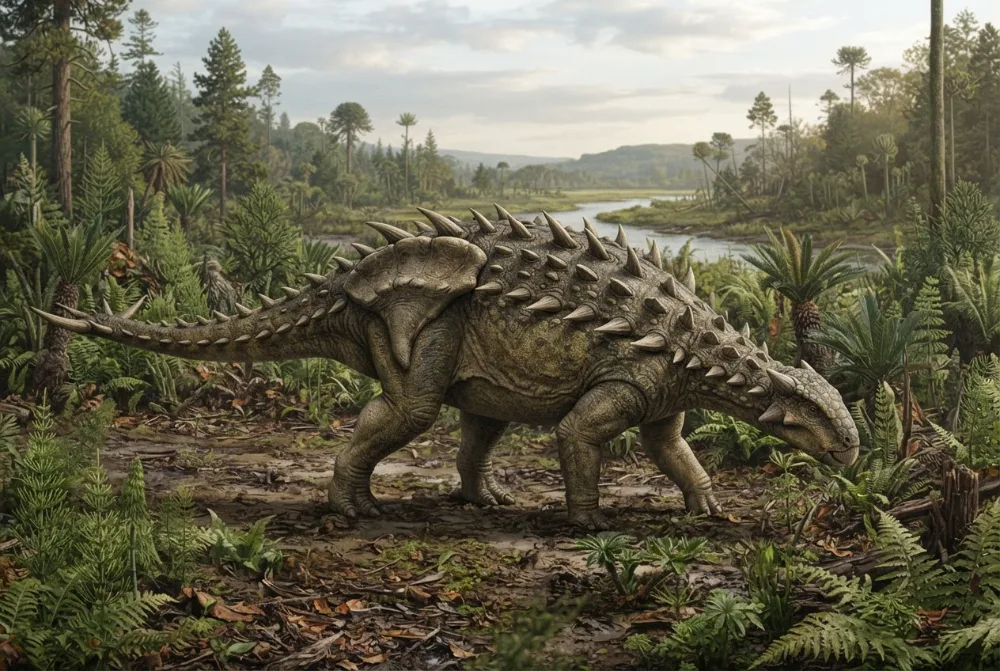
Polacanthus had a large fused plate of bone over its hips called a 'pelvic shield', which was about 108 centimetres wide and 90 centimetres long.1
Its body was covered with many spikes and small bony studs called ossicles.1
The first fossil of Polacanthus was discovered by the Reverend William Fox on the Isle of Wight in 1865.1
Polacanthus lived about 130 to 125 million years ago during the Early Cretaceous.1
Scientists are not sure if Polacanthus belongs to the Nodosauridae family or its own family, the Polacanthidae.1
A second species, Polacanthus rudgwickensis, was named in 1996 but later moved to its own genus Horshamosaurus in 2015.1
Ebibuuzo ebisinga okubuuzibwa ku Polacanthus
?How big was Polacanthus?
Polacanthus grew to about 4 to 5 metres (13 to 16 feet) long. Estimates of its weight vary significantly, with some scientists suggesting it weighed around 2 tonnes (4,400 pounds), while others estimate it was much lighter.1
?What did Polacanthus eat?
Polacanthus was a herbivore, meaning it ate plants. Its teeth and body were built for eating vegetation.1
?Did Polacanthus have a tail club?
No, Polacanthus did not have a tail club like Ankylosaurus. Instead, its tail had spikes and bony plates for protection.1
?Where was Polacanthus found?
Polacanthus fossils have been found in England, especially on the Isle of Wight. The first fossil was discovered there in 1865 by the Reverend William Fox.13
?When did Polacanthus live?
Polacanthus lived during the Early Cretaceous Period, about 130 to 125 million years ago.1
?How fast could Polacanthus run?
Nobody knows for sure how fast Polacanthus could run, but it walked on all fours and had relatively long hindlimbs for an ankylosaur, which might have allowed it to move fairly quickly.1
Omumenyi w'enfumo
Enfumo: Polacanthus could swing its tail like a club.
Amazima: Polacanthus did not have a tail club; its tail was covered in spikes but lacked the heavy bony club seen in some other ankylosaurs.1
Eri abakugu mu dayinoso
- Erinnya lya ssaayansi
- Polacanthus
- Yatuumibwa
- Fox 18664
- Ekibinja
- Dayinoso ez'engabo
- Ekika / ekibinja
- Nodosauridae4
- Engabanya
- Ornithischia > Ankylosauria > Nodosauridae > Thyreophora4
- Emyaka gy'enjazi
- emyaka obukadde 139 okutuuka ku 100 (Berriasian / Albian)4
- Ensengeka z'enjazi
- Wessex, Vectis, Pinilla de los Moros4
- Ensi
- Bungereza, Sipeyini4
- Ebisigalira ebyazuulibwa
- 16 mu The Paleobiology Database4
- Era emanyiddwa nga
- Euacanthus, Vectensia (amannya ag'edda kati gabalibwa ng'ekisolo kye kimu)4
- Okuzuulibwa
- Polacanthus was discovered by Reverend William Fox on the Isle of Wight in 1865. The name was first used by Richard Owen in a lecture later that year, and the full description was published by Fox in 1866.1
- Kikyakubaganyizibwako ebirowoozo
- Scientists still debate whether Polacanthus was a nodosaurid or belonged to a separate family called Polacanthidae.1
Ebituufu gye biva
- Polacanthus (en.wikipedia.org)
- Polacanthus | Natural History Museum (nhm.ac.uk)
- Spotlight on Polacanthus - Horniman Museum and Gardens (horniman.ac.uk)
- Polacanthus in The Paleobiology Database (CC BY 4.0): emyaka, ebifo, ensengeka z'enjazi, engabanya.
Buli kituufu ku lupapula luno kirina ennamba eraga ensibuko yaakyo. Bwe tuba nga tukoze ensobi, tusonyiwe, ffe tuli bawagizi ba dayinoso, so si magazini ya ssaayansi. Tubuulire ku [email protected] tujja kugitereeza.
 Rex alumwa enjala! Dino Wiki pulojekiti ya taata eri mutabani we ayagala ennyo dayinoso, ya bwereere, tewali bulango era tewali bikulondoola. Abakulu basobola okuwa Rex akantu ak'okulya okuyamba okugikuuma ku mutimbagano.Liisa Rex
 Ankylosaurus
 Sauropelta
 Pinacosaurus
 Scutellosaurus
 Struthiosaurus
 Euoplocephalus
 Stegosaurus
 Iguanodon
 Archaeopteryx
 Giganotosaurus
 Microraptor
 Deinonychus