 Kwizi: Oli dayinoso ki?
 Olutalo lwa dayinoso
 Empaka z'emisinde gya dayinoso
 Emizannyo emitono egya dayinoso
 Alubaamu ya sitika
 Enkalala za dayinoso eza TOP
 Mpa ekyewuunyisa!
Scansoriopteryx
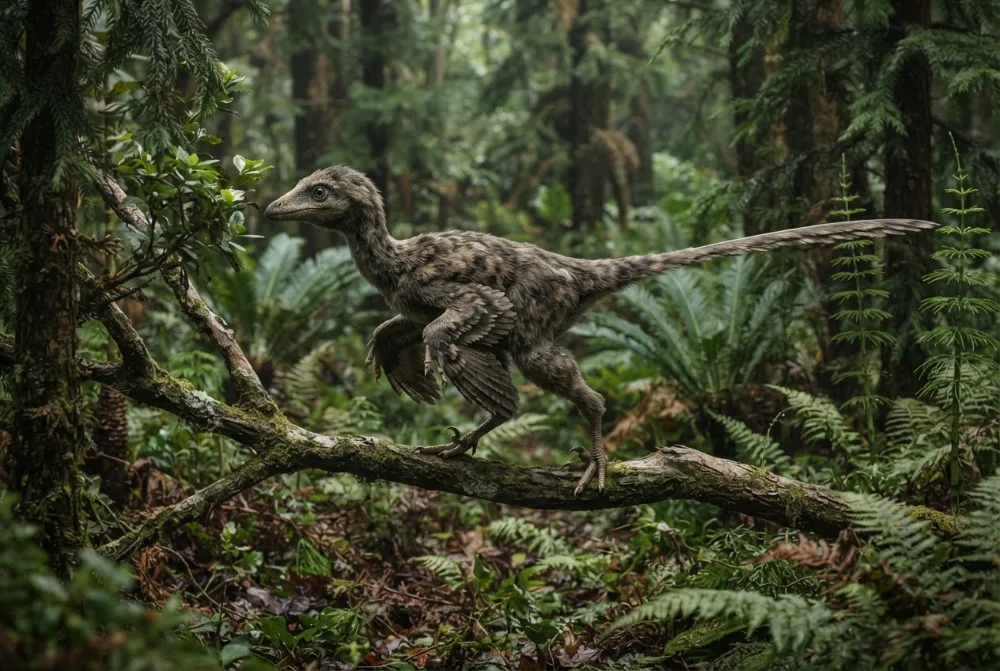
Scansoriopteryx was a tiny, sparrow-sized dinosaur that lived in trees. It had a super long third finger that may have helped it glide from branch to branch. This little dinosaur was covered in fluffy, down-like feathers.1
Yabeerawo ddi?
Yali wa mbiro kwenkana wa?


Ebyewuunyisa
Scansoriopteryx had a very unusual hand: its third finger was nearly twice as long as its second finger, unlike most other meat-eating dinosaurs.1
Its long third finger may have supported a membrane like a bat's wing, helping it glide between trees.1
The only known fossil is a baby, so scientists are not sure how big a full-grown Scansoriopteryx was.1
Scansoriopteryx had a backward-pointing toe, like modern birds, which helped it grip branches tightly.1
Its tail was short and stiff, and may have been used as a prop when climbing, like a woodpecker's tail.1
The name Scansoriopteryx means 'climbing wing', because scientists think it was a tree-climber that could glide.1
Ebibuuzo ebisinga okubuuzibwa ku Scansoriopteryx
?How big was Scansoriopteryx?
The only known fossil is a baby, so scientists are not sure how big a full-grown Scansoriopteryx was. The baby was about the size of a sparrow.1
?Did Scansoriopteryx have feathers?
Yes. The type specimen of Scansoriopteryx contains fossilized impressions of wispy, down-like feathers, especially on the forearm and hand.1
?Could Scansoriopteryx fly?
No, it could not fly. Scientists think it could only leap or glide from branch to branch using its long fingers and feathers.1
?What did Scansoriopteryx eat?
Nobody knows for sure. It had at least twelve teeth in its lower jaw, so it probably ate small animals or insects.1
?When did Scansoriopteryx live?
Scansoriopteryx lived during the mid to late Jurassic Period, about 160 million years ago.1
?Why did Scansoriopteryx have a long finger?
Its third finger was nearly twice as long as the second finger. It may have supported a membranous wing, like a bat's, to help it glide between trees.1
Omumenyi w'enfumo
Enfumo: Some people think Scansoriopteryx could fly like a bird.
Amazima: Scansoriopteryx probably could not fly. It may have glided short distances using its long fingers and feathers, but it did not have powered flight.1
Eri abakugu mu dayinoso
- Erinnya lya ssaayansi
- Scansoriopteryx
- Yatuumibwa
- Czerkas and Yuan 20023
- Ekibinja
- Dayinoso ezirya ennyama
- Ekika / ekibinja
- Scansoriopterygidae3
- Engabanya
- Theropoda3
- Emyaka gy'enjazi
- emyaka obukadde 126 okutuuka ku 120 (Barremian / Aptian)3
- Ensengeka z'enjazi
- Yixian3
- Ensi
- Cayina3
- Ebisigalira ebyazuulibwa
- 1 mu The Paleobiology Database3
- Okuzuulibwa
- Scansoriopteryx was named in 2002 by Stephen Czerkas and Yuan Chongxi. The only fossil was bought from a dealer and likely came from the Yixian Formation in Liaoning, China.1
- Kikyakubaganyizibwako ebirowoozo
- Scientists debate whether Scansoriopteryx is the same animal as another dinosaur called Epidendrosaurus. They are very similar, and both may be the same species.1
Ebituufu gye biva
- Scansoriopteryx (en.wikipedia.org)
- PBDB Taxon (paleobiodb.org)
- Scansoriopteryx in The Paleobiology Database (CC BY 4.0): emyaka, ebifo, ensengeka z'enjazi, engabanya.
Buli kituufu ku lupapula luno kirina ennamba eraga ensibuko yaakyo. Bwe tuba nga tukoze ensobi, tusonyiwe, ffe tuli bawagizi ba dayinoso, so si magazini ya ssaayansi. Tubuulire ku [email protected] tujja kugitereeza.
 Rex alumwa enjala! Dino Wiki pulojekiti ya taata eri mutabani we ayagala ennyo dayinoso, ya bwereere, tewali bulango era tewali bikulondoola. Abakulu basobola okuwa Rex akantu ak'okulya okuyamba okugikuuma ku mutimbagano.Liisa Rex
 Allosaurus
 Carnotaurus
 Dilophosaurus
 Giganotosaurus
 Compsognathus
 Paronychodon
 Stegosaurus
 Iguanodon
 Archaeopteryx
 Microraptor
 Deinonychus
 Baryonyx