 Kwizi: Oli dayinoso ki?
 Olutalo lwa dayinoso
 Empaka z'emisinde gya dayinoso
 Emizannyo emitono egya dayinoso
 Alubaamu ya sitika
 Enkalala za dayinoso eza TOP
 Mpa ekyewuunyisa!
Yabeerawo ddi?

Yali munene atya?
Yali muwanvu kwenkana wa?
Yali mugulumivu kwenkana wa?
kuteebereza
Yali muzito kwenkana wa?
 obuwanvu ng'embwa 3, ennyindo ku mukira🍌obuwanvu ng'amenvu 18 nga gaddiriŋŋana🍉obuzito ng'obwa wotamerooni 70🧸obuzito ng'obw'abaana 18 ab'omu nnasale🎒obuzito ng'obw'abaana b'essomero 11🏃yandidduse mita 100 mu sikonda 11 (omuntu asinga embiro yeetaaga 9.6)
Serendipaceratops yali munene atya bw'ogeraageranya ku GGWE?
Kubala kwokka mu browser yo. Tewali kiterekebwa wadde okusindikibwa wonna.
Yali wa mbiro kwenkana wa?


Ebyewuunyisa
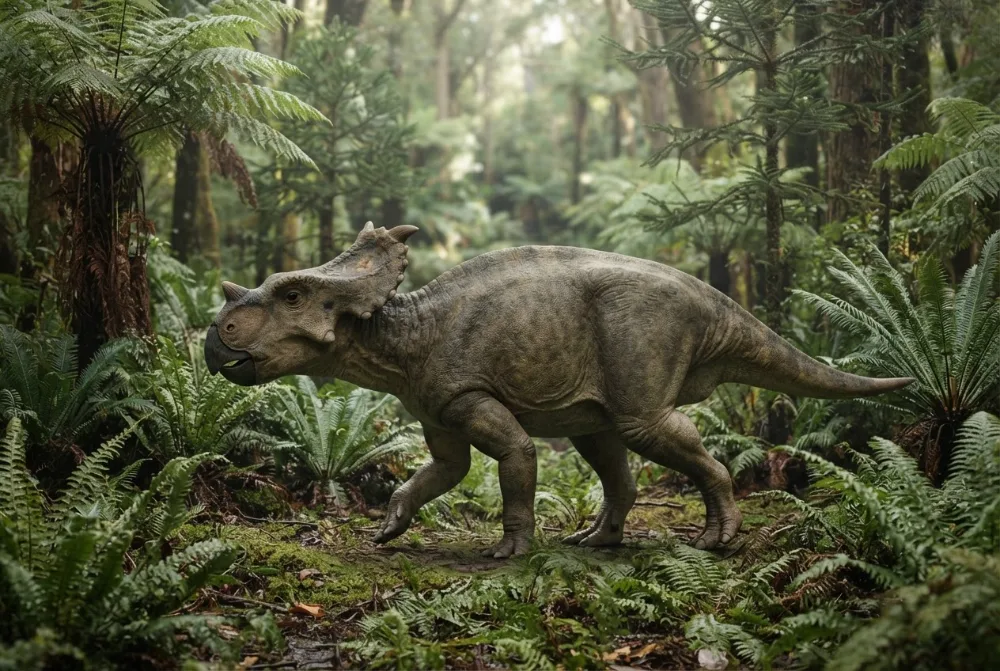
Serendipaceratops is known from just one bone, a left ulna (lower arm bone) that is about 16 centimetres long.1
The bone was discovered in 1993 during the Dinosaur Cove project, in a small area of sea-floor protected by a dam.1
Scientists first thought the bone might be from a theropod, but later noticed it looked like the arm bone of a horned dinosaur called Leptoceratops.1
The species name, arthurcclarkei, honors science fiction writer Arthur C. Clarke, who was a friend of the scientists that named it.1
Some scientists think Serendipaceratops might actually be an ankylosaur, not a horned dinosaur, because the arm bone is robust.1
The fossil was found in the Wonthaggi Formation, which is about 115 million years old.1
Ebibuuzo ebisinga okubuuzibwa ku Serendipaceratops
?What did Serendipaceratops eat?
Serendipaceratops was a herbivore, meaning it ate plants.1
?How big was Serendipaceratops?
Nobody knows for sure, because only one arm bone has been found. That bone is about 16 centimetres (6 inches) long.1
?When did Serendipaceratops live?
It lived during the Early Cretaceous Period, about 115 million years ago.1
?Was Serendipaceratops a dinosaur?
It is a type of ornithischian dinosaur, possibly an ankylosaur.1
?Why is it called Serendipaceratops?
The name means 'serendipitous horned face', because scientists were surprised to find a horned dinosaur bone in Australia. It was named by luck or serendipity.1
?Was Serendipaceratops a ceratopsian?
Scientists disagree. Some think it was a ceratopsian, but others think it was an ankylosaur because the arm bone is robust.1
Omumenyi w'enfumo
Enfumo: Some people think Serendipaceratops was definitely a horned dinosaur like Triceratops.
Amazima: Scientists are not sure. Some studies say it is a ceratopsian, but others say it might be an ankylosaur because the arm bone is robust.1
Eri abakugu mu dayinoso
- Erinnya lya ssaayansi
- Serendipaceratops
- Yatuumibwa
- Rich and Vickers-Rich 20033
- Ekibinja
- Dayinoso ez'amayembe
- Ekika / ekibinja
- Ceratopsia3
- Engabanya
- Ornithischia > Ceratopsia3
- Emyaka gy'enjazi
- emyaka obukadde 121 okutuuka ku 120 (Aptian)3
- Ensengeka z'enjazi
- Wonthaggi3
- Ensi
- Awusitureeliya3
- Ebisigalira ebyazuulibwa
- 1 mu The Paleobiology Database3
- Okuzuulibwa
- The bone was found in 1993 near Kilcunda, Australia, and the dinosaur was named by Tom Rich and Patricia Vickers-Rich in 2003. The name came after a colleague pointed out the bone looked like a horned dinosaur's arm bone.1
- Kikyakubaganyizibwako ebirowoozo
- Scientists still debate whether Serendipaceratops is a ceratopsian or an ankylosaur, because only one bone is known and it may be deformed.1
Ebituufu gye biva
- Serendipaceratops (en.wikipedia.org)
- Serendipaceratops arthurcclarkei | Dinosaur Database by DinoAnimals.com (dinoanimals.com)
- Serendipaceratops in The Paleobiology Database (CC BY 4.0): emyaka, ebifo, ensengeka z'enjazi, engabanya.
Buli kituufu ku lupapula luno kirina ennamba eraga ensibuko yaakyo. Bwe tuba nga tukoze ensobi, tusonyiwe, ffe tuli bawagizi ba dayinoso, so si magazini ya ssaayansi. Tubuulire ku [email protected] tujja kugitereeza.
 Rex alumwa enjala! Dino Wiki pulojekiti ya taata eri mutabani we ayagala ennyo dayinoso, ya bwereere, tewali bulango era tewali bikulondoola. Abakulu basobola okuwa Rex akantu ak'okulya okuyamba okugikuuma ku mutimbagano.Liisa Rex
 Triceratops
 Protoceratops
 Ojoceratops
 Tatankaceratops
 Psittacosaurus
 Centrosaurus
 Stegosaurus
 Iguanodon
 Archaeopteryx
 Giganotosaurus
 Microraptor
 Deinonychus