 Квиз: Кој диносаурус си ти?
 Битка на диносаурусите
 Трка на диносаурусите
 Мини игри со диносауруси
 Албум со налепници
 ТОП листи на диносауруси
 Изненади ме!
Caelestiventus
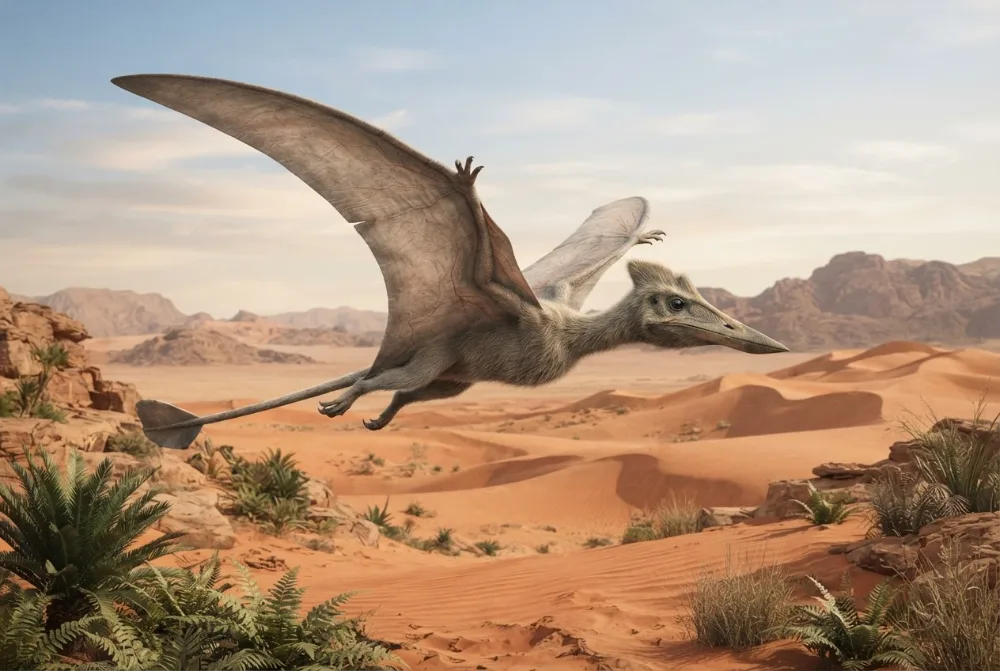
Caelestiventus was a flying reptile that lived in a hot desert during the Late Triassic, about 205 million years ago. It was one of the biggest pterosaurs of its time, with a wingspan over 1.5 meters (5 feet). Unlike most early pterosaurs, which are found in marine rocks, this one lived among sand dunes.21
Кога живеел?
Колку бил голем?
Колку широки му биле крилјата?
 долг колку 3 домашни мачки од нос до опашка⚽можел да прелета цело фудбалско игралиште за 7,3 секунди
Колку бил голем Caelestiventus во споредба со ТЕБЕ?
Само математика во твојот прелистувач. Ништо не се зачувува и не се праќа никаде.
Колку бил брз?


Забавни факти
Caelestiventus is the only known desert-dwelling non-pterodactyloid pterosaur, and it is 65 million years older than any other desert pterosaur.21
Its skull was 17.8 centimeters (7 inches) long, and most of the skull bones were preserved in three dimensions, not squashed flat like most Triassic pterosaur fossils.1
The lower jaw of Caelestiventus was hollow and air-filled, with large openings that may have helped reduce weight for flight.1
It had three different kinds of teeth: long fang-like spikes at the front, large leaf-shaped blades, and tiny blades further back.1
The only known fossil includes most of the skull and the last finger bone of the wing, which supported the wingtip.1
Caelestiventus is closely related to Dimorphodon, a pterosaur from the Early Jurassic of Britain.21
The quarry where it was found also contained bones of crocodile-like reptiles, lizards, and small meat-eating dinosaurs.1
Најчесто поставувани прашања за Caelestiventus
?Was Caelestiventus a dinosaur?
No, Caelestiventus was a pterosaur, a flying reptile, not a dinosaur.13
?How big was Caelestiventus?
It had a wingspan of at least 1.5 meters (4.9 feet) and a skull 17.8 centimeters (7 inches) long. It was one of the largest Triassic pterosaurs, and the only known specimen was not fully grown.1
?What did Caelestiventus eat?
Scientists are not sure, but its three kinds of teeth (fang-like spikes, leaf-shaped blades, and tiny blades) suggest it ate different foods, possibly insects or small animals.1
?Did Caelestiventus have feathers?
No, it did not have feathers. Like most pterosaurs, it was covered in small hair-like structures called pycnofibers.3
?When did Caelestiventus live?
It lived during the Late Triassic Period, about 205 million years ago.1
?Where was Caelestiventus found?
It was discovered in the Saints & Sinners Quarry in northeastern Utah, USA, in fossilized sand dunes.1
За експерти за диносауруси
- Научно име
- Caelestiventus
- Именуван од
- Britt et al. 20184
- Група
- Летечки рептили
- Фамилија / клада
- Dimorphodontidae4
- Класификација
- Pterosauria4
- Старост на карпите
- од 237 до 175 милиони години (Carnian / Toarcian)4
- Карпести формации
- Nugget Sandstone4
- Земји
- САД4
- Пронајдени фосили
- 1 во The Paleobiology Database4
- Откритие
- The fossil was discovered in 2007 by Dan Chure and George Engelmann in the Nugget Sandstone of Utah. It was named in 2018 by Britt and colleagues, honoring Robin Hansen, a geologist who helped with the excavation.14
- Сè уште се дебатира
- Scientists are not sure if the hollow spaces in its skull and jaw were used for storing food, for making sounds, or for display.1
Од каде доаѓаат фактите
- Caelestiventus (en.wikipedia.org)
- Caelestiventus hanseni gen. et sp. nov. extends the desert-dwelling pterosaur record back 65 million years | Nature Ecology & Evolution (nature.com)
- Caelestiventus hanseni - BYU Geology (geology.byu.edu)
- Caelestiventus in The Paleobiology Database (CC BY 4.0): возраст, места, карпести формации, класификација.
Секој факт на оваа страница има број што покажува кон неговиот извор. Ако згрешивме нешто, извини, ние сме љубители на диносауруси, не научно списание. Кажи ни на [email protected] и ќе го поправиме.
 Рекс е гладен! Dino Wiki е проект на еден тато за неговиот син што ги обожава диносаурусите, бесплатен, без реклами и без следење. Возрасните можат да му дадат грицка на Рекс за да помогнат сајтот да остане онлајн.Нахрани го Рекс
 Pteranodon
 Quetzalcoatlus
 Dorygnathus
 Rhamphorhynchus
 Anhanguera
 Pterodactylus
 Nothosaurus
 Massospondylus
 Plateosaurus
 Coelophysis
 Podokesaurus
 Simosaurus