 Квиз: Кој диносаурус си ти?
 Битка на диносаурусите
 Трка на диносаурусите
 Мини игри со диносауруси
 Албум со налепници
 ТОП листи на диносауруси
 Изненади ме!
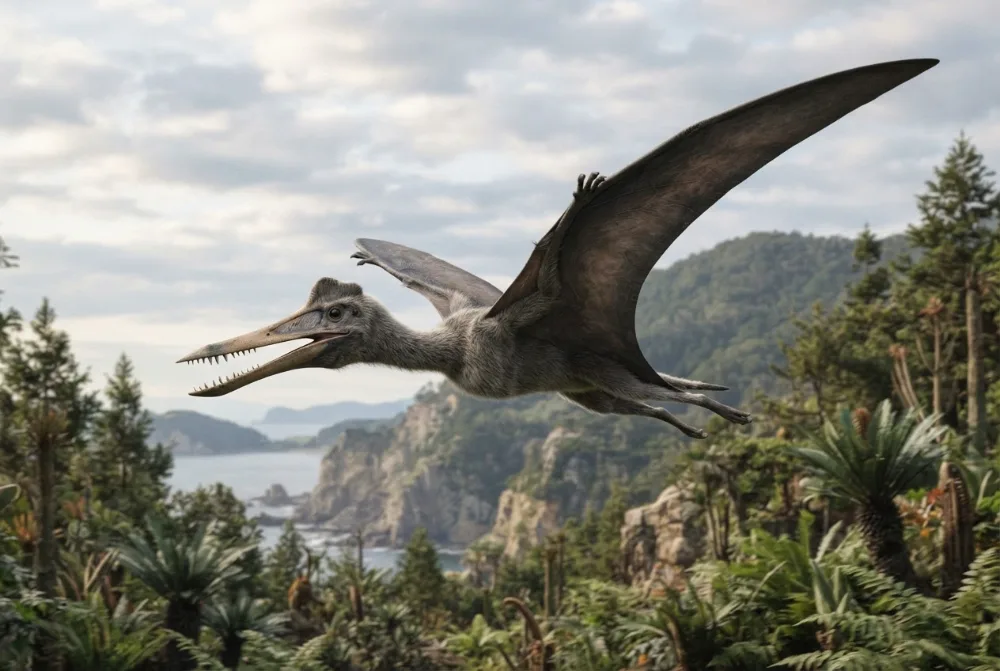
Dsungaripterus
Dsungaripterus was a flying reptile with long, narrow, upturned jaws that worked like tweezers. It used its toothless beak tip to poke into cracks and grab hard-shelled prey, then crushed them with flat, knobbly teeth at the back of its mouth.12
Кога живеел?
Колку бил голем?
Колку широки му биле крилјата?
 крилја широки колку 2 велосипеди во ред⚽можел да прелета цело фудбалско игралиште за 6,4 секунди
Колку бил голем Dsungaripterus во споредба со ТЕБЕ?
Само математика во твојот прелистувач. Ништо не се зачувува и не се праќа никаде.
Колку бил брз?


Забавни факти
Dsungaripterus had a skull over 46 centimeters (18 inches) long, and its head and neck together were almost 1 meter (3.3 feet) long.1
Its jaws curved upward at the tip, and the front part had no teeth, probably covered by a horny sheath.2
It had bulbous, flat teeth at the back of its jaws, perfect for crushing the armor of shellfish.1
The bones of Dsungaripterus were thick-walled and sturdy, suggesting it spent a lot of time walking on the ground.1
It likely landed abruptly and flapped a lot, rather than soaring for long distances.1
Dsungaripterus had a low bony crest on top of its skull, running from the base of the skull to halfway to the beak.1
Fossils show grooves on the jaws that might have held a horny covering, protecting the beak while it probed for food.2
Најчесто поставувани прашања за Dsungaripterus
?How big was Dsungaripterus?
Dsungaripterus had a wingspan of 3 to 3.5 metres (9.8 to 11.5 feet). Its skull was over 46 centimetres (18 inches) long, and its head and neck together were almost 1 metre (3.3 feet) long.1
?What did Dsungaripterus eat?
It ate hard-shelled prey like shellfish. It used its toothless, upturned beak tip to poke into cracks and grab food, then crushed shells with its flat, knobbly back teeth.12
?Was Dsungaripterus a dinosaur?
No, Dsungaripterus was a pterosaur, a flying reptile, not a dinosaur. Pterosaurs were the first vertebrates to evolve powered flight.3
?Why did Dsungaripterus have an upturned beak?
The upturned, toothless beak tip was probably used to probe and remove prey from cracks in rocks or sandy, muddy environments. It may have been covered by a horny sheath for protection.12
?Could Dsungaripterus walk on the ground?
Yes, its thick-walled, sturdy bones suggest it was mostly terrestrial and spent a lot of time walking on the ground. Pterosaurs could walk on all four limbs.13
?When did Dsungaripterus live?
Dsungaripterus lived during the Early Cretaceous period, about 145 to 100 million years ago. Its fossils were found in China and possibly South Korea.1
Рушител на митови
Мит: Dsungaripterus is often called a dinosaur.
Вистина: It was actually a pterosaur, a flying reptile that lived alongside dinosaurs but is not a dinosaur.1
За експерти за диносауруси
- Научно име
- Dsungaripterus
- Именуван од
- Young 19644
- Група
- Летечки рептили
- Фамилија / клада
- Dsungaripteridae4
- Класификација
- Pterosauria > Pterodactyloidea4
- Старост на карпите
- од 137 до 121 милиони години (Valanginian / Barremian)4
- Карпести формации
- Lianmuqin, Tsagaantsav, Hutubihe4
- Земји
- Кина, Монголија4
- Пронајдени фосили
- 4 во The Paleobiology Database4
- Откритие
- Dsungaripterus was named by Yang Zhongjian in 1964, based on a partial skull and skeleton from the Lianmuqin Formation in China. The species name weii honors paleontologist C.M. Wei.1
- Сè уште се дебатира
- Scientists are still debating whether Dsungaripterus and Noripterus lived in the same place at the same time, or in different layers.2
Од каде доаѓаат фактите
- Dsungaripterus (en.wikipedia.org)
- New anatomical information on Dsungaripterus weii Young, 1964 with focus on the palatal region (pmc.ncbi.nlm.nih.gov)
- Pterosaurs: The truth about these ‘flying dinosaurs’ | Natural History Museum (nhm.ac.uk)
- Dsungaripterus in The Paleobiology Database (CC BY 4.0): возраст, места, карпести формации, класификација.
Секој факт на оваа страница има број што покажува кон неговиот извор. Ако згрешивме нешто, извини, ние сме љубители на диносауруси, не научно списание. Кажи ни на [email protected] и ќе го поправиме.
 Рекс е гладен! Dino Wiki е проект на еден тато за неговиот син што ги обожава диносаурусите, бесплатен, без реклами и без следење. Возрасните можат да му дадат грицка на Рекс за да помогнат сајтот да остане онлајн.Нахрани го Рекс
 Pteranodon
 Quetzalcoatlus
 Dorygnathus
 Rhamphorhynchus
 Anhanguera
 Pterodactylus
 Stegosaurus
 Iguanodon
 Archaeopteryx
 Giganotosaurus
 Microraptor
 Deinonychus