 Квиз: Кој диносаурус си ти?
 Битка на диносаурусите
 Трка на диносаурусите
 Мини игри со диносауруси
 Албум со налепници
 ТОП листи на диносауруси
 Изненади ме!
Haliskia
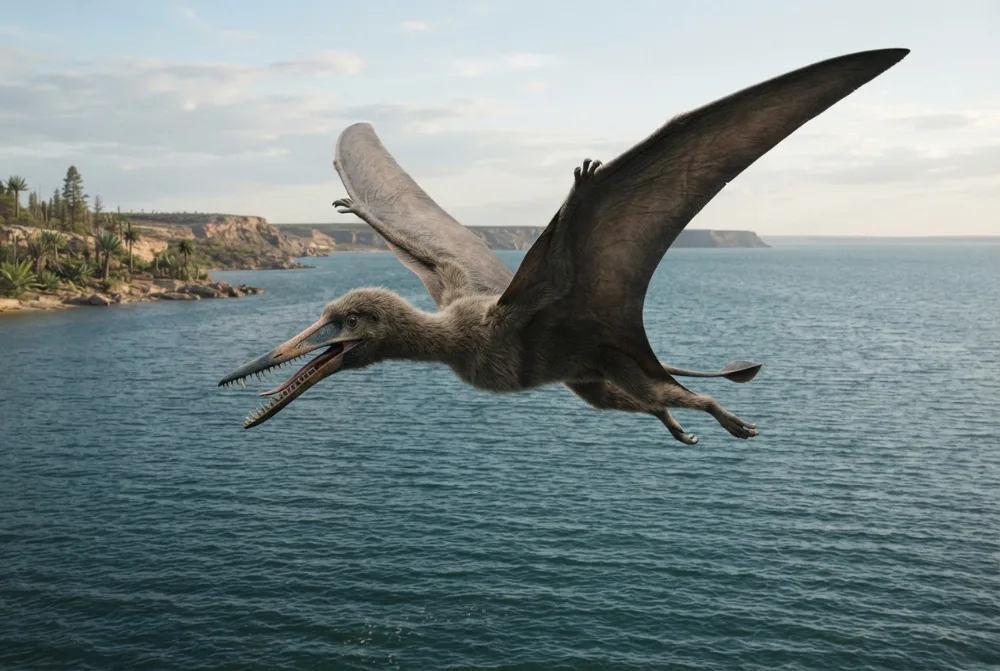
Haliskia was a flying reptile that soared over an ancient inland sea in Australia 100 million years ago. With a wingspan as wide as a car, it used its long, muscular tongue and curved teeth to catch slippery fish and squid. It is the most complete pterosaur skeleton ever found in Australia.12
Кога живеел?
Колку бил голем?
Колку широки му биле крилјата?
 крилја широки колку 2,5 велосипеди во ред⚽можел да прелета цело фудбалско игралиште за 5,7 секунди
Колку бил голем Haliskia во споредба со ТЕБЕ?
Само математика во твојот прелистувач. Ништо не се зачувува и не се праќа никаде.
Колку бил брз?


Забавни факти
Haliskia is 22% complete, more than twice as complete as any other partial pterosaur skeleton from Australia.2
Its hyoid bone (the tongue bone) is 70% as long as its lower jaw, the highest ratio of any pterosaur known. This means Haliskia had a very strong, muscular tongue.1
The fossil was found in 2021 by Kevin Petersen, a museum curator, at a site called Dig Site 3 near Richmond, Queensland.12
Haliskia lived during the Albian age, about 106 to 100 million years ago, when much of Queensland was covered by a shallow inland sea.31
Its teeth are curved and interlock when the mouth closes, forming a trap that stopped fish from wriggling out.1
Haliskia belongs to a group called Anhangueria, which were pterosaurs with crests on their snouts and teeth that stuck out sideways.1
Најчесто поставувани прашања за Haliskia
?How big was Haliskia?
About 4.6 metres (15 feet) across the wings, which is about as wide as a small car.12
?What did Haliskia eat?
It ate fish and soft-bodied animals like squid (cephalopods). Its curved, interlocking teeth formed a trap to stop slippery prey from escaping.12
?Is Haliskia a dinosaur?
No, it is a pterosaur, which is a flying reptile that lived at the same time as dinosaurs but is not a dinosaur.2
За експерти за диносауруси
- Научно име
- Haliskia
- Именуван од
- Pentland et al. 20244
- Група
- Летечки рептили
- Фамилија / клада
- Anhangueridae4
- Класификација
- Pterosauria > Pterodactyloidea4
- Старост на карпите
- од 106 до 100 милиони години (Albian)4
- Карпести формации
- Toolebuc4
- Земји
- Австралија4
- Пронајдени фосили
- 1 во The Paleobiology Database4
- Откритие
- Haliskia was discovered by Kevin Petersen, curator of Kronosaurus Korner museum, in November 2021 at a site in Queensland, Australia. It was named and described by Adele Pentland and colleagues in 2024.12
- Сè уште се дебатира
- Scientists are not sure whether Haliskia ate only fish or also soft-bodied animals like squid. Its teeth have few wear marks, which could mean it ate soft prey, but its 'fish grab' teeth suggest it caught fish too.1
Од каде доаѓаат фактите
- Haliskia peterseni, a new anhanguerian pterosaur from the late Early Cretaceous of Australia | Scientific Reports (nature.com)
- No bones about it: 100-million-year-old bones reveal new species of pterosaur | Curtin University (curtin.edu.au)
- PBDB Taxon (paleobiodb.org)
- Haliskia in The Paleobiology Database (CC BY 4.0): возраст, места, карпести формации, класификација.
Секој факт на оваа страница има број што покажува кон неговиот извор. Ако згрешивме нешто, извини, ние сме љубители на диносауруси, не научно списание. Кажи ни на [email protected] и ќе го поправиме.
 Рекс е гладен! Dino Wiki е проект на еден тато за неговиот син што ги обожава диносаурусите, бесплатен, без реклами и без следење. Возрасните можат да му дадат грицка на Рекс за да помогнат сајтот да остане онлајн.Нахрани го Рекс
 Pteranodon
 Quetzalcoatlus
 Dorygnathus
 Rhamphorhynchus
 Anhanguera
 Pterodactylus
 Stegosaurus
 Iguanodon
 Archaeopteryx
 Giganotosaurus
 Microraptor
 Deinonychus