 Квиз: Кој диносаурус си ти?
 Битка на диносаурусите
 Трка на диносаурусите
 Мини игри со диносауруси
 Албум со налепници
 ТОП листи на диносауруси
 Изненади ме!
Zalmoxes
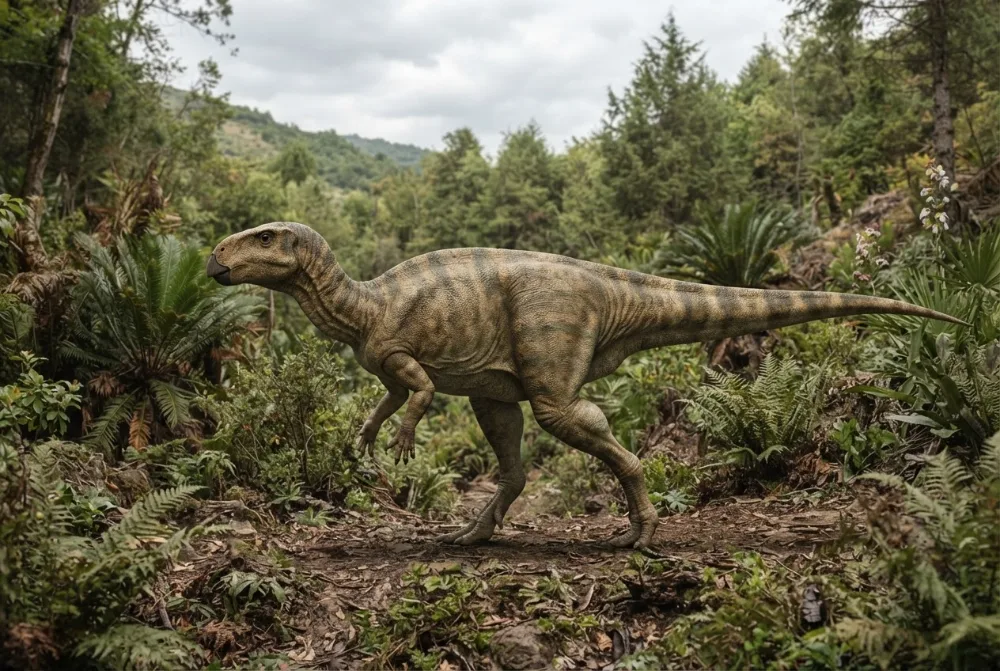
Zalmoxes was a small, plant-eating dinosaur that lived on an island called Hateg, in what is now Romania. It walked on two legs, had a beak, and ate tough plants. It was about the size of a small car, but some were even smaller!1
Кога живеел?
Колку бил голем?
Колку бил долг?
Колку бил висок?
проценка
Колку бил тежок?
 долг колку 3 кучиња од нос до опашка🍌долг колку 16 банани наредени еден до друг
 тежок колку 11 домашни мачки🍉тежок колку 9 лубеници🧸тежок колку 2,5 деца од градинка🎒тежок колку 1,5 ученици🏃можел да истрча 100 метри за 8,2 секунди (на најбрзиот човек му требаат 9,6)
Колку бил голем Zalmoxes во споредба со ТЕБЕ?
Само математика во твојот прелистувач. Ништо не се зачувува и не се праќа никаде.
Колку бил брз?


Забавни факти
Zalmoxes had a slow growth rate and a long growth period, which is different from many other dinosaurs.1
It lived on an island, and scientists think it might have been smaller than its relatives because of island dwarfism, though some think it was already small.1
Zalmoxes had a large triangular head and a beak, which helped it eat tough plants.1
Fossils of Zalmoxes have been found in Austria and France too, not just Romania.4
One species of Zalmoxes, called Z. shqiperorum, was later reclassified as a different type of dinosaur, a ceratopsian, not an ornithopod.1
Zalmoxes was one of the most common vertebrates in Transylvania during the latest Cretaceous period.1
Најчесто поставувани прашања за Zalmoxes
?How big was Zalmoxes?
Zalmoxes was small, with adults of Z. robustus reaching about 2.5 metres (8.2 feet) long and weighing about 45 kilograms (99 pounds). An unnamed species grew to about 2.9 metres (9.5 feet) long.1
?What did Zalmoxes eat?
Zalmoxes ate tough, fibrous plants like soft shoots, horsetails, angiosperms, pteridophytes, and ferns. It had a beak and could process C3 plants.1
?When did Zalmoxes live?
Zalmoxes lived during the Maastrichtian age of the Late Cretaceous, about 70 to 66 million years ago. It was one of the most common vertebrates in Transylvania at that time.13
?Where was Zalmoxes found?
Fossils of Zalmoxes have been found in Romania, specifically in the Hateg Basin of Transylvania. Some sources also mention finds in Austria and France, but the main site is Romania.13
?Was Zalmoxes a dinosaur?
Yes, Zalmoxes was a dinosaur, specifically a small ornithopod. It is classified as a probable rhabdodontid ornithopod, not a ceratopsian, though one species was later reclassified.13
?Why was Zalmoxes small?
Scientists once thought Zalmoxes was small due to island dwarfism, but later studies suggest it was already close to the size of its ancestors. Some related species were larger or smaller due to island effects.1
Рушител на митови
Мит: Some people think Zalmoxes was a dwarf dinosaur because it lived on an island.
Вистина: Scientists now think Zalmoxes was already small, and its larger relative Rhabdodon had island gigantism, while a smaller relative Mochlodon had island dwarfism.1
За експерти за диносауруси
- Научно име
- Zalmoxes
- Именуван од
- Weishampel et al. 20034
- Група
- Тревојади со клун
- Фамилија / клада
- Rhabdodontoidea4
- Класификација
- Ornithischia > Ornithopoda > Iguanodontia4
- Старост на карпите
- од 84 до 66 милиони години (Campanian / Maastrichtian)4
- Карпести формации
- Sebeş, Sînpetru, Densuș-Ciula4
- Земји
- Романија, Австрија, Франција4
- Пронајдени фосили
- 44 во The Paleobiology Database4
- Познат и како
- Onychosaurus (постарите имиња сега се бројат како истото животно)4
- Откритие
- The first fossils were named Mochlodon robustus by Baron Franz Nopcsa in 1899. In 2003, scientists renamed them Zalmoxes robustus after studying new remains.12
- Сè уште се дебатира
- Scientists still debate whether Zalmoxes was a dwarf species or just naturally small, and how it is related to other similar dinosaurs.1
Од каде доаѓаат фактите
- Zalmoxes (en.wikipedia.org)
- Osteology and phylogeny of Zalmoxes (n. g.), an unusual Euornithopod dinosaur from the latest Cretaceous of Romania (tandfonline.com)
- Zalmoxes | Natural History Museum (nhm.ac.uk)
- Zalmoxes in The Paleobiology Database (CC BY 4.0): возраст, места, карпести формации, класификација.
Секој факт на оваа страница има број што покажува кон неговиот извор. Ако згрешивме нешто, извини, ние сме љубители на диносауруси, не научно списание. Кажи ни на [email protected] и ќе го поправиме.
 Рекс е гладен! Dino Wiki е проект на еден тато за неговиот син што ги обожава диносаурусите, бесплатен, без реклами и без следење. Возрасните можат да му дадат грицка на Рекс за да помогнат сајтот да остане онлајн.Нахрани го Рекс
 Iguanodon
 Tenontosaurus
 Thescelosaurus
 Camptosaurus
 Rhabdodon
 Nanosaurus
 Tyrannosaurus
 Triceratops
 Velociraptor
 Spinosaurus
 Ankylosaurus
 Parasaurolophus