 നീ ഏതു ദിനോയാണ്? ക്വിസ്
 ദിനോ പോരാട്ടം
 ദിനോ ഓട്ടമത്സരം
 ദിനോ മിനി ഗെയിമുകൾ
 സ്റ്റിക്കർ ആൽബം
 ദിനോ TOP ലിസ്റ്റുകൾ
 എന്നെ അത്ഭുതപ്പെടുത്തൂ!
അത് എപ്പോഴാണ് ജീവിച്ചിരുന്നത്?

അത് എത്ര വലുതായിരുന്നു?
അതിന് എത്ര നീളമുണ്ടായിരുന്നു?
അതിന് എത്ര ഉയരമുണ്ടായിരുന്നു?
ഏകദേശ കണക്ക്
അതിന് എത്ര ഭാരമുണ്ടായിരുന്നു?
 മൂക്കു മുതൽ വാൽ വരെ നിരന്നുനിൽക്കുന്ന 2 വീട്ടുപൂച്ചകളുടെ നീളം🍌നിരയായി വെച്ച 6 വാഴപ്പഴങ്ങളുടെ നീളംഏകദേശം ഒരു വീട്ടുപൂച്ചയുടെ ഭാരം🍌42 വാഴപ്പഴങ്ങളുടെ ഭാരം🏊ഒരു വലിയ നീന്തൽക്കുളത്തിന്റെ നീളം (50 മീ.) 16 സെക്കൻഡിൽ നീന്തും
Baptornis നിന്നെ അപേക്ഷിച്ച് എത്ര വലുതായിരുന്നു?
നിന്റെ ബ്രൗസറിൽ വെറും കണക്കുകൂട്ടൽ മാത്രം. ഒന്നും സേവ് ചെയ്യുന്നില്ല, എവിടേക്കും അയയ്ക്കുന്നുമില്ല.
അത് എത്ര വേഗത്തിൽ ഓടുമായിരുന്നു?


രസകരമായ വസ്തുതകൾ
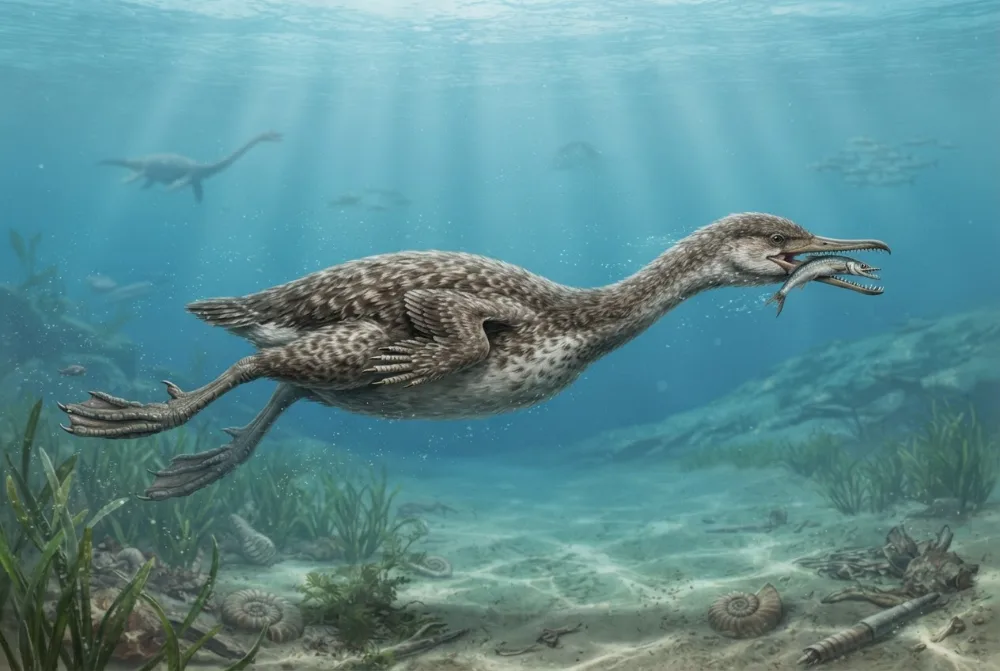
Baptornis had teeth in its beak, which is rare for birds. Most modern birds have no teeth.1
It was a strong swimmer and diver, but on land it was clumsy. It probably pushed itself along on its belly or did small hops.1
Fossils of young Baptornis have been found in Canada and Alaska, suggesting these birds migrated north to breed in summer, like some penguins do today.1
Baptornis lived about 87 to 80 million years ago, when a shallow sea covered much of central North America.1
One Baptornis fossil was found with tiny round coprolites (fossil poop) inside. The poop contained remains of a small sabre-toothed herring.1
Baptornis was one of the first Mesozoic birds discovered, along with Archaeopteryx. It was named by famous fossil hunter Othniel Charles Marsh in 1877.1
A second, much larger species of Baptornis was once named (Baptornis varneri), but later scientists moved it to a different genus called Brodavis.1
Baptornis: ഏറ്റവും കൂടുതൽ ചോദിച്ച ചോദ്യങ്ങൾ
?How big was Baptornis?
About the size of a loon, which is roughly 0.7 to 1 metre long. It was a medium-sized bird among its relatives.12
?Could Baptornis fly?
No, Baptornis was flightless. It was a strong swimmer and diver instead.1
?What did Baptornis eat?
It ate fish, especially small sabre-toothed herring called Enchodus. It caught them with its beak and swallowed them whole or in pieces.1
?Did Baptornis have teeth?
Yes, Baptornis had teeth in its beak, which is unusual for birds. Most modern birds have no teeth.1
ദിനോ വിദഗ്ധർക്ക്
- ശാസ്ത്രീയ നാമം
- Baptornis
- പേരിട്ടത്
- Marsh 18773
- ഗ്രൂപ്പ്
- ആദ്യകാല പക്ഷികൾ
- കുടുംബം / ക്ലേഡ്
- Baptornithidae3
- വർഗ്ഗീകരണം
- Theropoda > Avialae3
- പാറകളുടെ പ്രായം
- 90 മുതൽ 72 ദശലക്ഷം വർഷം വരെ (Coniacian / Campanian)3
- ശിലാസമൂഹങ്ങൾ
- Dinosaur Park, Niobrara, Judith River3
- രാജ്യങ്ങൾ
- കാനഡ, യുഎസ്എ, സ്വീഡൻ3
- ഫോസിൽ രേഖകൾ
- The Paleobiology Database-ൽ 103
- മറ്റു പേരുകൾ
- Parascaniornis (പഴയ പേരുകളും ഇപ്പോൾ ഇതേ ജീവിയായാണ് കണക്കാക്കുന്നത്)3
- കണ്ടെത്തൽ
- Othniel Charles Marsh discovered the first fossils of Baptornis in Kansas in the 1870s. He named it in 1877.1
- ഇപ്പോഴും തർക്കത്തിൽ
- Scientists are not sure if a fossil from Sweden called Parascaniornis stensioi is actually a second species of Baptornis or just the same species.1
വസ്തുതകൾ എവിടെനിന്ന്
- Baptornis (en.wikipedia.org)
- The Skeleton of Baptornis advenus (Aves: Hesperornithiformes) (exa.ai)
- Baptornis in The Paleobiology Database (CC BY 4.0): പ്രായം, സ്ഥലങ്ങൾ, ശിലാസമൂഹങ്ങൾ, വർഗ്ഗീകരണം.
ഈ പേജിലെ ഓരോ വസ്തുതയ്ക്കും ഒരു നമ്പറുണ്ട്, അത് അതിന്റെ ഉറവിടത്തിലേക്ക് ചൂണ്ടുന്നു. എന്തെങ്കിലും തെറ്റിപ്പോയെങ്കിൽ ക്ഷമിക്കണം, ഞങ്ങൾ ദിനോ ആരാധകരാണ്, ശാസ്ത്ര ജേണലല്ല. [email protected] എന്ന വിലാസത്തിൽ അറിയിക്കൂ, ഞങ്ങൾ ശരിയാക്കാം.
 റെക്സിന് വിശക്കുന്നു! ദിനോസറുകളെ ഇഷ്ടപ്പെടുന്ന മകനുവേണ്ടി ഒരു അച്ഛൻ ഉണ്ടാക്കിയതാണ് Dino Wiki, പരസ്യങ്ങളും ട്രാക്കറുകളുമില്ലാതെ തികച്ചും സൗജന്യം. ഇത് ഓൺലൈനിൽ നിലനിർത്താൻ മുതിർന്നവർക്ക് റെക്സിന് ഒരു സ്നാക്ക് കൊടുക്കാം.റെക്സിനെ ഊട്ടൂ
 Archaeopteryx
 Hesperornis
 Ichthyornis
 Jurapteryx
 Gobipteryx
 Martinavis
 Tyrannosaurus
 Triceratops
 Velociraptor
 Spinosaurus
 Ankylosaurus
 Parasaurolophus