 Чи ямар үлэг гүрвэл вэ? Тест
 Үлэг гүрвэлийн тулаан
 Үлэг гүрвэлийн уралдаан
 Үлэг гүрвэлийн мини тоглоомууд
 Наалтын цомог
 Үлэг гүрвэлийн ТОП жагсаалтууд
 Намайг гайхшруул!
Dsungaripterus
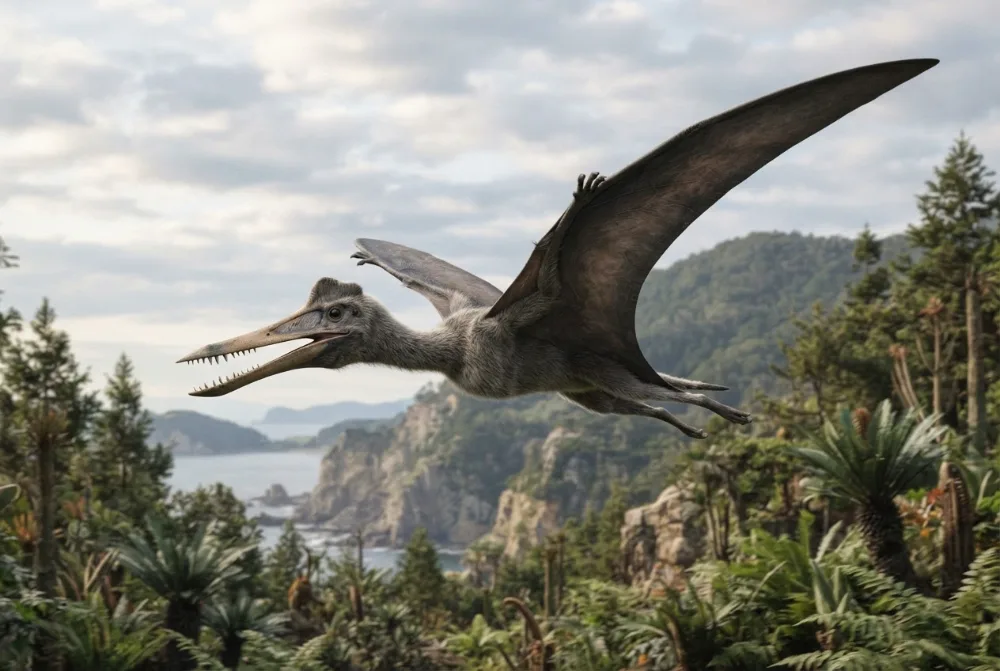
Dsungaripterus was a flying reptile with long, narrow, upturned jaws that worked like tweezers. It used its toothless beak tip to poke into cracks and grab hard-shelled prey, then crushed them with flat, knobbly teeth at the back of its mouth.12
Хэзээ амьдарч байсан бэ?
Хэр том байсан бэ?
Далавч нь хэр өргөн байсан бэ?
 далавч нь эгнүүлсэн 2 дугуйтай тэнцэх өргөн⚽бүтэн хөлбөмбөгийн талбайг 6,4 секундэд нисэн гатлах чадалтай
Dsungaripterus ЧАМТАЙ харьцуулахад хэр том байсан бэ?
Зүгээр л хөтөч доторх тооцоо. Юу ч хадгалагдахгүй, хаашаа ч илгээгдэхгүй.
Хэр хурдан байсан бэ?


Сонирхолтой баримтууд
Dsungaripterus had a skull over 46 centimeters (18 inches) long, and its head and neck together were almost 1 meter (3.3 feet) long.1
Its jaws curved upward at the tip, and the front part had no teeth, probably covered by a horny sheath.2
It had bulbous, flat teeth at the back of its jaws, perfect for crushing the armor of shellfish.1
The bones of Dsungaripterus were thick-walled and sturdy, suggesting it spent a lot of time walking on the ground.1
It likely landed abruptly and flapped a lot, rather than soaring for long distances.1
Dsungaripterus had a low bony crest on top of its skull, running from the base of the skull to halfway to the beak.1
Fossils show grooves on the jaws that might have held a horny covering, protecting the beak while it probed for food.2
Dsungaripterus: хамгийн их асуудаг асуултууд
?How big was Dsungaripterus?
Dsungaripterus had a wingspan of 3 to 3.5 metres (9.8 to 11.5 feet). Its skull was over 46 centimetres (18 inches) long, and its head and neck together were almost 1 metre (3.3 feet) long.1
?What did Dsungaripterus eat?
It ate hard-shelled prey like shellfish. It used its toothless, upturned beak tip to poke into cracks and grab food, then crushed shells with its flat, knobbly back teeth.12
?Was Dsungaripterus a dinosaur?
No, Dsungaripterus was a pterosaur, a flying reptile, not a dinosaur. Pterosaurs were the first vertebrates to evolve powered flight.3
?Why did Dsungaripterus have an upturned beak?
The upturned, toothless beak tip was probably used to probe and remove prey from cracks in rocks or sandy, muddy environments. It may have been covered by a horny sheath for protection.12
?Could Dsungaripterus walk on the ground?
Yes, its thick-walled, sturdy bones suggest it was mostly terrestrial and spent a lot of time walking on the ground. Pterosaurs could walk on all four limbs.13
?When did Dsungaripterus live?
Dsungaripterus lived during the Early Cretaceous period, about 145 to 100 million years ago. Its fossils were found in China and possibly South Korea.1
Домог няцаагч
Домог: Dsungaripterus is often called a dinosaur.
Үнэн: It was actually a pterosaur, a flying reptile that lived alongside dinosaurs but is not a dinosaur.1
Үлэг гүрвэлийн мэргэжилтнүүдэд
- Шинжлэх ухааны нэр
- Dsungaripterus
- Нэр өгсөн
- Young 19644
- Бүлэг
- Нисдэг мөлхөгчид
- Овог / клад
- Dsungaripteridae4
- Ангилал
- Pterosauria > Pterodactyloidea4
- Чулуулгийн нас
- 137 / 121 сая жил (Valanginian / Barremian)4
- Чулуулгийн формацууд
- Lianmuqin, Tsagaantsav, Hutubihe4
- Улсууд
- Хятад, Монгол4
- Чулуужсан олдворын бүртгэл
- The Paleobiology Database дээр 44
- Нээлт
- Dsungaripterus was named by Yang Zhongjian in 1964, based on a partial skull and skeleton from the Lianmuqin Formation in China. The species name weii honors paleontologist C.M. Wei.1
- Маргаантай хэвээр
- Scientists are still debating whether Dsungaripterus and Noripterus lived in the same place at the same time, or in different layers.2
Баримтууд хаанаас ирдэг вэ
- Dsungaripterus (en.wikipedia.org)
- New anatomical information on Dsungaripterus weii Young, 1964 with focus on the palatal region (pmc.ncbi.nlm.nih.gov)
- Pterosaurs: The truth about these ‘flying dinosaurs’ | Natural History Museum (nhm.ac.uk)
- Dsungaripterus in The Paleobiology Database (CC BY 4.0): нас, газар, чулуулгийн формац, ангилал.
Энэ хуудсан дээрх баримт бүр эх сурвалж руугаа заасан дугаартай. Хэрэв бид ямар нэг зүйл буруу бичсэн бол уучлаарай, бид шинжлэх ухааны сэтгүүл биш, зүгээр л үлэг гүрвэлд дурлагчид. [email protected] хаягаар бидэнд бичээрэй, бид засна.
 Рекс өлсөж байна! Dino Wiki бол үлэг гүрвэлд дурлагч хүүдээ зориулж нэгэн аавын хийсэн төсөл бөгөөд үнэгүй, зар сурталчилгаагүй, хянагчгүй. Сайтыг цааш ажиллуулахад туслахын тулд томчууд Рексийг амттангаар хооллож болно.Рексийг хооллох
 Pteranodon
 Quetzalcoatlus
 Dorygnathus
 Rhamphorhynchus
 Anhanguera
 Pterodactylus
 Stegosaurus
 Iguanodon
 Archaeopteryx
 Giganotosaurus
 Microraptor
 Deinonychus