 Чи ямар үлэг гүрвэл вэ? Тест
 Үлэг гүрвэлийн тулаан
 Үлэг гүрвэлийн уралдаан
 Үлэг гүрвэлийн мини тоглоомууд
 Наалтын цомог
 Үлэг гүрвэлийн ТОП жагсаалтууд
 Намайг гайхшруул!
Gonkoken
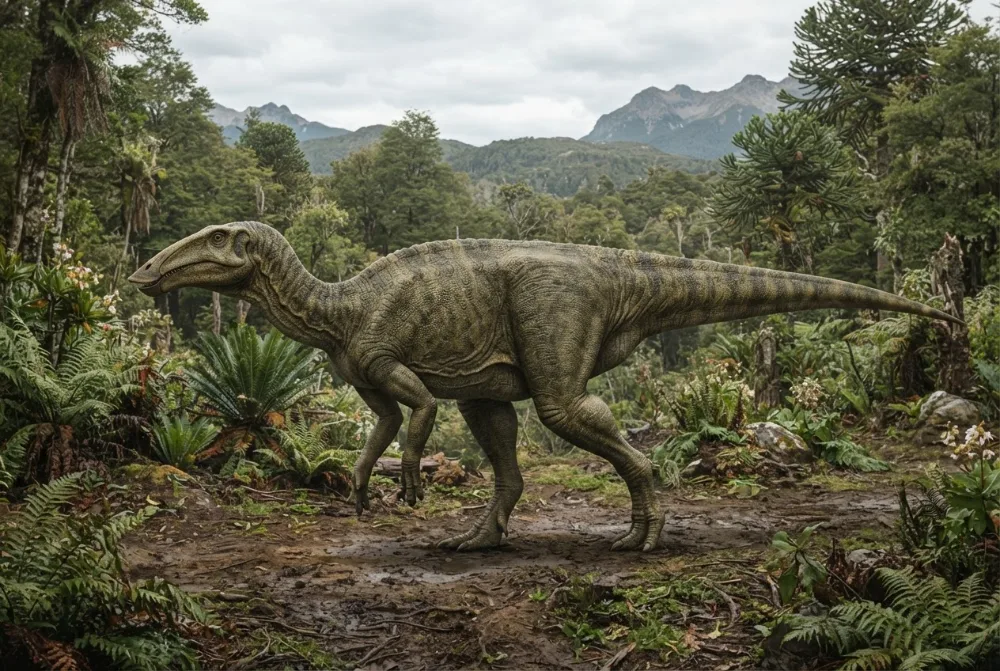
Gonkoken was a small duck-billed dinosaur that lived in what is now southern Chile, near Antarctica. It was about as long as a car and used its hundreds of teeth to chew tough plants. This dinosaur is special because it is not a true hadrosaurid, but a more ancient cousin that survived until the very end of the dinosaur age.24
Хэзээ амьдарч байсан бэ?
Хэр том байсан бэ?
Хэр урт байсан бэ?
Хэр өндөр байсан бэ?
тооцоолол
Хэр хүнд байсан бэ?
 4 нохойг хамраас сүүлээр нь цувуулсантай тэнцэх урттай🍌22 бананыг дараалан тавьсантай тэнцэх урттай🍉200 тарвастай тэнцэх жинтэй🧸53 цэцэрлэгийн хүүхэдтэй тэнцэх жинтэй🎒31 сургуулийн хүүхэдтэй тэнцэх жинтэй🐻❄️2 цагаан баавгайтай тэнцэх жинтэй🏃100 метрийг 11 секундэд гүйх чадалтай (хамгийн хурдан хүн 9.6 секунд гүйдэг)
Gonkoken ЧАМТАЙ харьцуулахад хэр том байсан бэ?
Зүгээр л хөтөч доторх тооцоо. Юу ч хадгалагдахгүй, хаашаа ч илгээгдэхгүй.
Хэр хурдан байсан бэ?


Сонирхолтой баримтууд
Gonkoken is a 'transitional' duckbill, meaning it is closely related to true hadrosaurids but not one itself. Its ancestors came from North America and arrived in South America earlier than the more advanced duckbills.2
The name Gonkoken comes from the Aónik’enk language, spoken by the indigenous people of the region. 'Gon' means 'similar to' and 'koken' means 'wild duck or swan'.21
Fossils of Gonkoken were found in a bonebed containing at least three individuals. The site is still being excavated and may hold many more bones.2
Gonkoken lived about 71.7 to 70.5 million years ago, during the early Maastrichtian stage of the Late Cretaceous. This was just a few million years before the asteroid impact that ended the age of dinosaurs.2
Unlike true hadrosaurids, Gonkoken had fewer than 30 tooth positions in its lower jaw, and its tooth rows did not extend beyond the coronoid process.2
Gonkoken is the first duck-billed dinosaur described from a subantarctic region. Its discovery suggests that some alleged hadrosaurid fossils from Antarctica might actually belong to non-hadrosaurid duckbills like Gonkoken.2
Gonkoken: хамгийн их асуудаг асуултууд
?How big was Gonkoken?
Gonkoken was a small duck-billed dinosaur, about 4 metres (13 feet) long. That is roughly the length of a small car.12
?When did Gonkoken live?
Gonkoken lived about 71.7 to 70.5 million years ago, during the early Maastrichtian stage of the Late Cretaceous. That was just a few million years before the asteroid hit.12
Домог няцаагч
Домог: All duck-billed dinosaurs are hadrosaurids (true duckbills).
Үнэн: Gonkoken is a duck-billed dinosaur but not a hadrosaurid. It belongs to a more ancient lineage that survived alongside true duckbills in the far south.2
Үлэг гүрвэлийн мэргэжилтнүүдэд
- Шинжлэх ухааны нэр
- Gonkoken
- Нэр өгсөн
- Alarcón-Muñoz et al. 20234
- Бүлэг
- Хушуутай өвсөн тэжээлтнүүд
- Овог / клад
- Hadrosauroidea4
- Ангилал
- Ornithischia > Ornithopoda > Iguanodontia4
- Чулуулгийн нас
- 72 / 66 сая жил (Maastrichtian)4
- Чулуулгийн формацууд
- Dorotea4
- Улсууд
- Чили4
- Чулуужсан олдворын бүртгэл
- The Paleobiology Database дээр 14
- Нээлт
- Gonkoken was named in 2023 by Alarcón-Muñoz and colleagues. The first bones were found by Mario 'Nano' Ulloa in the Río de las Chinas Valley, and excavations began in 2013, uncovering many disarticulated remains.24
- Маргаантай хэвээр
- Scientists debate whether all alleged hadrosaurid fossils from Antarctica and subantarctic regions actually belong to non-hadrosaurid duckbills like Gonkoken, rather than true hadrosaurids.2
Баримтууд хаанаас ирдэг вэ
- Gonkoken (en.wikipedia.org)
- Relict duck-billed dinosaurs survived into the last age of the dinosaurs in subantarctic Chile (science.org)
- Scientists discover duck-billed dinosaur roamed Chile 72 million years ago | Reuters (reuters.com)
- Gonkoken in The Paleobiology Database (CC BY 4.0): нас, газар, чулуулгийн формац, ангилал.
Энэ хуудсан дээрх баримт бүр эх сурвалж руугаа заасан дугаартай. Хэрэв бид ямар нэг зүйл буруу бичсэн бол уучлаарай, бид шинжлэх ухааны сэтгүүл биш, зүгээр л үлэг гүрвэлд дурлагчид. [email protected] хаягаар бидэнд бичээрэй, бид засна.
 Рекс өлсөж байна! Dino Wiki бол үлэг гүрвэлд дурлагч хүүдээ зориулж нэгэн аавын хийсэн төсөл бөгөөд үнэгүй, зар сурталчилгаагүй, хянагчгүй. Сайтыг цааш ажиллуулахад туслахын тулд томчууд Рексийг амттангаар хооллож болно.Рексийг хооллох
 Iguanodon
 Tenontosaurus
 Thescelosaurus
 Zalmoxes
 Camptosaurus
 Rhabdodon
 Tyrannosaurus
 Triceratops
 Velociraptor
 Spinosaurus
 Ankylosaurus
 Parasaurolophus