 Чи ямар үлэг гүрвэл вэ? Тест
 Үлэг гүрвэлийн тулаан
 Үлэг гүрвэлийн уралдаан
 Үлэг гүрвэлийн мини тоглоомууд
 Наалтын цомог
 Үлэг гүрвэлийн ТОП жагсаалтууд
 Намайг гайхшруул!
Latenivenatrix
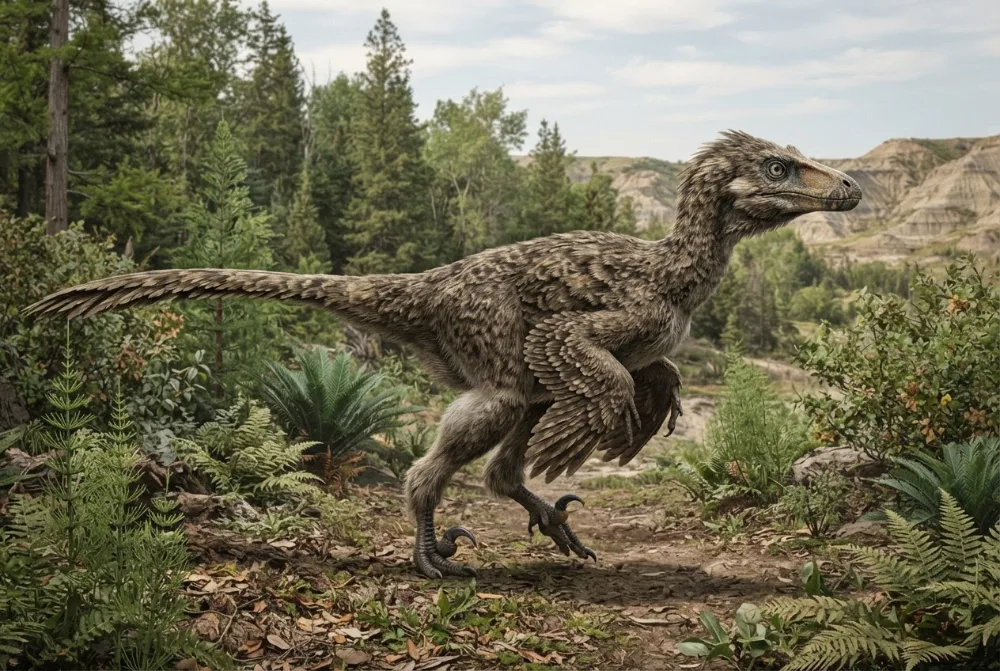
Latenivenatrix was a large, bird-like dinosaur that lived in what is now Canada. It was one of the biggest troodontids ever found, and it probably ate both plants and meat. Scientists are still debating whether it was really its own species or just a different name for another dinosaur called Stenonychosaurus.14
Хэзээ амьдарч байсан бэ?
Хэр том байсан бэ?
Хэр урт байсан бэ?
Хэр өндөр байсан бэ?
 4 нохойг хамраас сүүлээр нь цувуулсантай тэнцэх урттай🍌19 бананыг дараалан тавьсантай тэнцэх урттай🏃100 метрийг 7,1 секундэд гүйх чадалтай (хамгийн хурдан хүн 9.6 секунд гүйдэг)
Latenivenatrix ЧАМТАЙ харьцуулахад хэр том байсан бэ?
Зүгээр л хөтөч доторх тооцоо. Юу ч хадгалагдахгүй, хаашаа ч илгээгдэхгүй.
Хэр хурдан байсан бэ?


Сонирхолтой баримтууд
Latenivenatrix is the largest known troodontid, reaching up to 3.5 meters (11.5 feet) in length.1
Its name means 'hiding huntress' in Latin, because it was a stealthy predator.1
The first fossil of Latenivenatrix was found in 1968 by Irene Vanderloh in Alberta, Canada.1
Some scientists think Latenivenatrix might actually be the same species as Stenonychosaurus, not a separate dinosaur.1
Latenivenatrix had a special pelvis with a pubis bone that was tilted backward at a 17-degree angle.1
Latenivenatrix: хамгийн их асуудаг асуултууд
?How big was Latenivenatrix?
It was about 3 to 3.5 metres (9.8 to 11.5 ft) long, making it the largest known troodontid. Its skull was about 45 centimetres (18 in) long.1
?What did Latenivenatrix eat?
It was probably a semi-omnivore, meaning it ate both plants and meat. It was a bird-like dinosaur that likely hunted small prey and also ate plants.1
?Is Latenivenatrix a dinosaur?
Yes, it is a dinosaur. It belongs to a group of bird-like dinosaurs called troodontids.1
?When did Latenivenatrix live?
It lived about 75.5 million years ago during the Cretaceous Period. Its fossils were found in Alberta, Canada.1
?What does the name Latenivenatrix mean?
It means 'hiding huntress' in Latin, because it was a stealthy predator.3
?Could Latenivenatrix fly?
No, it could not fly. As a troodontid, it probably lost the ability to fly and was a biped that walked on two legs.1
Домог няцаагч
Домог: Latenivenatrix is definitely a unique dinosaur species.
Үнэн: Some scientists argue that Latenivenatrix is actually a junior synonym of Stenonychosaurus, meaning it may not be a separate species.1
Үлэг гүрвэлийн мэргэжилтнүүдэд
- Шинжлэх ухааны нэр
- Latenivenatrix
- Нэр өгсөн
- van der Reest and Currie 20174
- Бүлэг
- Рапторууд
- Овог / клад
- Troodontidae4
- Ангилал
- Theropoda > Troodontidae4
- Чулуулгийн нас
- 84 / 72 сая жил (Campanian)4
- Чулуулгийн формацууд
- Dinosaur Park4
- Улсууд
- Канад4
- Чулуужсан олдворын бүртгэл
- The Paleobiology Database дээр 44
- Нээлт
- Latenivenatrix was named in 2017 by paleontologists Aaron van der Reest and Philip Currie. The type specimen was originally collected in 1968 and had been assigned to other troodontids before being recognized as a new genus.14
- Маргаантай хэвээр
- Scientists still debate whether Latenivenatrix is a valid genus or just a synonym of Stenonychosaurus.1
Баримтууд хаанаас ирдэг вэ
- Latenivenatrix (en.wikipedia.org)
- Two New Cretaceous Dinosaur Species Discovered in Canada | Sci.News (sci.news)
- Paleo Profile: The Hiding Hunter | Scientific American (scientificamerican.com)
- Latenivenatrix in The Paleobiology Database (CC BY 4.0): нас, газар, чулуулгийн формац, ангилал.
Энэ хуудсан дээрх баримт бүр эх сурвалж руугаа заасан дугаартай. Хэрэв бид ямар нэг зүйл буруу бичсэн бол уучлаарай, бид шинжлэх ухааны сэтгүүл биш, зүгээр л үлэг гүрвэлд дурлагчид. [email protected] хаягаар бидэнд бичээрэй, бид засна.
 Рекс өлсөж байна! Dino Wiki бол үлэг гүрвэлд дурлагч хүүдээ зориулж нэгэн аавын хийсэн төсөл бөгөөд үнэгүй, зар сурталчилгаагүй, хянагчгүй. Сайтыг цааш ажиллуулахад туслахын тулд томчууд Рексийг амттангаар хооллож болно.Рексийг хооллох
 Velociraptor
 Microraptor
 Deinonychus
 Asiamericana
 Richardoestesia
 Saurornitholestes
 Tyrannosaurus
 Triceratops
 Spinosaurus
 Ankylosaurus
 Parasaurolophus
 Pteranodon