 Чи ямар үлэг гүрвэл вэ? Тест
 Үлэг гүрвэлийн тулаан
 Үлэг гүрвэлийн уралдаан
 Үлэг гүрвэлийн мини тоглоомууд
 Наалтын цомог
 Үлэг гүрвэлийн ТОП жагсаалтууд
 Намайг гайхшруул!
Sinornithomimus
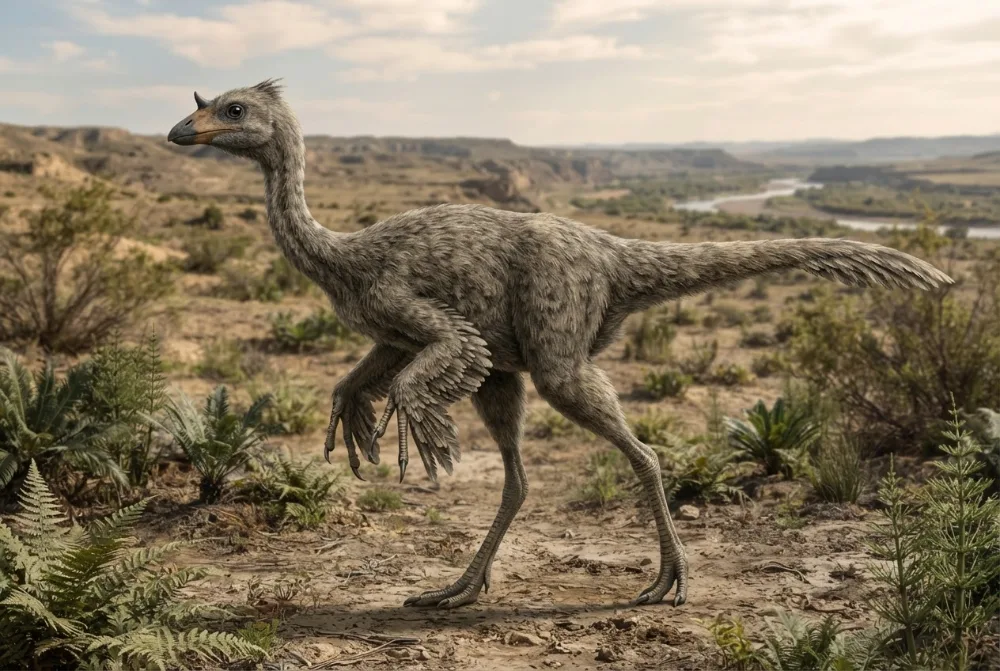
Sinornithomimus was a small, fast dinosaur that looked a bit like an ostrich. It lived in what is now China during the Late Cretaceous Period, about 92 to 90 million years ago. Scientists found many skeletons together, showing that these dinosaurs probably lived in herds.12
Хэзээ амьдарч байсан бэ?
Хэр том байсан бэ?
Хэр урт байсан бэ?
Хэр өндөр байсан бэ?
тооцоолол
Хэр хүнд байсан бэ?
 2,5 нохойг хамраас сүүлээр нь цувуулсантай тэнцэх урттай🍌14 бананыг дараалан тавьсантай тэнцэх урттай🍉18 тарвастай тэнцэх жинтэй🧸5 цэцэрлэгийн хүүхэдтэй тэнцэх жинтэй🎒3 сургуулийн хүүхэдтэй тэнцэх жинтэй🏃100 метрийг 5,5 секундэд гүйх чадалтай (хамгийн хурдан хүн 9.6 секунд гүйдэг)
Sinornithomimus ЧАМТАЙ харьцуулахад хэр том байсан бэ?
Зүгээр л хөтөч доторх тооцоо. Юу ч хадгалагдахгүй, хаашаа ч илгээгдэхгүй.
Хэр хурдан байсан бэ?


Сонирхолтой баримтууд
At least fourteen skeletons of Sinornithomimus were found together in one spot, and most of them were young dinosaurs. This suggests they lived in groups, maybe to protect each other from predators.21
Sinornithomimus had gastroliths, or stomach stones, that helped it grind up tough plants. This is rare among bird-like dinosaurs and shows it was a plant-eater.1
The first fossils of Sinornithomimus were discovered in 1997 by Chinese paleontologist Dong Zhiming during the Mongol Highland International Dinosaur Project.1
Sinornithomimus was about 2.5 meters (8.2 feet) long and weighed around 91 kilograms (201 pounds). That is about as heavy as a large adult human.1
Adult Sinornithomimus had longer lower legs compared to their upper legs than juveniles did. This means they could run faster as they grew up.21
A second herd of thirteen young Sinornithomimus was found in 2001. They probably died together after getting stuck in the mud of a drying waterhole.1
Sinornithomimus: хамгийн их асуудаг асуултууд
?What did Sinornithomimus eat?
It ate plants. Scientists found gastroliths (stomach stones) in its fossils that helped grind up tough plant food.1
?How fast could Sinornithomimus run?
Nobody knows exactly, but it was a fast runner. Adults had longer lower legs than juveniles, which made them even faster.1
Үлэг гүрвэлийн мэргэжилтнүүдэд
- Шинжлэх ухааны нэр
- Sinornithomimus
- Нэр өгсөн
- Kobayashi and Lü 20035
- Бүлэг
- Тэмээн хяруул үлэг гүрвэлүүд
- Овог / клад
- Ornithomimidae5
- Ангилал
- Theropoda > Ornithomimosauria5
- Чулуулгийн нас
- 94 / 90 сая жил (Turonian)5
- Чулуулгийн формацууд
- Ulansuhai5
- Улсууд
- Хятад5
- Чулуужсан олдворын бүртгэл
- The Paleobiology Database дээр 15
- Нээлт
- Sinornithomimus was named and described by Yoshitsugu Kobayashi and Lü Junchang in 2003. The name means 'Chinese bird mimic' and honors Dong Zhiming, who found the first fossils in 1997.12
- Маргаантай хэвээр
- Scientists are not sure whether the herds of Sinornithomimus were family groups with adults protecting young, or if the young lived separately from adults while the adults were busy nesting.1
Баримтууд хаанаас ирдэг вэ
- Sinornithomimus (en.wikipedia.org)
- A new ornithomimid dinosaur with gregarious habits from the Late Cretaceous of China - Acta Palaeontologica Polonica (app.pan.pl)
- PBDB Taxon (paleobiodb.org)
- Young dinosaurs roamed together, died together | University of Chicago News (news.uchicago.edu)
- Sinornithomimus in The Paleobiology Database (CC BY 4.0): нас, газар, чулуулгийн формац, ангилал.
Энэ хуудсан дээрх баримт бүр эх сурвалж руугаа заасан дугаартай. Хэрэв бид ямар нэг зүйл буруу бичсэн бол уучлаарай, бид шинжлэх ухааны сэтгүүл биш, зүгээр л үлэг гүрвэлд дурлагчид. [email protected] хаягаар бидэнд бичээрэй, бид засна.
 Рекс өлсөж байна! Dino Wiki бол үлэг гүрвэлд дурлагч хүүдээ зориулж нэгэн аавын хийсэн төсөл бөгөөд үнэгүй, зар сурталчилгаагүй, хянагчгүй. Сайтыг цааш ажиллуулахад туслахын тулд томчууд Рексийг амттангаар хооллож болно.Рексийг хооллох
 Gallimimus
 Ornithomimus
 Struthiomimus
 Deinocheirus
 Dromiceiomimus
 Archaeornithomimus
 Tyrannosaurus
 Triceratops
 Velociraptor
 Spinosaurus
 Ankylosaurus
 Parasaurolophus