 Kwizi ya Ndiwe dino uti?
 Nkhondo ya madino
 Mpikisano wa madino
 Masewera ang'onoang'ono a madino
 Chimbale cha zomata
 Mindandanda ya TOP ya madino
 Ndidabwitse!
Amanzia
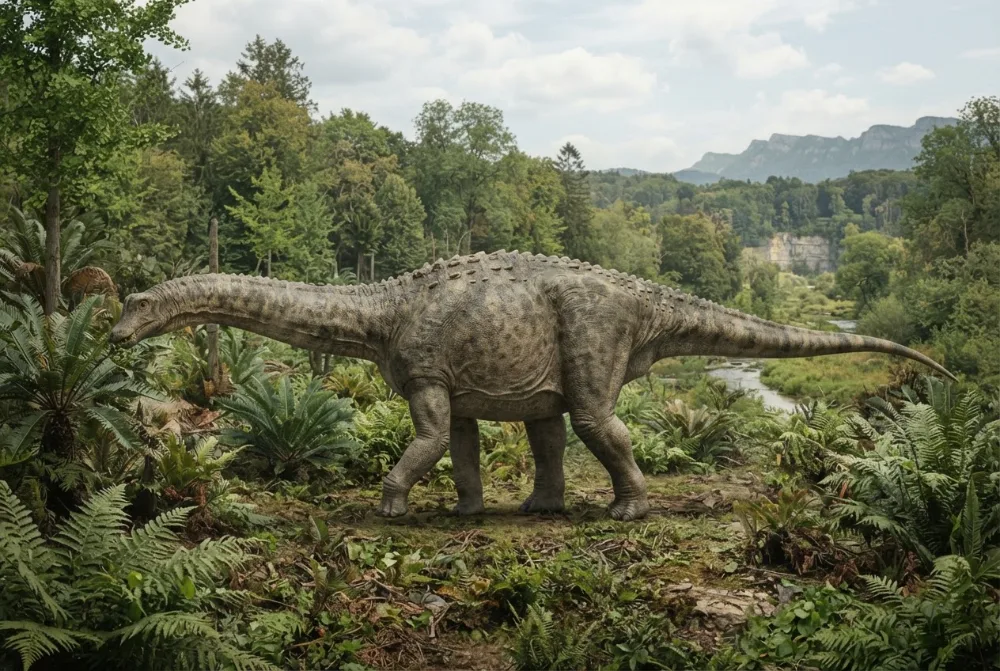
Amanzia was a long-necked plant-eater that lived in what is now Switzerland about 157 million years ago. It was a small sauropod, not much longer than a school bus, and it munched on leaves and ferns. Its bones were found in an old quarry near the town of Moutier.12
Ankakhala liti?
Anali wamkulu bwanji?
Anali wautali bwanji?
Msinkhu wake unali wautali bwanji?
kuyerekeza
 wautali ngati magalimoto 2 oimikidwa pamzere🍌wautali ngati nthochi 56 zotsatizana🏃akanatha kuthamanga mamita 100 m'masekondi 16 (munthu waliwiro kwambiri amafunika 9.6)
Amanzia anali wamkulu bwanji poyerekeza ndi IWEYO?
Ndi masamu chabe mu msakatuli wako. Palibe chimene chimasungidwa kapena kutumizidwa kwina kulikonse.
Anali ndi liwiro lotani?


Mfundo zosangalatsa
Amanzia was first thought to be a different dinosaur called Ornithopsis, and later Cetiosauriscus, before scientists gave it its own name in 2020.12
The fossils include bones from at least four different individuals, some of which were different sizes.1
Amanzia had a special rough patch on the back of its upper arm bone that no other sauropod has.1
Its tail bones were long and had small holes for blood vessels.1
The bones were found in a greenish layer of marl and limestone, which was once a muddy seafloor.1
Amanzia is one of the few sauropods known from Switzerland, and its discovery helped scientists understand European dinosaurs better.1
Mafunso ofunsidwa kwambiri okhudza Amanzia
?How big was Amanzia?
Amanzia was a small sauropod, not more than 10 metres long. That is about as long as a school bus.12
?What did Amanzia eat?
Amanzia was a plant-eater. It munched on leaves and ferns, like other sauropods.2
Kwa akatswiri a madino
- Dzina la sayansi
- Amanzia
- Anapatsidwa dzina ndi
- Schwarz et al. 20203
- Gulu
- Makosi atali
- Banja / kladi
- Turiasauria3
- Magawidwe a sayansi
- Sauropodomorpha > Sauropoda3
- Zaka za miyala
- zaka 155 mpaka 152 miliyoni (Kimmeridgian)3
- Mapangidwe a miyala
- Reuchenette3
- Mayiko
- Switzerland3
- Zolemba za mafosili
- 2 mu The Paleobiology Database3
- Kupezeka
- The first bones were found in the 1860s in a quarry near Moutier, Switzerland. In 1922, German scientist Friedrich von Huene named them Ornithopsis greppini. In 2020, a new study gave them the new genus name Amanzia, after Swiss geologist Amanz Gressly.12
- Akukambiranabe
- Scientists are not sure whether Amanzia was a member of the group Turiasauria or just a close relative of all later sauropods.1
Kumene mfundo zimachokera
- Re-description of the sauropod dinosaur Amanzia (“Ornithopsis/Cetiosauriscus”) greppini n. gen. and other vertebrate remains from the Kimmeridgian (Late Jurassic) Reuchenette Formation of Moutier, Switzerland | Swiss Journal of Geosciences | Springer Nature Link (link.springer.com)
- Amanzia (en.wikipedia.org)
- Amanzia in The Paleobiology Database (CC BY 4.0): zaka, malo, mapangidwe a miyala, magawidwe a sayansi.
Mfundo iliyonse patsamba lino ili ndi nambala yosonyeza kumene yachokera. Ngati talakwitsa kanthu, pepa, ndife okonda madino, osati magazini ya sayansi. Tiuze pa [email protected] ndipo tikonza.
 Rex ali ndi njala! Dino Wiki ndi ntchito ya bambo kwa mwana wawo wamwamuna wokonda madainoso, yaulere popanda zotsatsa ndi zokazonda. Akuluakulu angadyetse Rex zokhwasula-khwasula kuti tsambali lipitirize kupezeka pa intaneti.Dyetsa Rex
 Brachiosaurus
 Diplodocus
 Brontosaurus
 Argentinosaurus
 Camarasaurus
 Morosaurus
 Allosaurus
 Compsognathus
 Camptosaurus
 Nanosaurus
 Rhamphorhynchus
 Ceratosaurus