 Kwizi ya Ndiwe dino uti?
 Nkhondo ya madino
 Mpikisano wa madino
 Masewera ang'onoang'ono a madino
 Chimbale cha zomata
 Mindandanda ya TOP ya madino
 Ndidabwitse!
Europasaurus
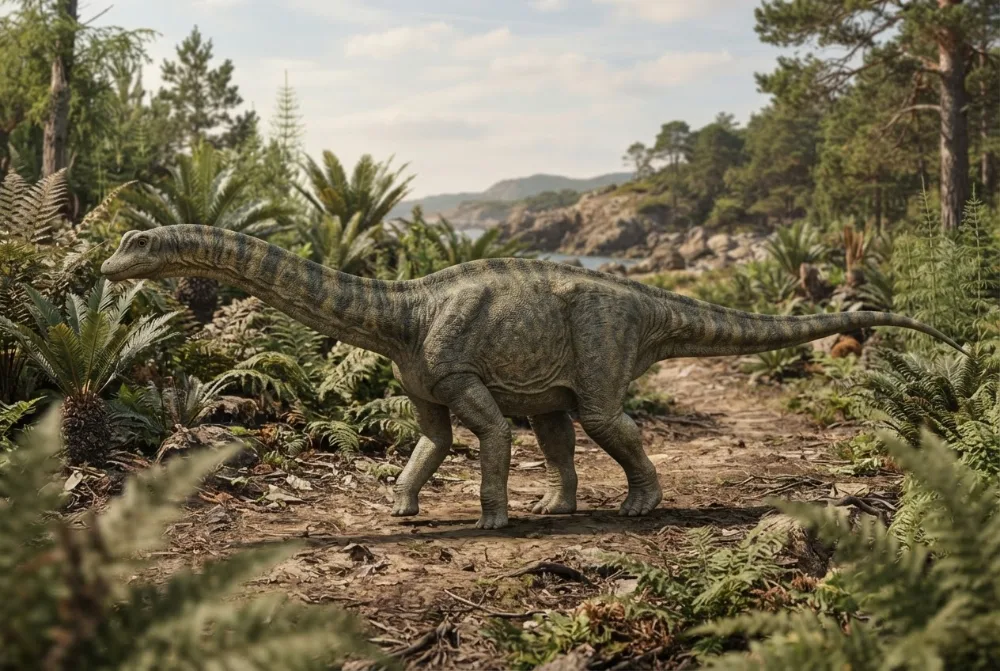
Europasaurus was a tiny sauropod dinosaur that lived on an island in what is now Germany. It was a dwarf, much smaller than its giant relatives like Brachiosaurus. Scientists think it shrank because food was limited on its island home.21
Ankakhala liti?
Anali wamkulu bwanji?
Anali wautali bwanji?
Msinkhu wake unali wautali bwanji?
kuyerekeza
Ankalemera bwanji?

 wautali ngati agalu 6 otsatizana mphuno ndi mchira🍌wautali ngati nthochi 34 zotsatizanawolemera ngati agalu 100🍉wolemera ngati mavwende 420🎒wolemera ngati makalasi athunthu a ana a sukulu 2.5🐻❄️wolemera ngati zimbalangondo zoyera 5🏃akanatha kuthamanga mamita 100 m'masekondi 13 (munthu waliwiro kwambiri amafunika 9.6)
Europasaurus anali wamkulu bwanji poyerekeza ndi IWEYO?
Ndi masamu chabe mu msakatuli wako. Palibe chimene chimasungidwa kapena kutumizidwa kwina kulikonse.
Anali ndi liwiro lotani?


Mfundo zosangalatsa
Europasaurus is one of the smallest known sauropods, only about as long as a car.1
It lived during the Late Jurassic, about 154 to 151 million years ago.1
The first fossil was a single tooth found by a private collector named Holger Lüdtke in 1998.1
Bone studies show that Europasaurus grew more slowly than its giant relatives, a sign of island dwarfism.2
About one third of the Europasaurus bones found have tooth marks, probably from fish or crocodile-like scavengers.1
Young Europasaurus had well-developed inner ears, meaning they could probably hear well and may have stayed close to adults for protection.1
Mafunso ofunsidwa kwambiri okhudza Europasaurus
?How big was Europasaurus?
About 5.7 to 6.2 metres long, weighing 750 to 2,100 kilograms as an adult. That is roughly as long as a car.13
?Why was Europasaurus so small?
It was a dwarf species due to insular dwarfism, meaning it shrank because it lived on an island with limited food. Bone studies show it grew more slowly than its giant relatives.21
?What did Europasaurus eat?
It was herbivorous, meaning it ate plants. Conifer cones and twigs from araucarian trees (like modern monkey puzzle trees) have been found at its fossil site.31
?Did Europasaurus live in herds?
Yes, fossils of at least 11 individuals were found together, suggesting they lived in groups. Scientists think a herd might have drowned while crossing a tidal zone.1
?When did Europasaurus live?
It lived during the Late Jurassic Period, about 154 to 151 million years ago.13
?Where was Europasaurus found?
Its fossils were found in a quarry at Langenberg Mountain in northern Germany. It lived on an island in the Lower Saxony basin.1
Kwa akatswiri a madino
- Dzina la sayansi
- Europasaurus
- Anapatsidwa dzina ndi
- Sander et al. 20064
- Gulu
- Makosi atali
- Banja / kladi
- Camarasauromorpha4
- Magawidwe a sayansi
- Sauropodomorpha > Sauropoda > Macronaria4
- Zaka za miyala
- zaka 152 mpaka 149 miliyoni (Kimmeridgian)4
- Mapangidwe a miyala
- Süntel4
- Mayiko
- Jeremani4
- Zolemba za mafosili
- 1 mu The Paleobiology Database4
- Kupezeka
- The first fossils were found in 1998 by Holger Lüdtke in a quarry in Germany. After more bones were found, the species was named Europasaurus holgeri in 2006 by Sander and colleagues.1
- Akukambiranabe
- Scientists are not sure exactly why Europasaurus became so small, but they think it was because it lived on an island with limited food.2
Kumene mfundo zimachokera
- Europasaurus (en.wikipedia.org)
- nature.com (nature.com)
- Europasaurus | Natural History Museum (nhm.ac.uk)
- Europasaurus in The Paleobiology Database (CC BY 4.0): zaka, malo, mapangidwe a miyala, magawidwe a sayansi.
Mfundo iliyonse patsamba lino ili ndi nambala yosonyeza kumene yachokera. Ngati talakwitsa kanthu, pepa, ndife okonda madino, osati magazini ya sayansi. Tiuze pa [email protected] ndipo tikonza.
 Rex ali ndi njala! Dino Wiki ndi ntchito ya bambo kwa mwana wawo wamwamuna wokonda madainoso, yaulere popanda zotsatsa ndi zokazonda. Akuluakulu angadyetse Rex zokhwasula-khwasula kuti tsambali lipitirize kupezeka pa intaneti.Dyetsa Rex
 Brachiosaurus
 Diplodocus
 Brontosaurus
 Argentinosaurus
 Camarasaurus
 Morosaurus
 Allosaurus
 Compsognathus
 Camptosaurus
 Nanosaurus
 Rhamphorhynchus
 Ceratosaurus