 Kwizi ya Ndiwe dino uti?
 Nkhondo ya madino
 Mpikisano wa madino
 Masewera ang'onoang'ono a madino
 Chimbale cha zomata
 Mindandanda ya TOP ya madino
 Ndidabwitse!
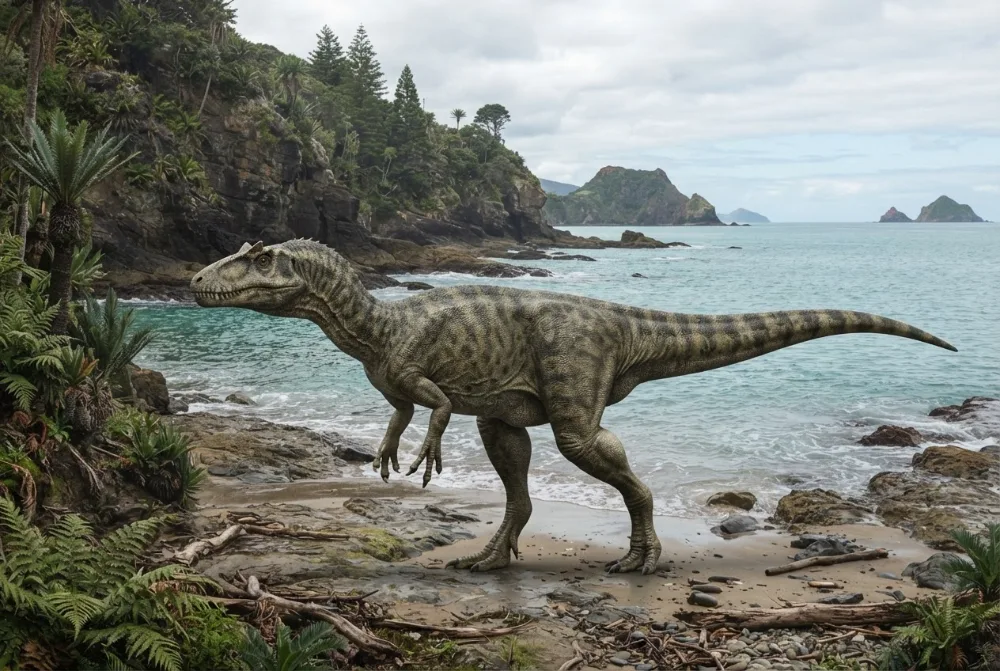
Eustreptospondylus
Eustreptospondylus was a meat-eating dinosaur that lived on islands in the Jurassic sea. It was about as long as a small car and probably hunted small animals or ate dead ones washed up on the beach.1
Ankakhala liti?
Anali wamkulu bwanji?
Anali wautali bwanji?
Msinkhu wake unali wautali bwanji?
Ankalemera bwanji?
 wautali ngati agalu 6 otsatizana mphuno ndi mchira🍌wautali ngati nthochi 33 zotsatizana🍉wolemera ngati mavwende 100🧸wolemera ngati ana a sukulu ya mkaka 26🎒wolemera ngati ana a sukulu 16🏃akanatha kuthamanga mamita 100 m'masekondi 8 (munthu waliwiro kwambiri amafunika 9.6)
Eustreptospondylus anali wamkulu bwanji poyerekeza ndi IWEYO?
Ndi masamu chabe mu msakatuli wako. Palibe chimene chimasungidwa kapena kutumizidwa kwina kulikonse.
Anali ndi liwiro lotani?


Mfundo zosangalatsa
The first skeleton found was the most complete large meat-eating dinosaur skeleton known at the time, and it is still the most complete large Jurassic European theropod.1
It lived on islands, because Europe was a group of islands back then. Some scientists think it could swim short distances between islands, like a Komodo dragon.1
Its skull had a pointed snout and a large horizontal nostril. It did not have a horn on its face.1
Grooves in its jaw joints let it open its mouth extra wide when it lowered its lower jaws.1
No teeth were found with the skeleton, but the size of the tooth sockets shows that the third tooth in the lower jaw was extra big.1
The known fossil was found in a marine layer, which means it ended up in the sea. That is why some scientists think it could swim, but others think it just washed out to sea after dying.1
Mafunso ofunsidwa kwambiri okhudza Eustreptospondylus
?How big was Eustreptospondylus?
The known skeleton was from a subadult about 4.63 metres (15.2 ft) long and weighed about 218 kilograms (481 lb). A full-grown adult may have reached around 6 metres (20 ft) and weighed 0.5 tonnes.1
?What did Eustreptospondylus eat?
It was a carnivore that ate smaller dinosaurs and pterosaurs, and may have scavenged dead fish, marine reptiles, and other dinosaurs.1
?Could Eustreptospondylus swim?
Some scientists think it could swim short distances between islands, like a Komodo dragon, because its fossil was found on what was an island. Others think it just washed out to sea after dying.1
?When did Eustreptospondylus live?
It lived during the Middle to Late Jurassic period, about 166 to 154 million years ago.1
?Where was Eustreptospondylus found?
Its fossils were found in southern England, near Oxford, in a marine clay layer.1
?Is Eustreptospondylus a dinosaur?
Yes, it is a theropod dinosaur, a meat-eating dinosaur that walked on two legs.1
Wothetsa nthano zabodza
Nthano: Eustreptospondylus was a slow, clumsy scavenger that only ate dead animals.
Zoona: It was a meat-eater that probably hunted small animals and also scavenged. Its body shows it was an active predator, and it may have foraged on shorelines.1
Kwa akatswiri a madino
- Dzina la sayansi
- Eustreptospondylus
- Anapatsidwa dzina ndi
- Walker 19643
- Gulu
- Madino odya nyama
- Banja / kladi
- Megalosauridae3
- Magawidwe a sayansi
- Theropoda3
- Zaka za miyala
- zaka 165 mpaka 162 miliyoni (Callovian)3
- Mapangidwe a miyala
- Oxford Clay3
- Mayiko
- United Kingdom3
- Zolemba za mafosili
- 1 mu The Paleobiology Database3
- Kupezeka
- Workers found the skeleton in 1870 at Summertown Brick Pit near Oxford, England. It was described in 1871 by John Phillips, but it got its own name, Eustreptospondylus oxoniensis, from Alick Walker in 1964.1
- Akukambiranabe
- Scientists still debate whether Eustreptospondylus could swim between islands or if its body just washed out to sea after death.1
Kumene mfundo zimachokera
- Eustreptospondylus (en.wikipedia.org)
- enchantedlearning.com (enchantedlearning.com)
- Eustreptospondylus in The Paleobiology Database (CC BY 4.0): zaka, malo, mapangidwe a miyala, magawidwe a sayansi.
Mfundo iliyonse patsamba lino ili ndi nambala yosonyeza kumene yachokera. Ngati talakwitsa kanthu, pepa, ndife okonda madino, osati magazini ya sayansi. Tiuze pa [email protected] ndipo tikonza.
 Rex ali ndi njala! Dino Wiki ndi ntchito ya bambo kwa mwana wawo wamwamuna wokonda madainoso, yaulere popanda zotsatsa ndi zokazonda. Akuluakulu angadyetse Rex zokhwasula-khwasula kuti tsambali lipitirize kupezeka pa intaneti.Dyetsa Rex
 Allosaurus
 Carnotaurus
 Dilophosaurus
 Giganotosaurus
 Compsognathus
 Paronychodon
 Ichthyosaurus
 Khudiakovia
 Ophthalmosaurus
 Pterodactylus
 Peloneustes
 Rhamphocephalus