 Kwizi ya Ndiwe dino uti?
 Nkhondo ya madino
 Mpikisano wa madino
 Masewera ang'onoang'ono a madino
 Chimbale cha zomata
 Mindandanda ya TOP ya madino
 Ndidabwitse!
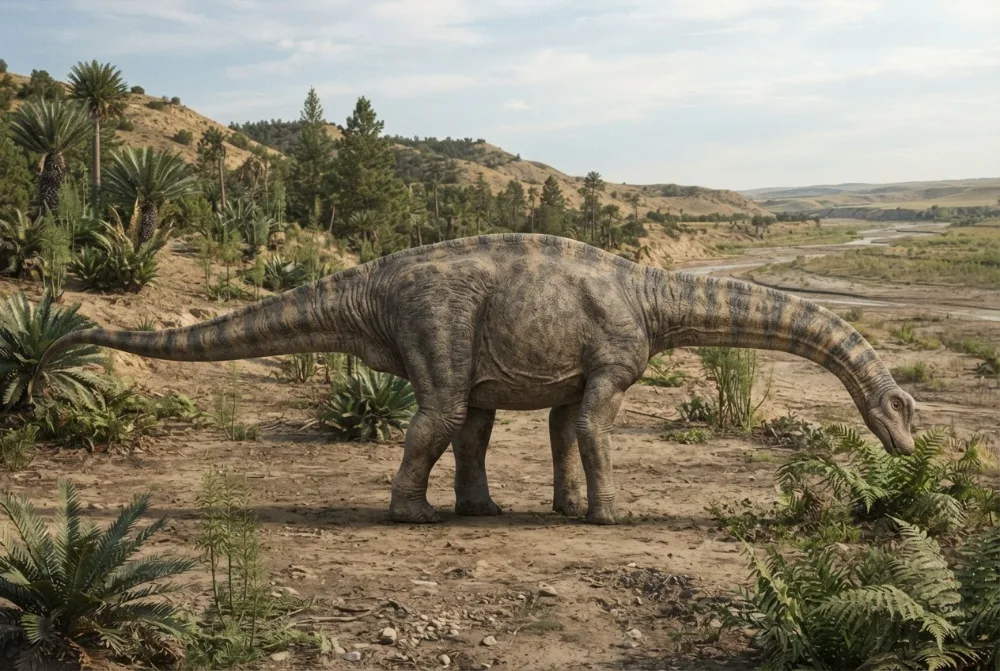
Kaatedocus
Kaatedocus was a long-necked sauropod that lived in what is now Wyoming during the Late Jurassic. It was smaller than many of its relatives, only about 14 metres long. Its well-preserved skull and neck helped scientists learn how sauropods held their heads.12
Ankakhala liti?
Anali wamkulu bwanji?
Anali wautali bwanji?
Msinkhu wake unali wautali bwanji?
kuyerekeza
 wautali ngati magalimoto 3 oimikidwa pamzere🍌wautali ngati nthochi 78 zotsatizana🏃akanatha kuthamanga mamita 100 m'masekondi 21 (munthu waliwiro kwambiri amafunika 9.6)
Kaatedocus anali wamkulu bwanji poyerekeza ndi IWEYO?
Ndi masamu chabe mu msakatuli wako. Palibe chimene chimasungidwa kapena kutumizidwa kwina kulikonse.
Anali ndi liwiro lotani?


Mfundo zosangalatsa
Kaatedocus was named in 2012 by paleontologists Emanuel Tschopp and Octávio Mateus.1
Its name comes from the Crow Indian word 'kaate' meaning 'small' and 'docus' from Diplodocus, so 'small beam'.1
The only known specimen includes a nearly complete skull and a neck made of at least 14 vertebrae.1
The skull and neck together measured about 3.8 metres (12 feet) long.1
The fossils were originally thought to belong to Barosaurus or Diplodocus before being recognized as a new dinosaur.2
Scientists used CT scans and 3D printing to study Kaatedocus's neck vertebrae and learn how sauropods held their necks upright.1
Mafunso ofunsidwa kwambiri okhudza Kaatedocus
?How big was Kaatedocus?
About 14 metres (46 feet) long. That is smaller than many of its relatives like Diplodocus.12
?What did Kaatedocus eat?
Plants. It was a sauropod with peg-like teeth at the front of its mouth, good for stripping leaves.2
?When did Kaatedocus live?
It lived during the Late Jurassic, about 155 million years ago.1
?Why is it called Kaatedocus?
Its name comes from the Crow Indian word 'kaate' meaning 'small' and 'docus' from Diplodocus, so 'small beam'.1
Wothetsa nthano zabodza
Nthano: Some scientists thought Kaatedocus was just a young Barosaurus or Diplodocus.
Zoona: Kaatedocus is now considered a distinct genus based on unique features in its skull and vertebrae.2
Kwa akatswiri a madino
- Dzina la sayansi
- Kaatedocus
- Anapatsidwa dzina ndi
- Tschopp and Mateus 20134
- Gulu
- Makosi atali
- Banja / kladi
- Dicraeosauridae4
- Magawidwe a sayansi
- Sauropodomorpha > Sauropoda > Diplodocoidea4
- Zaka za miyala
- zaka 155 mpaka 149 miliyoni (Kimmeridgian)4
- Mapangidwe a miyala
- Morrison4
- Mayiko
- Amereka4
- Zolemba za mafosili
- 1 mu The Paleobiology Database4
- Kupezeka
- Fossils were first excavated in 1934 by Barnum Brown's team at Howe Quarry in Wyoming. The dinosaur was named Kaatedocus siberi in 2012 by Emanuel Tschopp and Octávio Mateus.1
- Akukambiranabe
- Scientists are not sure if Kaatedocus is a distinct genus or a juvenile of another sauropod like Barosaurus.2
Kumene mfundo zimachokera
- Kaatedocus (en.wikipedia.org)
- Jurassic Boneyard Yields Hidden Dinosaur | National Geographic (nationalgeographic.com)
- PBDB Taxon (paleobiodb.org)
- Kaatedocus in The Paleobiology Database (CC BY 4.0): zaka, malo, mapangidwe a miyala, magawidwe a sayansi.
Mfundo iliyonse patsamba lino ili ndi nambala yosonyeza kumene yachokera. Ngati talakwitsa kanthu, pepa, ndife okonda madino, osati magazini ya sayansi. Tiuze pa [email protected] ndipo tikonza.
 Rex ali ndi njala! Dino Wiki ndi ntchito ya bambo kwa mwana wawo wamwamuna wokonda madainoso, yaulere popanda zotsatsa ndi zokazonda. Akuluakulu angadyetse Rex zokhwasula-khwasula kuti tsambali lipitirize kupezeka pa intaneti.Dyetsa Rex
 Brachiosaurus
 Diplodocus
 Brontosaurus
 Argentinosaurus
 Camarasaurus
 Morosaurus
 Allosaurus
 Compsognathus
 Camptosaurus
 Nanosaurus
 Rhamphorhynchus
 Ceratosaurus