 Kwizi ya Ndiwe dino uti?
 Nkhondo ya madino
 Mpikisano wa madino
 Masewera ang'onoang'ono a madino
 Chimbale cha zomata
 Mindandanda ya TOP ya madino
 Ndidabwitse!
Ankakhala liti?

Anali wamkulu bwanji?
Anali wautali bwanji?
Msinkhu wake unali wautali bwanji?
kuyerekeza
Ankalemera bwanji?

 wautali ngati magalimoto 6 oimikidwa pamzere🍌wautali ngati nthochi 140 zotsatizana🍉wolemera ngati mavwende 9400🎒wolemera ngati makalasi athunthu a ana a sukulu 59🐻❄️wolemera ngati zimbalangondo zoyera 100🏢wamtali moti angasuzumire pawindo la nsanjika ya 2🏃akanatha kuthamanga mamita 100 m'masekondi 33 (munthu waliwiro kwambiri amafunika 9.6)
Losillasaurus anali wamkulu bwanji poyerekeza ndi IWEYO?
Ndi masamu chabe mu msakatuli wako. Palibe chimene chimasungidwa kapena kutumizidwa kwina kulikonse.
Anali ndi liwiro lotani?


Mfundo zosangalatsa
Losillasaurus had a very long humerus (upper arm bone) that measured 143 centimetres (56 inches) long, even though the specimen was not fully grown.1
The neural spines on its tail vertebrae were shaped like cutlasses, a unique feature that helps scientists identify this dinosaur.2
Losillasaurus lived during the Late Jurassic and possibly into the Early Cretaceous, about 157 to 145 million years ago.1
The largest Losillasaurus individuals may have weighed as much as 47 tonnes (52 short tons), similar to several elephants combined.1
Losillasaurus belongs to a group of sauropods called Turiasauria, which includes other giants like Turiasaurus.3
The first fossils of Losillasaurus were discovered near the village of Losilla in Valencia, Spain, by a local teacher who was also an amateur archaeologist.2
Mafunso ofunsidwa kwambiri okhudza Losillasaurus
?How big was Losillasaurus?
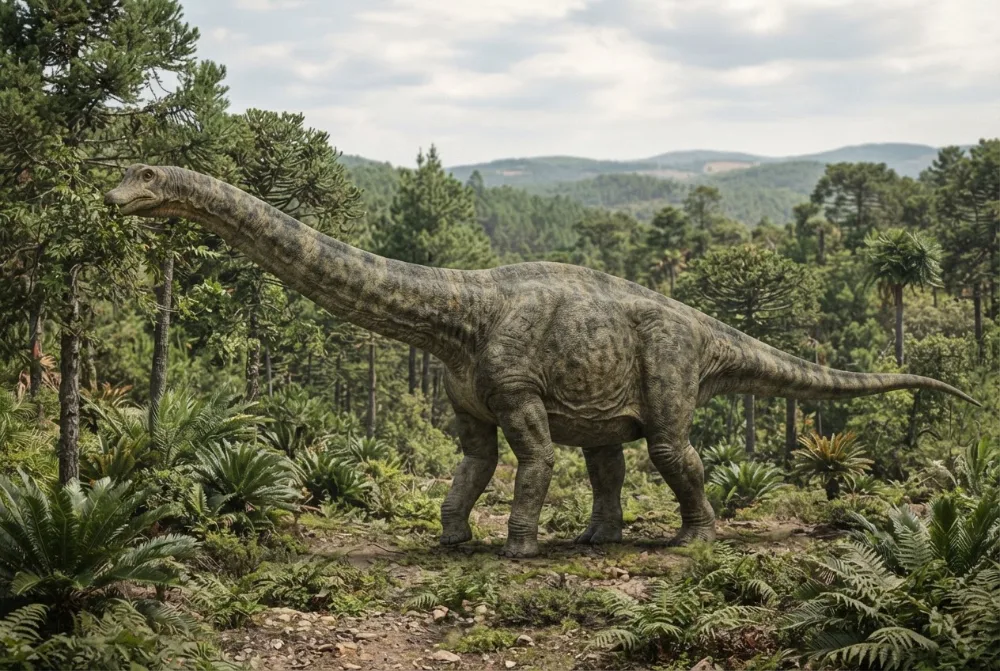
Estimates vary. One study suggests 15 to 18 metres (49 to 59 ft) long and 12 to 15 tonnes (13 to 17 short tons). But the largest adults may have reached 25 metres (82 ft) and weighed about 47 tonnes (52 short tons).1
?What did Losillasaurus eat?
It was a plant-eater. Its heart-shaped teeth helped it eat tough plants.1
?When did Losillasaurus live?
It lived during the Late Jurassic and possibly into the Early Cretaceous, about 157 to 145 million years ago.1
?Where was Losillasaurus found?
Its fossils were discovered near the village of Losilla in Valencia, Spain, and also in the Lourinhã Formation of Portugal.1
Kwa akatswiri a madino
- Dzina la sayansi
- Losillasaurus
- Anapatsidwa dzina ndi
- Casanovas et al. 20013
- Gulu
- Makosi atali
- Banja / kladi
- Turiasauria3
- Magawidwe a sayansi
- Sauropodomorpha > Sauropoda3
- Zaka za miyala
- zaka 155 mpaka 143 miliyoni (Kimmeridgian / Tithonian)3
- Mapangidwe a miyala
- Villar del Arzobispo, Praia da Amoreira-Porto Novo3
- Mayiko
- Sipeyini, Potogalo3
- Zolemba za mafosili
- 3 mu The Paleobiology Database3
- Kupezeka
- Losillasaurus was named in 2001 by Casanovas, Santafé, and Sanz based on fossils found near Losilla, Spain. The fossils were excavated between 1989 and 1995.12
- Akukambiranabe
- Scientists are not sure exactly how big adult Losillasaurus could grow, because the best-known specimen is a subadult.1
Kumene mfundo zimachokera
- Losillasaurus (en.wikipedia.org)
- Losillasaurus giganteus, a new sauropod from the transitional Jurassic Cretaceous of the Los Serranos basin (Valencia, Spain) (naturalhistory.si.edu)
- Losillasaurus in The Paleobiology Database (CC BY 4.0): zaka, malo, mapangidwe a miyala, magawidwe a sayansi.
Mfundo iliyonse patsamba lino ili ndi nambala yosonyeza kumene yachokera. Ngati talakwitsa kanthu, pepa, ndife okonda madino, osati magazini ya sayansi. Tiuze pa [email protected] ndipo tikonza.
 Rex ali ndi njala! Dino Wiki ndi ntchito ya bambo kwa mwana wawo wamwamuna wokonda madainoso, yaulere popanda zotsatsa ndi zokazonda. Akuluakulu angadyetse Rex zokhwasula-khwasula kuti tsambali lipitirize kupezeka pa intaneti.Dyetsa Rex
 Brachiosaurus
 Diplodocus
 Brontosaurus
 Argentinosaurus
 Camarasaurus
 Morosaurus
 Allosaurus
 Compsognathus
 Camptosaurus
 Nanosaurus
 Rhamphorhynchus
 Ceratosaurus