 Kwizi ya Ndiwe dino uti?
 Nkhondo ya madino
 Mpikisano wa madino
 Masewera ang'onoang'ono a madino
 Chimbale cha zomata
 Mindandanda ya TOP ya madino
 Ndidabwitse!
Ankakhala liti?

Anali wamkulu bwanji?
Anali wautali bwanji?
Msinkhu wake unali wautali bwanji?
Ankalemera bwanji?
 wautali ngati agalu 8 otsatizana mphuno ndi mchira🍌wautali ngati nthochi 42 zotsatizana🍉wolemera ngati mavwende 220🧸wolemera ngati ana a sukulu ya mkaka 58🎒wolemera ngati ana a sukulu 34🐻❄️wolemera ngati zimbalangondo zoyera 2.5🏃akanatha kuthamanga mamita 100 m'masekondi 10 (munthu waliwiro kwambiri amafunika 9.6)
Lusovenator anali wamkulu bwanji poyerekeza ndi IWEYO?
Ndi masamu chabe mu msakatuli wako. Palibe chimene chimasungidwa kapena kutumizidwa kwina kulikonse.
Anali ndi liwiro lotani?


Mfundo zosangalatsa
Lusovenator lived during the Late Jurassic and Early Cretaceous periods, about 154 to 144 million years ago.1
Its fossils were found in the Lourinhã Formation in Portugal, which is famous for many dinosaur discoveries.1
The first fossils of Lusovenator were discovered in the 1980s by a man named José Joaquim dos Santos, who later donated them to a museum.1
Lusovenator belongs to a group of large meat-eating dinosaurs called carcharodontosaurs, which includes some of the biggest predators ever.1
The known bones of Lusovenator include parts of the spine, hips, and a nearly complete right foot.1
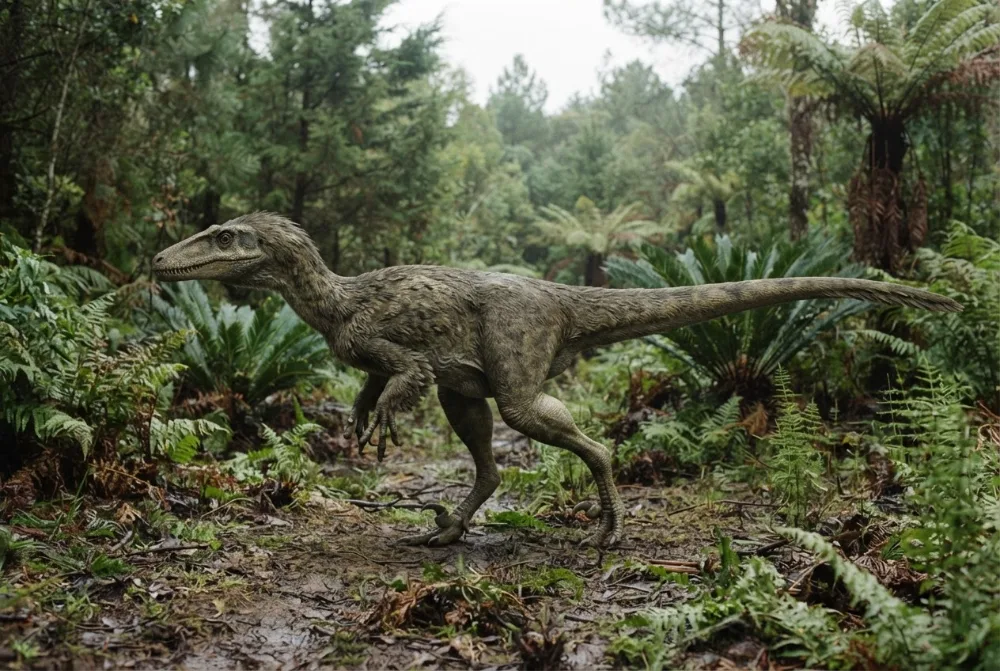
Mafunso ofunsidwa kwambiri okhudza Lusovenator
?How big was Lusovenator?
Scientists don't know its exact size because only partial bones were found, but it was a medium to large meat eater, likely around 6 to 8 metres long (20 to 26 feet).4
?What did Lusovenator eat?
Lusovenator was a carnivore, so it ate meat. It probably hunted smaller dinosaurs and other animals in its environment.4
?When did Lusovenator live?
It lived during the Late Jurassic and Early Cretaceous periods, about 154 to 144 million years ago.1
?Where was Lusovenator found?
Its fossils were found in Portugal, in the Lourinhã Formation, which is famous for many dinosaur discoveries.1
?Is Lusovenator a dinosaur?
Yes, it is a dinosaur. It belongs to a group of meat-eating dinosaurs called carcharodontosaurs.1
?Why is it called Lusovenator?
The name means 'Portuguese hunter' because it was found in Portugal and it was a predator.1
Kwa akatswiri a madino
- Dzina la sayansi
- Lusovenator
- Anapatsidwa dzina ndi
- Malafaia et al. 20204
- Gulu
- Madino odya nyama
- Banja / kladi
- Carcharodontosauria4
- Magawidwe a sayansi
- Theropoda > Allosauroidea4
- Zaka za miyala
- zaka 152 mpaka 143 miliyoni (Kimmeridgian / Tithonian)4
- Mapangidwe a miyala
- Freixial, Praia da Amoreira-Porto Novo4
- Mayiko
- Potogalo4
- Zolemba za mafosili
- 2 mu The Paleobiology Database4
- Kupezeka
- Lusovenator was named in 2020 by Malafaia and colleagues. The fossils were found in Portugal by José Joaquim dos Santos in the 1980s and later studied by scientists.14
- Akukambiranabe
- Scientists are not sure exactly how big Lusovenator grew, because the only skeleton found so far is from a young animal.1
Kumene mfundo zimachokera
- Lusovenator (en.wikipedia.org)
- Lusovenator santosi: New Predatory Dinosaur Identified in Portugal | Paleontology World (paleontologyworld.com)
- Lusovenator santosi | Dinosaur Database by DinoAnimals.com (dinoanimals.com)
- Lusovenator in The Paleobiology Database (CC BY 4.0): zaka, malo, mapangidwe a miyala, magawidwe a sayansi.
Mfundo iliyonse patsamba lino ili ndi nambala yosonyeza kumene yachokera. Ngati talakwitsa kanthu, pepa, ndife okonda madino, osati magazini ya sayansi. Tiuze pa [email protected] ndipo tikonza.
 Rex ali ndi njala! Dino Wiki ndi ntchito ya bambo kwa mwana wawo wamwamuna wokonda madainoso, yaulere popanda zotsatsa ndi zokazonda. Akuluakulu angadyetse Rex zokhwasula-khwasula kuti tsambali lipitirize kupezeka pa intaneti.Dyetsa Rex
 Allosaurus
 Carnotaurus
 Dilophosaurus
 Giganotosaurus
 Compsognathus
 Paronychodon
 Brachiosaurus
 Diplodocus
 Brontosaurus
 Camarasaurus
 Morosaurus
 Apatosaurus