 Ati daayinoo kami? Qormaata
 Lola daayinoo
 Dorgommii daayinoo
 Taphoota daayinoo xixiqqoo
 Albamii istiikarii
 Tarreewwan TOP daayinoo
 Na dinqisiisi!
Yoom jiraate?

Hammam guddaa ture?
Hammam dheeraa ture?
Hammam ol-dheeraa ture?
tilmaama
Hammam ulfaataa ture?

 akka adurree manaa 4 funyaan hanga eegeetti dheeraa🍌akka muuzii 11 walitti hiriiran dheeraa🍉akka habxuu 50 ulfaata🧸akka ijoollee KG 13 ulfaata🎒akka ijoollee mana barumsaa 8 ulfaata🏃meetira 100 sekondii 9.5 keessatti fiiguu danda'a (namni hunda caalaa saffisaan 9.6 barbaada)
SI wajjin yoo wal bira qabamu, Asylosaurus hammam guddaa ture?
Herrega qofa barbaadduu kee keessatti. Wanti tokkollee hin olkaa'amu, eessayyuu hin ergamu.
Hammam saffisaa ture?


Odeeffannoowwan bashannansiisoo
The bones of Asylosaurus were discovered in 1834, but they were not recognized as a new dinosaur until 2007.1
Its bones were saved from destruction during World War II because they had been taken to Yale University in the USA.1
Asylosaurus had a different upper arm bone (humerus) compared to its relatives Thecodontosaurus and Pantydraco.1
Its hand had a reduced number of finger bones, with a formula of 2 to 3-4 to 2-?1.2
The name Asylosaurus means 'unharmed lizard', because its fossils escaped the bombing of Bristol in 1940.1
Gaaffiiwwan waa'ee Asylosaurus baay'ee gaafataman
?How big was Asylosaurus?
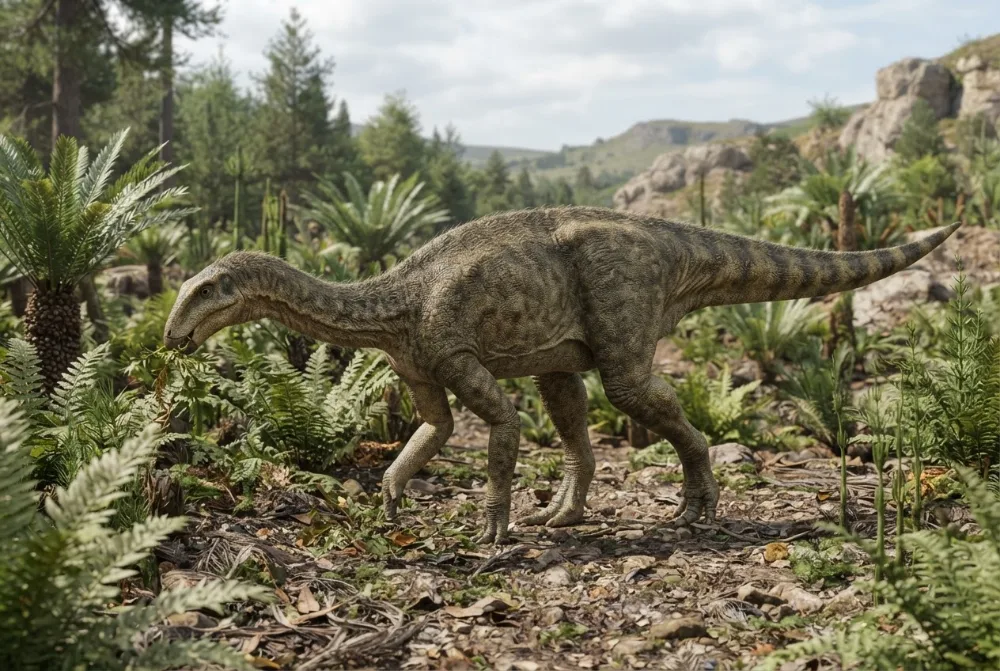
About 2 metres long and weighed roughly 250 kilograms.1
?What did Asylosaurus eat?
It was a plant-eater, but it may have also eaten some insects or small animals, since scientists are not sure if it was purely herbivorous or omnivorous.1
?Why is it called Asylosaurus?
The name means 'unharmed lizard' because its fossils were saved from a World War II bombing that destroyed the original Thecodontosaurus bones.1
?When did Asylosaurus live?
It lived during the Late Triassic period, about 200 million years ago.1
Seenaa sobaa diigaa
Seenaa sobaa: Some people think Asylosaurus is the same as Thecodontosaurus.
Dhugaa: It was first thought to be Thecodontosaurus, but scientists now see it as its own genus because of differences in the upper arm bone.1
Ogeeyyii daayinootiif
- Maqaa saayinsii
- Asylosaurus
- Kan maqaa baase
- Galton 20073
- Garee
- Morma-dheertota
- Maatii / kilaadii
- Sauropodomorpha3
- Ramaddii
- Sauropodomorpha3
- Umurii dhagaawwanii
- waggaa miliyoona 206 hanga 201 (Rhaetian)3
- Caasaawwan dhagaa
- Magnesian Conglomerate3
- Biyyoota
- Biriteen3
- Galmee fosilii
- 1 The Paleobiology Database keessa3
- Argannoo
- The bones were found in 1834 by quarrymen in Bristol, England. They were described in 1836 as Thecodontosaurus, but Peter Galton named them Asylosaurus in 2007.1
- Ammallee falmisiisaa
- Scientists are not sure if some other bones from the same site belong to Asylosaurus or to another dinosaur.2
Odeeffannoon eessaa dhufa
- Asylosaurus (en.wikipedia.org)
- VOL. 26, N° 2, 2007 (dinochecker.com)
- Asylosaurus in The Paleobiology Database (CC BY 4.0): umurii, bakkeewwan, caasaawwan dhagaa, ramaddii.
Odeeffannoon fuula kana irra jiru hundi lakkoofsa madda isaa agarsiisu qaba. Yoo waa dogoggorre, dhiifama, nuti jaallattoota daayinoo malee joornaalii saayinsii miti. [email protected] irratti nutti himi, nus ni sirreessina.
 Rex beela'eera! Dino Wiki pirojektii abbaa tokkoo kan ilma isaa daayinoo jaallatuuf hojjetame, bilisa, beeksisa malee fi hordoftuu malee. Ga'eessonni akka inni interneetii irra turuuf Rexiif nyaata xiqqoo kennuu danda'u.Rex soori
 Brachiosaurus
 Diplodocus
 Brontosaurus
 Argentinosaurus
 Camarasaurus
 Morosaurus
 Nothosaurus
 Coelophysis
 Podokesaurus
 Simosaurus
 Eudimorphodon
 Herrerasaurus