 Ati daayinoo kami? Qormaata
 Lola daayinoo
 Dorgommii daayinoo
 Taphoota daayinoo xixiqqoo
 Albamii istiikarii
 Tarreewwan TOP daayinoo
 Na dinqisiisi!
Avimimus
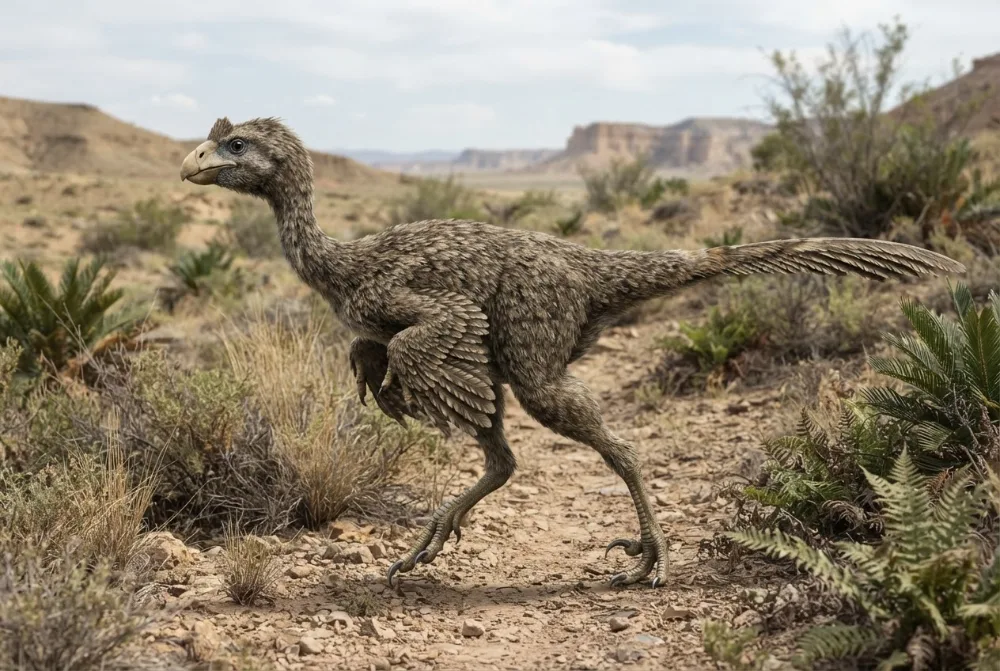
Avimimus was a small, fast-running dinosaur that looked a lot like a bird. It had a beak like a parrot and may have had feathers on its arms. Scientists think it lived in what is now Mongolia during the Late Cretaceous period.21
Yoom jiraate?
Hammam guddaa ture?
Hammam dheeraa ture?
Hammam ol-dheeraa ture?
tilmaama
Hammam ulfaataa ture?
 akka adurree manaa 3 funyaan hanga eegeetti dheeraa🍌akka muuzii 8 walitti hiriiran dheeraa🍌akka muuzii 120 ulfaata🏃meetira 100 sekondii 9.5 keessatti fiiguu danda'a (namni hunda caalaa saffisaan 9.6 barbaada)
SI wajjin yoo wal bira qabamu, Avimimus hammam guddaa ture?
Herrega qofa barbaadduu kee keessatti. Wanti tokkollee hin olkaa'amu, eessayyuu hin ergamu.
Hammam saffisaa ture?


Odeeffannoowwan bashannansiisoo
Avimimus had a large brain and big eyes, which helped it see well and think fast.2
Its legs were very long and slender, making it a fast runner. Its shins were longer than its thighs, just like in many speedy animals today.2
The bones in its hand were fused together, just like in modern birds. This is one reason scientists think it was very bird-like.2
A fossil bonebed in Mongolia contained at least ten Avimimus individuals together. This suggests they lived in groups, maybe for safety or to find mates.2
Avimimus had a beak with no teeth, but some later fossils show tiny teeth in the front of the upper jaw. Scientists are still studying this.2
When Avimimus was first discovered, scientists thought it had no tail. Later finds proved it did have a tail, just like other dinosaurs.2
Gaaffiiwwan waa'ee Avimimus baay'ee gaafataman
?Did Avimimus have feathers?
Yes, most scientists now agree Avimimus had feathers. Quill knobs on its arm bones suggest feathers were attached there.24
?What did Avimimus eat?
It probably ate both plants and small animals, making it an omnivore. Its beak had no teeth, though some fossils show tiny front teeth.21
?How fast could Avimimus run?
It was a very fast runner, with long legs and shins longer than its thighs. One source compares its speed to an ostrich, which can reach 70 km/h.24
?When did Avimimus live?
It lived during the Late Cretaceous period, about 80 to 75 million years ago.14
?Is Avimimus a bird?
No, Avimimus is a dinosaur, not a bird. It belonged to a group of bird-like dinosaurs called oviraptorosaurs.2
Seenaa sobaa diigaa
Seenaa sobaa: Avimimus could fly.
Dhugaa: Some scientists once thought Avimimus could fly because it had bumps on its arm bones that might have held feathers. But most now agree it could not fly and was a fast runner instead.2
Ogeeyyii daayinootiif
- Maqaa saayinsii
- Avimimus
- Kan maqaa baase
- Kurzanov 19815
- Garee
- Daayinoowwan rifeensa qaban kan addaa
- Maatii / kilaadii
- Oviraptorosauria5
- Ramaddii
- Theropoda > Oviraptorosauria5
- Umurii dhagaawwanii
- waggaa miliyoona 84 hanga 66 (Campanian / Maastrichtian)5
- Caasaawwan dhagaa
- Nemegt, Baruungoyot, Dinosaur Park5
- Biyyoota
- Mongooliyaa, Kanaadaa5
- Galmee fosilii
- 8 The Paleobiology Database keessa5
- Argannoo
- Avimimus was named by Russian paleontologist Sergei Kurzanov in 1981. He found the fossils in Mongolia and thought they came from the Djadokhta Formation, but later scientists think they actually came from the Nemegt Formation.25
- Ammallee falmisiisaa
- Scientists are not sure what Avimimus ate. It might have been an herbivore, an insectivore, or an omnivore. The beak and possible tiny teeth give clues, but no one knows for sure.2
Odeeffannoon eessaa dhufa
- Avimimus | Natural History Museum (nhm.ac.uk)
- Avimimus (en.wikipedia.org)
- Avimimus Kurzanov 1981 - Encyclopedia of Life (eol.org)
- Avimimus - ZoomDinosaurs.com (enchantedlearning.com)
- Avimimus in The Paleobiology Database (CC BY 4.0): umurii, bakkeewwan, caasaawwan dhagaa, ramaddii.
Odeeffannoon fuula kana irra jiru hundi lakkoofsa madda isaa agarsiisu qaba. Yoo waa dogoggorre, dhiifama, nuti jaallattoota daayinoo malee joornaalii saayinsii miti. [email protected] irratti nutti himi, nus ni sirreessina.
 Rex beela'eera! Dino Wiki pirojektii abbaa tokkoo kan ilma isaa daayinoo jaallatuuf hojjetame, bilisa, beeksisa malee fi hordoftuu malee. Ga'eessonni akka inni interneetii irra turuuf Rexiif nyaata xiqqoo kennuu danda'u.Rex soori
 Therizinosaurus
 Oviraptor
 Chirostenotes
 Citipes
 Leptorhynchos
 Caenagnathus
 Tyrannosaurus
 Triceratops
 Velociraptor
 Spinosaurus
 Ankylosaurus
 Parasaurolophus