 Ati daayinoo kami? Qormaata
 Lola daayinoo
 Dorgommii daayinoo
 Taphoota daayinoo xixiqqoo
 Albamii istiikarii
 Tarreewwan TOP daayinoo
 Na dinqisiisi!
Bonapartenykus
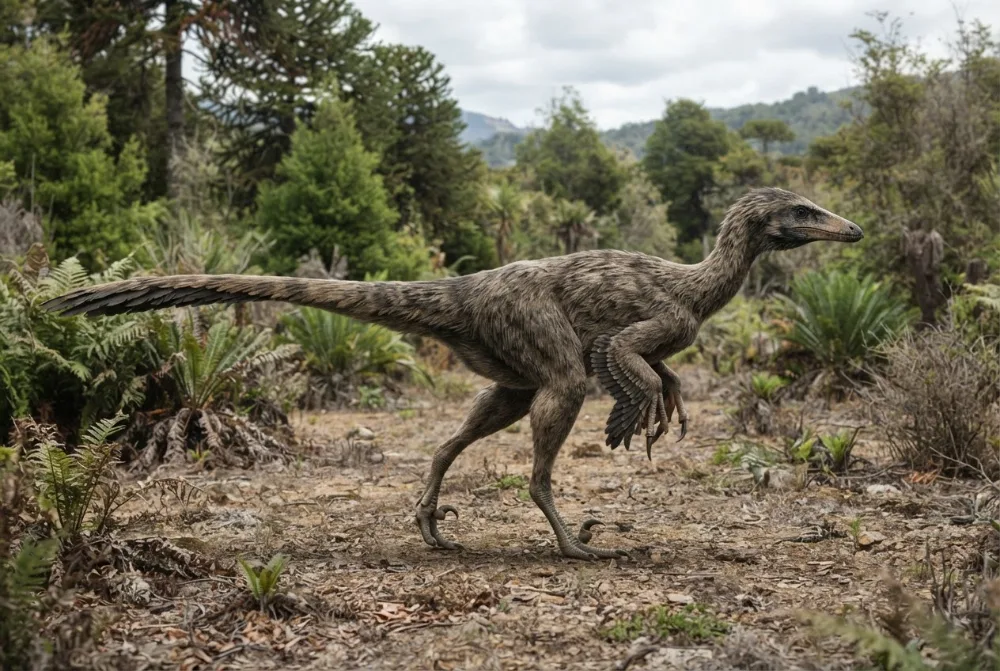
Bonapartenykus was a meat-eating dinosaur that lived in South America near the end of the Age of Dinosaurs. It was one of the biggest members of its family, the alvarezsauroids, and it had a special claw on each hand.1
Yoom jiraate?
Hammam guddaa ture?
Hammam dheeraa ture?
Hammam ol-dheeraa ture?
tilmaama
Hammam ulfaataa ture?
 akka saree 3 funyaan hanga eegeetti dheeraa🍌akka muuzii 18 walitti hiriiran dheeraa🍉akka habxuu 14 ulfaata🧸akka ijoollee KG 4 ulfaata🎒akka ijoollee mana barumsaa 2 ulfaata🏃meetira 100 sekondii 7.2 keessatti fiiguu danda'a (namni hunda caalaa saffisaan 9.6 barbaada)
SI wajjin yoo wal bira qabamu, Bonapartenykus hammam guddaa ture?
Herrega qofa barbaadduu kee keessatti. Wanti tokkollee hin olkaa'amu, eessayyuu hin ergamu.
Hammam saffisaa ture?


Odeeffannoowwan bashannansiisoo
Bonapartenykus is the largest known alvarezsauroid, measuring up to 3.3 metres (10.8 feet) long and weighing up to 72 kilograms (159 pounds).1
Its fossils were found with two incomplete eggs and many eggshell pieces, which were given their own scientific name, Arriagadoolithus.1
The eggs were found less than 20 centimetres (7.9 inches) away from the skeleton, so scientists think they may belong to Bonapartenykus.1
Bonapartenykus had a fused hip bone and a fused shoulder blade, which are unusual features that help scientists tell it apart from other dinosaurs.1
It lived between 72 and 66 million years ago, during the Maastrichtian age of the Late Cretaceous period.2
The name 'ultimus' means 'latest', because it was one of the youngest alvarezsauroids from South America.1
Gaaffiiwwan waa'ee Bonapartenykus baay'ee gaafataman
?How big was Bonapartenykus?
It was about 2.5 to 3.3 metres (8.2 to 10.8 feet) long and weighed 43 to 72 kilograms (95 to 159 pounds). That makes it the largest known alvarezsauroid.1
?What did Bonapartenykus eat?
It was a meat-eating dinosaur, so it probably ate small animals like lizards or insects. Its special claw may have helped it catch prey.1
?Did Bonapartenykus lay eggs?
Yes, its fossils were found with two eggs and many eggshell pieces nearby. Scientists think the eggs belonged to Bonapartenykus and gave them the name Arriagadoolithus.1
?When did Bonapartenykus live?
It lived between 72 and 66 million years ago, near the end of the Age of Dinosaurs. Its name 'ultimus' means 'latest' because it was one of the youngest alvarezsauroids from South America.1
Seenaa sobaa diigaa
Seenaa sobaa: Some people think Bonapartenykus was a bird because it had feathers and a beak-like snout.
Dhugaa: Bonapartenykus was a dinosaur, not a bird. It belonged to a group called alvarezsauroids, which are close relatives of birds but still dinosaurs.1
Ogeeyyii daayinootiif
- Maqaa saayinsii
- Bonapartenykus
- Kan maqaa baase
- Agnolin et al. 20122
- Garee
- Daayinoowwan foon nyaatan
- Maatii / kilaadii
- Alvarezsauroidea2
- Ramaddii
- Theropoda2
- Umurii dhagaawwanii
- waggaa miliyoona 72 hanga 66 (Maastrichtian)2
- Caasaawwan dhagaa
- Allen2
- Biyyoota
- Arjentiinaa2
- Galmee fosilii
- 3 The Paleobiology Database keessa2
- Argannoo
- The first skeleton was found in Argentina and was described in 2009 as an unknown alvarezsaurid. In 2012, scientists Federico Agnolin, Jaime Powell, Fernando Novas, and Martin Kundrát named it Bonapartenykus ultimus.1
- Ammallee falmisiisaa
- Scientists are not sure if the eggs found with Bonapartenykus really belong to it, because they were not inside the body. They might belong to another animal.1
Odeeffannoon eessaa dhufa
- Bonapartenykus (en.wikipedia.org)
- Bonapartenykus in The Paleobiology Database (CC BY 4.0): umurii, bakkeewwan, caasaawwan dhagaa, ramaddii.
Odeeffannoon fuula kana irra jiru hundi lakkoofsa madda isaa agarsiisu qaba. Yoo waa dogoggorre, dhiifama, nuti jaallattoota daayinoo malee joornaalii saayinsii miti. [email protected] irratti nutti himi, nus ni sirreessina.
 Rex beela'eera! Dino Wiki pirojektii abbaa tokkoo kan ilma isaa daayinoo jaallatuuf hojjetame, bilisa, beeksisa malee fi hordoftuu malee. Ga'eessonni akka inni interneetii irra turuuf Rexiif nyaata xiqqoo kennuu danda'u.Rex soori
 Allosaurus
 Carnotaurus
 Dilophosaurus
 Giganotosaurus
 Compsognathus
 Paronychodon
 Tyrannosaurus
 Triceratops
 Velociraptor
 Spinosaurus
 Ankylosaurus
 Parasaurolophus