 Ati daayinoo kami? Qormaata
 Lola daayinoo
 Dorgommii daayinoo
 Taphoota daayinoo xixiqqoo
 Albamii istiikarii
 Tarreewwan TOP daayinoo
 Na dinqisiisi!
Coronosaurus
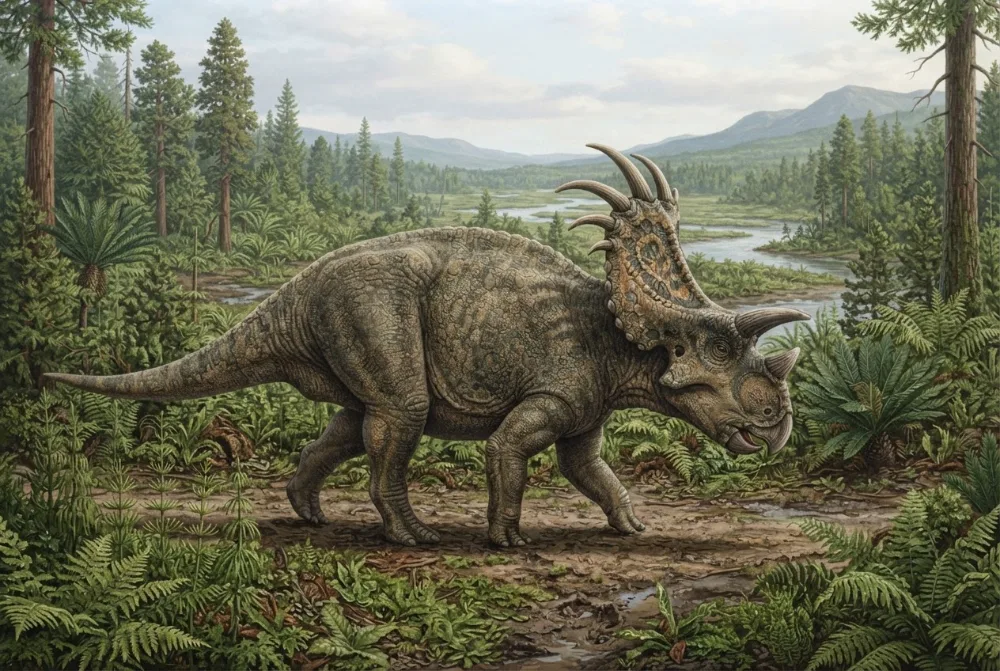
Coronosaurus was a horned dinosaur that lived in Canada during the Late Cretaceous. It had a big frill on its head with a crown of spiky bones, which made it look very fancy. It walked on four legs and ate plants.1
Yoom jiraate?
Hammam guddaa ture?
Hammam dheeraa ture?
Hammam ol-dheeraa ture?
tilmaama
Hammam ulfaataa ture?

 akka saree 5 funyaan hanga eegeetti dheeraa🍌akka muuzii 28 walitti hiriiran dheeraaakka saree 100 ulfaata🍉akka habxuu 400 ulfaata🎒akka kutaalee mana barumsaa guutuu 2.5 ulfaata🐻❄️akka beeraa adii 4 ulfaata🏃meetira 100 sekondii 11 keessatti fiiguu danda'a (namni hunda caalaa saffisaan 9.6 barbaada)
SI wajjin yoo wal bira qabamu, Coronosaurus hammam guddaa ture?
Herrega qofa barbaadduu kee keessatti. Wanti tokkollee hin olkaa'amu, eessayyuu hin ergamu.
Hammam saffisaa ture?


Odeeffannoowwan bashannansiisoo
Coronosaurus had a unique crown of spiky bones on its frill, which no other ceratopsian dinosaur had.1
It was originally thought to be a species of Centrosaurus, but scientists later gave it its own name in 2012.1
Its fossils were found in two bone beds in Alberta, Canada, which were discovered by paleontologist Philip Currie.1
Coronosaurus lived about 83 to 72 million years ago, during the Campanian stage of the Late Cretaceous.2
It was a medium-sized ceratopsid, about 5 metres (16 feet) long and weighing around 2 tonnes (2.2 short tons).1
The dinosaur's name comes from the Latin word 'corona', meaning crown, because of the crown-like horns on its frill.1
Coronosaurus shared its home with other dinosaurs like Daspletosaurus, Troodon, and Parasaurolophus.1
Gaaffiiwwan waa'ee Coronosaurus baay'ee gaafataman
?How big was Coronosaurus?
About 5 metres (16 feet) long and 2 tonnes (2.2 short tons) in weight. It was a medium sized dinosaur for its kind.1
?What did Coronosaurus eat?
It ate plants. It was a herbivore that walked on four legs and had a beak for cropping vegetation.12
?Why did Coronosaurus have a crown of spikes?
Scientists think the crown of spiky bones on its frill was used for display, maybe to attract mates or scare off rivals. It is unique among ceratopsians.1
?Where was Coronosaurus found?
Its fossils were found in two bone beds in Alberta, Canada, in the Oldman Formation. They were discovered by paleontologist Philip Currie.1
Ogeeyyii daayinootiif
- Maqaa saayinsii
- Coronosaurus
- Kan maqaa baase
- Ryan et al. 20122
- Garee
- Daayinoowwan gaanfa qaban
- Maatii / kilaadii
- Ceratopsidae2
- Ramaddii
- Ornithischia > Ceratopsia > Ceratopsidae2
- Umurii dhagaawwanii
- waggaa miliyoona 84 hanga 72 (Campanian)2
- Caasaawwan dhagaa
- Oldman2
- Biyyoota
- Kanaadaa2
- Galmee fosilii
- 2 The Paleobiology Database keessa2
- Argannoo
- Coronosaurus was first described in 2005 as a species of Centrosaurus, but in 2012 scientists Michael Ryan, David Evans, and Kieran Shepherd gave it its own genus name because of its unique frill horns.1
- Ammallee falmisiisaa
- Scientists are still debating exactly how Coronosaurus is related to other horned dinosaurs like Styracosaurus and Centrosaurus.1
Odeeffannoon eessaa dhufa
- Coronosaurus (en.wikipedia.org)
- Coronosaurus in The Paleobiology Database (CC BY 4.0): umurii, bakkeewwan, caasaawwan dhagaa, ramaddii.
Odeeffannoon fuula kana irra jiru hundi lakkoofsa madda isaa agarsiisu qaba. Yoo waa dogoggorre, dhiifama, nuti jaallattoota daayinoo malee joornaalii saayinsii miti. [email protected] irratti nutti himi, nus ni sirreessina.
 Rex beela'eera! Dino Wiki pirojektii abbaa tokkoo kan ilma isaa daayinoo jaallatuuf hojjetame, bilisa, beeksisa malee fi hordoftuu malee. Ga'eessonni akka inni interneetii irra turuuf Rexiif nyaata xiqqoo kennuu danda'u.Rex soori
 Triceratops
 Protoceratops
 Ojoceratops
 Tatankaceratops
 Psittacosaurus
 Centrosaurus
 Tyrannosaurus
 Velociraptor
 Spinosaurus
 Ankylosaurus
 Parasaurolophus
 Pteranodon