 Ati daayinoo kami? Qormaata
 Lola daayinoo
 Dorgommii daayinoo
 Taphoota daayinoo xixiqqoo
 Albamii istiikarii
 Tarreewwan TOP daayinoo
 Na dinqisiisi!
Yoom jiraate?

Hammam guddaa ture?
Hammam dheeraa ture?
Hammam ol-dheeraa ture?
Hammam ulfaataa ture?
 akka saree 7 funyaan hanga eegeetti dheeraa🍌akka muuzii 39 walitti hiriiran dheeraa🍉akka habxuu 240 ulfaata🧸akka ijoollee KG 63 ulfaata🎒akka ijoollee mana barumsaa 38 ulfaata🐻❄️akka beeraa adii 2.5 ulfaata🏃meetira 100 sekondii 10 keessatti fiiguu danda'a (namni hunda caalaa saffisaan 9.6 barbaada)
SI wajjin yoo wal bira qabamu, Indosuchus hammam guddaa ture?
Herrega qofa barbaadduu kee keessatti. Wanti tokkollee hin olkaa'amu, eessayyuu hin ergamu.
Hammam saffisaa ture?


Odeeffannoowwan bashannansiisoo
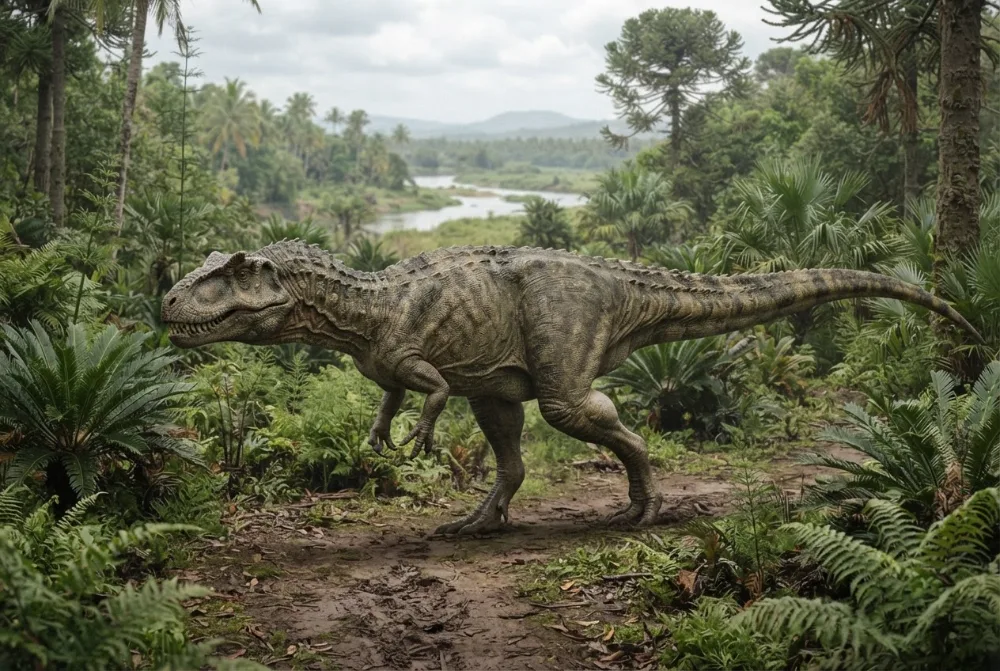
Indosuchus is known only from a few skull bones, so scientists are still learning about it.1
Its name means 'Indian crocodile', even though it was a dinosaur, not a crocodile.1
At first, scientists thought Indosuchus was related to Allosaurus or Tyrannosaurus, but now they know it was an abelisaurid.1
Indosuchus had a crested skull that was flattened on top, which helped tell it apart from other dinosaurs.1
Gaaffiiwwan waa'ee Indosuchus baay'ee gaafataman
?How big was Indosuchus?
Indosuchus was about 7 metres (23 feet) long and weighed about 1.2 tonnes (1.3 short tons). That is about as long as a large car.42
?What did Indosuchus eat?
Indosuchus was a carnivore, so it ate meat. It probably hunted other dinosaurs or scavenged for food.42
?When did Indosuchus live?
Indosuchus lived during the Late Cretaceous Period, about 70 to 66 million years ago, right before the dinosaurs went extinct.42
?Where was Indosuchus found?
Indosuchus fossils were found in India, near Jabalpur in Madhya Pradesh, in rocks of the Lameta Formation.42
?Why is it called Indosuchus?
Its name means 'Indian crocodile' in Greek, because it was found in India and its skull reminded scientists of a crocodile. But it was a dinosaur, not a crocodile.42
?Did Indosuchus have feathers?
Nobody knows for sure. No feathers have been found with Indosuchus fossils, and since it was an abelisaurid, it might have had scales like other abelisaurids.4
Seenaa sobaa diigaa
Seenaa sobaa: Indosuchus was a crocodile because its name means 'Indian crocodile'.
Dhugaa: Indosuchus was a dinosaur, not a crocodile. The name just refers to its crocodile-like snout.1
Ogeeyyii daayinootiif
- Maqaa saayinsii
- Indosuchus
- Kan maqaa baase
- Huene 19335
- Garee
- Daayinoowwan foon nyaatan
- Maatii / kilaadii
- Abelisauridae5
- Ramaddii
- Theropoda > Ceratosauria > Abelisauridae5
- Umurii dhagaawwanii
- waggaa miliyoona 72 hanga 66 (Maastrichtian)5
- Caasaawwan dhagaa
- Lameta5
- Biyyoota
- Hindii5
- Galmee fosilii
- 1 The Paleobiology Database keessa5
- Argannoo
- Indosuchus was named by German paleontologist Friedrich von Huene in 1932, and described by Huene and Charles Alfred Matley in 1933 from three partial skulls found near Jabalpur, India.1
- Ammallee falmisiisaa
- Scientists still debate exactly how Indosuchus is related to other abelisaurids, because only a few skull bones have been found.1
Odeeffannoon eessaa dhufa
- Indosuchus (en.wikipedia.org)
- Indosuchus (nhm.ac.uk)
- Indosuchus| The Late Cretaceous Predator of Ancient India (thedinosaurs.org)
- Indosuchus - Wikipedia (en.m.wikipedia.org)
- Indosuchus in The Paleobiology Database (CC BY 4.0): umurii, bakkeewwan, caasaawwan dhagaa, ramaddii.
Odeeffannoon fuula kana irra jiru hundi lakkoofsa madda isaa agarsiisu qaba. Yoo waa dogoggorre, dhiifama, nuti jaallattoota daayinoo malee joornaalii saayinsii miti. [email protected] irratti nutti himi, nus ni sirreessina.
 Rex beela'eera! Dino Wiki pirojektii abbaa tokkoo kan ilma isaa daayinoo jaallatuuf hojjetame, bilisa, beeksisa malee fi hordoftuu malee. Ga'eessonni akka inni interneetii irra turuuf Rexiif nyaata xiqqoo kennuu danda'u.Rex soori
 Allosaurus
 Carnotaurus
 Dilophosaurus
 Giganotosaurus
 Compsognathus
 Paronychodon
 Tyrannosaurus
 Triceratops
 Velociraptor
 Spinosaurus
 Ankylosaurus
 Parasaurolophus