 Ati daayinoo kami? Qormaata
 Lola daayinoo
 Dorgommii daayinoo
 Taphoota daayinoo xixiqqoo
 Albamii istiikarii
 Tarreewwan TOP daayinoo
 Na dinqisiisi!
Yoom jiraate?

Hammam guddaa ture?
Hammam dheeraa ture?
Hammam ol-dheeraa ture?
Hammam ulfaataa ture?
 akka saree 8 funyaan hanga eegeetti dheeraa🍌akka muuzii 42 walitti hiriiran dheeraa🍉akka habxuu 220 ulfaata🧸akka ijoollee KG 58 ulfaata🎒akka ijoollee mana barumsaa 34 ulfaata🐻❄️akka beeraa adii 2.5 ulfaata🏃meetira 100 sekondii 10 keessatti fiiguu danda'a (namni hunda caalaa saffisaan 9.6 barbaada)
SI wajjin yoo wal bira qabamu, Lusovenator hammam guddaa ture?
Herrega qofa barbaadduu kee keessatti. Wanti tokkollee hin olkaa'amu, eessayyuu hin ergamu.
Hammam saffisaa ture?


Odeeffannoowwan bashannansiisoo
Lusovenator lived during the Late Jurassic and Early Cretaceous periods, about 154 to 144 million years ago.1
Its fossils were found in the Lourinhã Formation in Portugal, which is famous for many dinosaur discoveries.1
The first fossils of Lusovenator were discovered in the 1980s by a man named José Joaquim dos Santos, who later donated them to a museum.1
Lusovenator belongs to a group of large meat-eating dinosaurs called carcharodontosaurs, which includes some of the biggest predators ever.1
The known bones of Lusovenator include parts of the spine, hips, and a nearly complete right foot.1
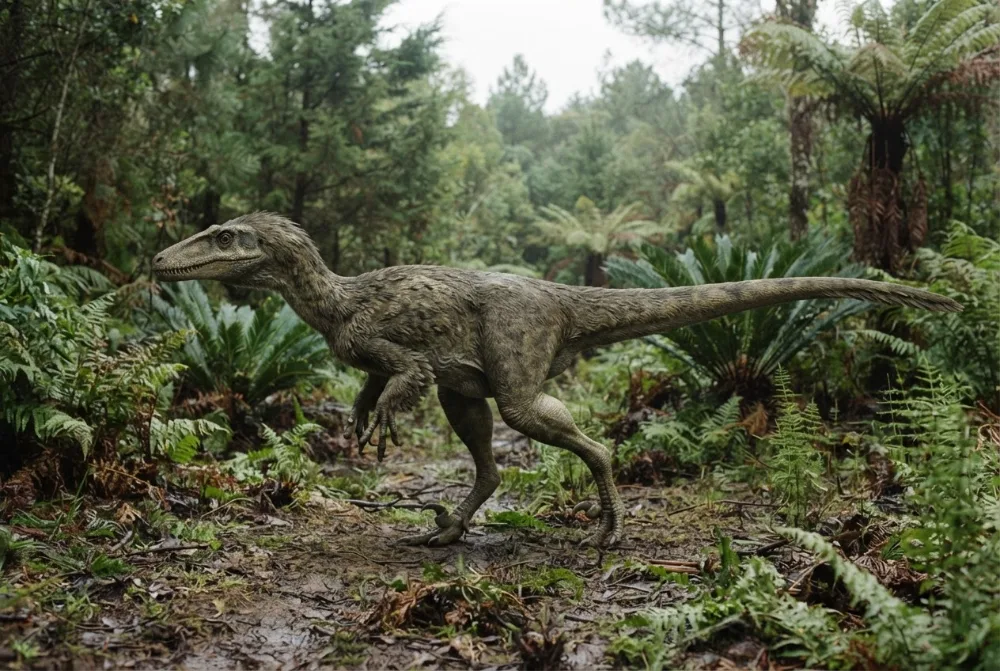
Gaaffiiwwan waa'ee Lusovenator baay'ee gaafataman
?How big was Lusovenator?
Scientists don't know its exact size because only partial bones were found, but it was a medium to large meat eater, likely around 6 to 8 metres long (20 to 26 feet).4
?What did Lusovenator eat?
Lusovenator was a carnivore, so it ate meat. It probably hunted smaller dinosaurs and other animals in its environment.4
?When did Lusovenator live?
It lived during the Late Jurassic and Early Cretaceous periods, about 154 to 144 million years ago.1
?Where was Lusovenator found?
Its fossils were found in Portugal, in the Lourinhã Formation, which is famous for many dinosaur discoveries.1
?Is Lusovenator a dinosaur?
Yes, it is a dinosaur. It belongs to a group of meat-eating dinosaurs called carcharodontosaurs.1
?Why is it called Lusovenator?
The name means 'Portuguese hunter' because it was found in Portugal and it was a predator.1
Ogeeyyii daayinootiif
- Maqaa saayinsii
- Lusovenator
- Kan maqaa baase
- Malafaia et al. 20204
- Garee
- Daayinoowwan foon nyaatan
- Maatii / kilaadii
- Carcharodontosauria4
- Ramaddii
- Theropoda > Allosauroidea4
- Umurii dhagaawwanii
- waggaa miliyoona 152 hanga 143 (Kimmeridgian / Tithonian)4
- Caasaawwan dhagaa
- Freixial, Praia da Amoreira-Porto Novo4
- Biyyoota
- Portugaal4
- Galmee fosilii
- 2 The Paleobiology Database keessa4
- Argannoo
- Lusovenator was named in 2020 by Malafaia and colleagues. The fossils were found in Portugal by José Joaquim dos Santos in the 1980s and later studied by scientists.14
- Ammallee falmisiisaa
- Scientists are not sure exactly how big Lusovenator grew, because the only skeleton found so far is from a young animal.1
Odeeffannoon eessaa dhufa
- Lusovenator (en.wikipedia.org)
- Lusovenator santosi: New Predatory Dinosaur Identified in Portugal | Paleontology World (paleontologyworld.com)
- Lusovenator santosi | Dinosaur Database by DinoAnimals.com (dinoanimals.com)
- Lusovenator in The Paleobiology Database (CC BY 4.0): umurii, bakkeewwan, caasaawwan dhagaa, ramaddii.
Odeeffannoon fuula kana irra jiru hundi lakkoofsa madda isaa agarsiisu qaba. Yoo waa dogoggorre, dhiifama, nuti jaallattoota daayinoo malee joornaalii saayinsii miti. [email protected] irratti nutti himi, nus ni sirreessina.
 Rex beela'eera! Dino Wiki pirojektii abbaa tokkoo kan ilma isaa daayinoo jaallatuuf hojjetame, bilisa, beeksisa malee fi hordoftuu malee. Ga'eessonni akka inni interneetii irra turuuf Rexiif nyaata xiqqoo kennuu danda'u.Rex soori
 Allosaurus
 Carnotaurus
 Dilophosaurus
 Giganotosaurus
 Compsognathus
 Paronychodon
 Brachiosaurus
 Diplodocus
 Brontosaurus
 Camarasaurus
 Morosaurus
 Apatosaurus