 Quiz: Tge dino es ti?
 Cumbat da dinos
 Cursa da dinos
 Mini-gieus da dinos
 Album d'adesivs
 TOP-glistas da dinos
 Ma surprenda!
Bravoceratops
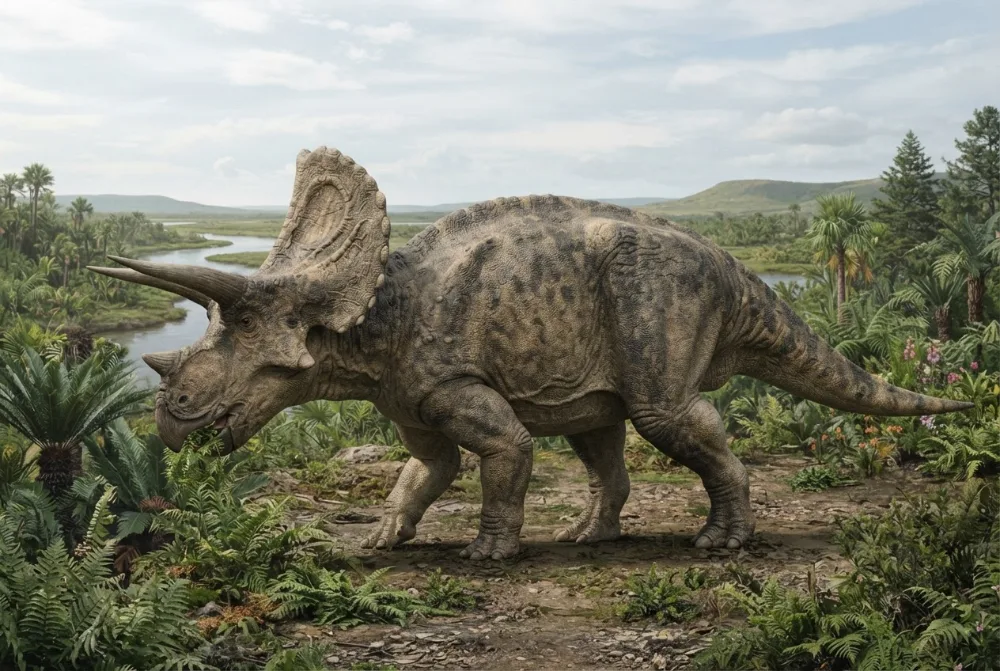
Bravoceratops was a big, plant-eating dinosaur with a huge frill on its head and a beak like a parrot. It lived in what is now Texas, USA, about 70 million years ago. This dinosaur is known from just one skull, but it helps scientists understand how horned dinosaurs changed over time.1
Cura viveva el?
Quant grond era el?
Quant lung era el?
Quant aut era el?
stima
 uschè lung sco 2 autos parcads in suenter l'auter🍌uschè lung sco 56 bananas ina suenter l'autra🏃pudess currer 100 meters en 19 secundas (il pli spert uman dovra 9,6)
Quant grond era Bravoceratops cumpareglià cun TAI?
Mo matematica en tes navigatur. Nagut na vegn arcunà u tramess.
Quant spert era el?


Fatgs divertents
Bravoceratops had a fan-shaped bone in the middle of its frill with a hollow spot that looked like a single eye, which is why it was named after the cyclops Polyphemus.1
Its name comes from the Rio Bravo del Norte, the Mexican name for the Rio Grande river.1
The only known fossil of Bravoceratops was found in Big Bend National Park in Texas.1
Bravoceratops lived during the Maastrichtian age, about 70 million years ago, near the end of the dinosaur era.1
Some scientists think Bravoceratops might be the same as another dinosaur, but others say it is a valid genus with unique features.1
Bravoceratops had two brow horns that were taller than they were wide, not round like in some other horned dinosaurs.1
Las dumondas las pli frequentas davart Bravoceratops
?How big was Bravoceratops?
Bravoceratops was one of the largest chasmosaurine horned dinosaurs. Its skull was about 2.1 metres long, and its brow horns were each over 0.9 metres long. It was similar in size to Triceratops, which weighed up to about 6,800 kilograms.3
?What did Bravoceratops eat?
Bravoceratops was a plant-eater. It had a beak like a parrot for snipping plants.1
?When did Bravoceratops live?
Bravoceratops lived about 70 million years ago, during the Late Cretaceous period.1
Chatschader da mitus
Mitus: Bravoceratops had a single horn on its frill like a cyclops eye.
Vardad: The hollow spot on its frill was probably the base for a small horn, but the horn itself is not preserved in the fossil.1
Per experts da dinos
- Num scientific
- Bravoceratops
- Numnà da
- Wick and Lehman 20134
- Gruppa
- Dinos cun corns
- Famiglia / clada
- Ceratopsidae4
- Classificaziun
- Ornithischia > Ceratopsia > Ceratopsidae4
- Vegliadetgna da la crappa
- 72 fin 66 milliuns onns (Maastrichtian)4
- Formaziuns da crap
- Javelina4
- Pajais
- USA4
- Chats da fossils
- 1 en The Paleobiology Database4
- Scuverta
- Bravoceratops was named by Steven L. Wick and Thomas M. Lehman in 2013 based on a skull found in the Javelina Formation of Texas.1
- Anc discutà
- Scientists are not sure if Bravoceratops is a valid genus or if its fossil was reconstructed upside down, making it a nomen dubium.1
Danunder che vegnan ils fatgs
- Bravoceratops (en.wikipedia.org)
- PBDB Taxon (paleobiodb.org)
- Horned Dinosaur Discovery - Big Bend National Park (U.S. National Park Service) (nps.gov)
- Bravoceratops in The Paleobiology Database (CC BY 4.0): vegliadetgna, lieus, formaziuns da crap, classificaziun.
Mintga fatg sin questa pagina ha in numer che maina tar sia funtauna. Sche nus avain fatg in sbagl, perstgisa, nus essan fans da dinos, betg ina revista scientifica. Scriva a nus sin [email protected] e nus il curregin.
 Rex ha fom! Dino Wiki è in project d'in bab per ses figl che ama ils dinos, gratuit, senza reclama e senza trackers. Ils creschids pon dar ina marenda a Rex per gidar a tegnair la pagina online.Pavlar Rex
 Triceratops
 Protoceratops
 Ojoceratops
 Tatankaceratops
 Psittacosaurus
 Centrosaurus
 Tyrannosaurus
 Velociraptor
 Spinosaurus
 Ankylosaurus
 Parasaurolophus
 Pteranodon