 Quiz: Tge dino es ti?
 Cumbat da dinos
 Cursa da dinos
 Mini-gieus da dinos
 Album d'adesivs
 TOP-glistas da dinos
 Ma surprenda!
Dolichorhynchops
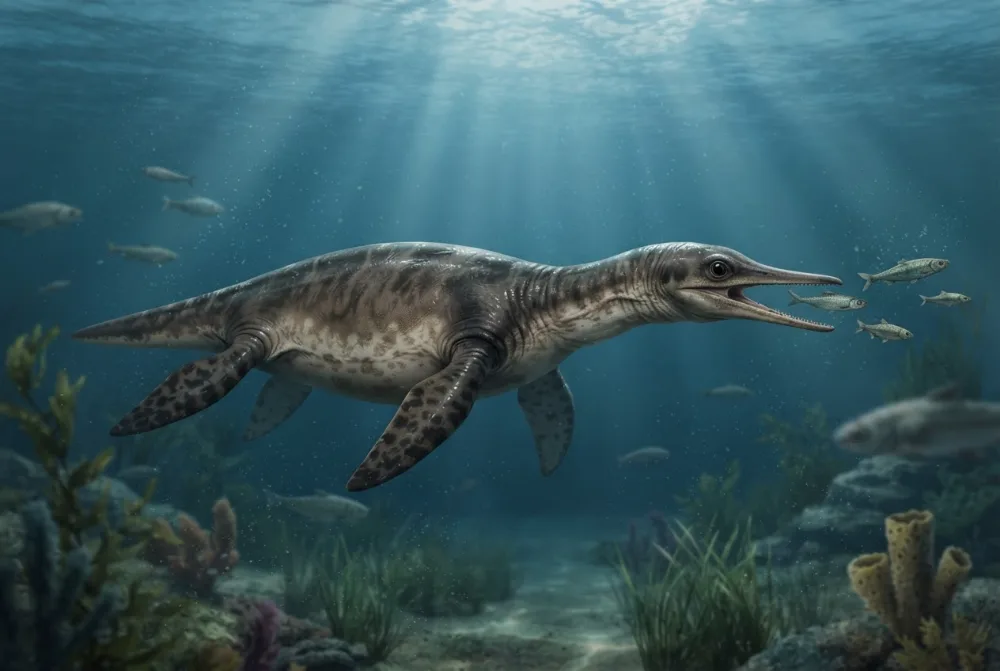
Dolichorhynchops was a small, fast-swimming marine reptile that lived in the Late Cretaceous seas. It had a long snout and a short neck, and it used its four flippers to chase after fish and squid.1
Cura viveva el?
Quant grond era el?
Quant lung era el?
Quant grev era el?
 uschè lung sco 3 chauns dal nas a la cua🍌uschè lung sco 17 bananas ina suenter l'autra🍉uschè grev sco 85 melunas🧸uschè grev sco 22 uffants da scoletta🎒uschè grev sco 13 scolars🏊pudess nudar la lunghezza d'ina gronda piscina (50 m) en 6,2 secundas
Quant grond era Dolichorhynchops cumpareglià cun TAI?
Mo matematica en tes navigatur. Nagut na vegn arcunà u tramess.
Quant spert era el?


Fatgs divertents
Dolichorhynchops was a plesiosaur, but unlike the long-necked plesiosaurs, it had a short neck and a big head.1
The first fossil of Dolichorhynchops was found by a teenager, George Fryer Sternberg, in Kansas around 1900.1
Its name means 'long-nosed face' because of its long, narrow snout.1
Dolichorhynchops lived in the Western Interior Seaway, a shallow sea that split North America in two during the Cretaceous.1
Las dumondas las pli frequentas davart Dolichorhynchops
?How big was Dolichorhynchops?
Dolichorhynchops was a relatively small plesiosaur, measuring around 3 metres (9.8 ft) long. Some estimates range from 2.5 to 3 metres (8.2 to 9.8 ft).13
?What did Dolichorhynchops eat?
It ate fish and squid. Its long, narrow jaws were filled with sharp teeth to grab prey, which it swallowed whole.43
?Was Dolichorhynchops a dinosaur?
No, it was a marine reptile called a plesiosaur, not a dinosaur. It lived in the seas during the Late Cretaceous.14
?When did Dolichorhynchops live?
It lived during the Late Cretaceous, about 87 to 72 million years ago. Fossils are found in North America.1
?Could Dolichorhynchops swim fast?
Yes, it was a quick and agile swimmer. It used its long, paddle-like flippers to 'fly' through the water like a penguin.4
?Did Dolichorhynchops give birth to live young?
Yes, fossils have been found with unborn babies inside, strong evidence that it gave birth to live young.4
Per experts da dinos
- Num scientific
- Dolichorhynchops
- Numnà da
- Williston 19025
- Gruppa
- Plesiosaurs
- Famiglia / clada
- Polycotylidae5
- Classificaziun
- Plesiosauria > Sauropterygia5
- Vegliadetgna da la crappa
- 94 fin 66 milliuns onns (Turonian / Maastrichtian)5
- Formaziuns da crap
- Niobrara, Pierre Shale, Mesaverde5
- Pajais
- USA, Canada, Pologna, Russia5
- Chats da fossils
- 14 en The Paleobiology Database5
- Scuverta
- The first specimen was found by teenage fossil hunter George Fryer Sternberg in Kansas around 1900. It was named Dolichorhynchops osborni by Samuel Wendell Williston in 1902.1
- Anc discutà
- Scientists still debate whether some large polycotylid specimens from Wyoming belong to Dolichorhynchops or to a different genus.1
Danunder che vegnan ils fatgs
- Dolichorhynchops (en.wikipedia.org)
- A new genus of small polycotylid plesiosaur from the Upper Cretaceous of the Western Interior Seaway and a clarification of the genus Dolichorhynchops (sciencedirect.com)
- Herschel Short-necked Plesiosaur (royalsaskmuseum.ca)
- Sea Monster Pictures, Dolichorhynchops Photos, Facts, Desktop Wallpaper, Animals Reports, News, Info - National Geographic | National Geographic (nationalgeographic.com)
- Dolichorhynchops in The Paleobiology Database (CC BY 4.0): vegliadetgna, lieus, formaziuns da crap, classificaziun.
Mintga fatg sin questa pagina ha in numer che maina tar sia funtauna. Sche nus avain fatg in sbagl, perstgisa, nus essan fans da dinos, betg ina revista scientifica. Scriva a nus sin [email protected] e nus il curregin.
 Rex ha fom! Dino Wiki è in project d'in bab per ses figl che ama ils dinos, gratuit, senza reclama e senza trackers. Ils creschids pon dar ina marenda a Rex per gidar a tegnair la pagina online.Pavlar Rex
 Elasmosaurus
 Pliosaurus
 Plesiosaurus
 Cimoliasaurus
 Colymbosaurus
 Trinacromerum
 Tyrannosaurus
 Triceratops
 Velociraptor
 Spinosaurus
 Ankylosaurus
 Parasaurolophus