 Uri dinozore iyihe? Umukino w'ibibazo
 Intambara ya dinozore
 Isiganwa rya dinozore
 Imikino mito ya dinozore
 Alubumu ya sitikeri
 Intonde za TOP za dinozore
 Ntungura!
Agujaceratops
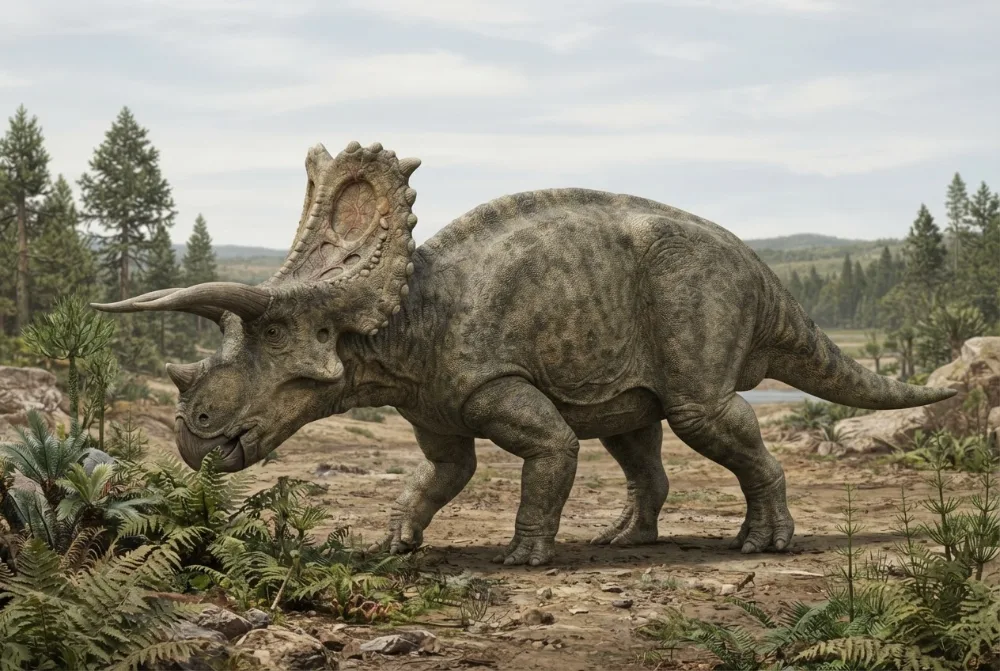
Agujaceratops was a big, four-legged plant eater with a huge frill and long horns on its face. It lived in what is now Texas and Mexico, about 77 million years ago. It looked a bit like a Triceratops, but with a longer frill and different horns.13
Yabayeho ryari?
Yanganaga ite?
Yari ndende ite?
Ubutumburuke bwayo bwanganaga iki?
igereranya
Yari iremereye ite?

 ndende nk'imbwa 4 zikurikiranye🍌ndende nk'imineke 24 ikurikiranyeiremereye nk'imbwa 75🍉iremereye nk'imbuto 300 za watermelon🧸iremereye nk'abana 79 bo mu ishuri ry'incuke🎒iremereye nk'abanyeshuri 47🐻❄️iremereye nk'idubu 3 zo mu rubura🏃yashoboraga kwiruka metero 100 mu masegonda 10 (umuntu wihuta kurusha abandi akenera 9,6)
Agujaceratops yanganaga ite ugereranyije NAWE?
Ni imibare gusa ibarirwa muri mushakisha yawe. Nta kintu kibikwa cyangwa cyoherezwa ahandi.
Yihutaga ite?


Utuntu dushimishije
Agujaceratops had a heart-shaped frill with a deep notch at the back, and the edges were covered with small, blunt hornlets that made it look scalloped.1
Its brow horns pointed up and out, then curved backwards, which is different from many other horned dinosaurs.1
There are two known species: Agujaceratops mariscalensis and Agujaceratops mavericus. The second one has longer brow horns and a longer frill.1
Many Agujaceratops fossils have been found together in one quarry, which might mean they lived in herds or were gathered by a flood.1
It lived alongside the feathered dinosaur Leptorhynchos and the small pachycephalosaur Texacephale, and was hunted by tyrannosaurs and the giant crocodilian Deinosuchus.1
The first fossils were found in 1938 in Big Bend National Park, Texas, but they were not studied until many years later.1
Ibibazo bibazwa cyane kuri Agujaceratops
?How big was Agujaceratops?
Agujaceratops was about 4.3 metres (14 feet) long and weighed around 1.5 metric tons (1.7 short tons). That is roughly the size of a small car.1
?What did Agujaceratops eat?
It was a four-legged plant eater, like other ceratopsids. It probably ate low-growing plants with its beak and teeth.13
?When did Agujaceratops live?
It lived about 77 million years ago, during the Late Cretaceous period. Its fossils are found in Texas and Mexico.13
?Why did Agujaceratops have a frill?
The frill and horns were probably used for showing off to other members of its species, and maybe for fighting over territory or mates.1
Gusenya ibinyoma
Ibivugwa: Some people think Agujaceratops is the same as Chasmosaurus.
Ukuri: It was first named Chasmosaurus mariscalensis, but scientists later decided it was different enough to be its own genus, Agujaceratops.1
Ku bazobereye muri dinozore
- Izina rya siyansi
- Agujaceratops
- Yiswe na
- Lucas et al. 20063
- Itsinda
- Dinozore zifite amahembe
- Umuryango / ishami
- Ceratopsidae3
- Ishyirwa mu byiciro
- Ornithischia > Ceratopsia > Ceratopsidae3
- Imyaka y'amabuye
- imyaka miliyoni 84 kugeza 72 (Campanian)3
- Inzego z'amabuye
- Aguja3
- Ibihugu
- Amerika, Megizike3
- Ibisigazwa byanditswe
- 16 muri The Paleobiology Database3
- Ivumburwa
- The first fossils were collected in 1938 from Big Bend National Park, Texas. In 1989, Lehman named them Chasmosaurus mariscalensis, and in 2006 Lucas, Sullivan, and Hunt gave them the new name Agujaceratops.1
- Biracyagibwaho impaka
- Scientists are not sure if the many Agujaceratops fossils found together represent a herd or just animals that died together in a drought or flood.1
Aho amakuru yakuwe
- Agujaceratops (en.wikipedia.org)
- PBDB Taxon (paleobiodb.org)
- Agujaceratops in The Paleobiology Database (CC BY 4.0): imyaka, ahantu, inzego z'amabuye, ishyirwa mu byiciro.
Buri kintu kiri kuri uru rupapuro gifite nimero yerekana aho cyakuwe. Niba hari icyo twibeshye, tubabarire, turi abakunzi ba dinozore, ntituri ikinyamakuru cya siyansi. Tubwire kuri [email protected] tuzagikosora.
 Rex arashonje! Dino Wiki ni umushinga wa papa umwe yakoreye umuhungu we ukunda dinozore, ni ubuntu, nta matangazo kandi nta bigukurikirana. Abantu bakuru bashobora guha Rex akantu ko kurya kugira ngo Dino Wiki ikomeze kuboneka kuri interineti.Gaburira Rex
 Triceratops
 Protoceratops
 Ojoceratops
 Tatankaceratops
 Psittacosaurus
 Centrosaurus
 Tyrannosaurus
 Velociraptor
 Spinosaurus
 Ankylosaurus
 Parasaurolophus
 Pteranodon