 Uri dinozore iyihe? Umukino w'ibibazo
 Intambara ya dinozore
 Isiganwa rya dinozore
 Imikino mito ya dinozore
 Alubumu ya sitikeri
 Intonde za TOP za dinozore
 Ntungura!
Ajkaceratops
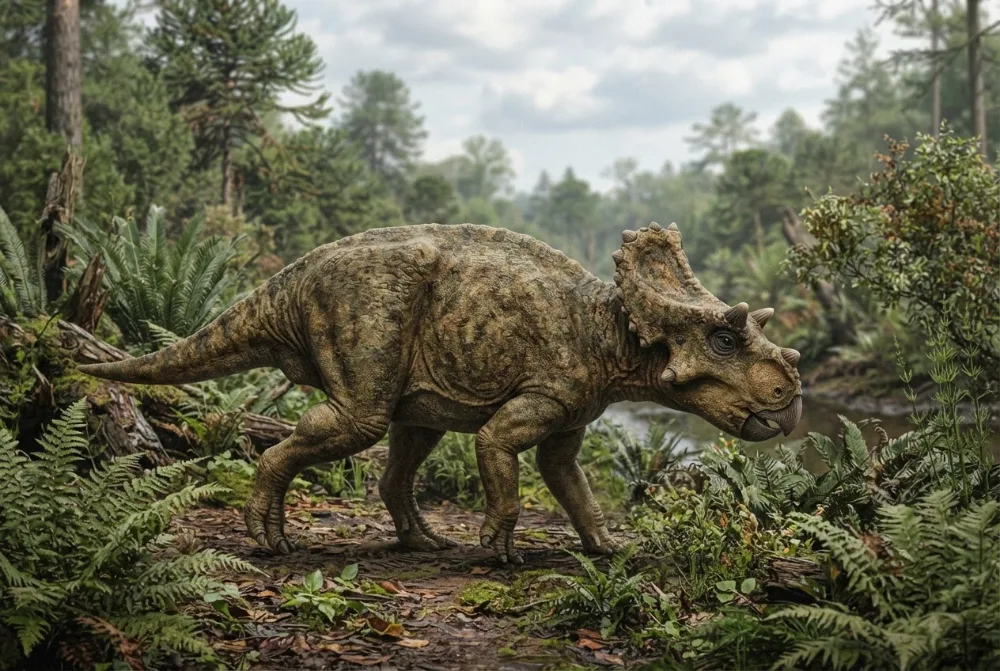
Ajkaceratops was a small horned dinosaur that lived on ancient islands in what is now Europe. It had a beak like a parrot and probably ate tough plants. Scientists think it may have hopped from island to island to reach Europe from Asia.12
Yabayeho ryari?
Yanganaga ite?
Yari ndende ite?
Ubutumburuke bwayo bwanganaga iki?
igereranya
 ndende nk'injangwe 2 zo mu rugo zikurikiranye🍌ndende nk'imineke 6 ikurikiranye🪑nto ku buryo yanyura munsi y'intebe🏃yashoboraga kwiruka metero 100 mu masegonda 14 (umuntu wihuta kurusha abandi akenera 9,6)
Ajkaceratops yanganaga ite ugereranyije NAWE?
Ni imibare gusa ibarirwa muri mushakisha yawe. Nta kintu kibikwa cyangwa cyoherezwa ahandi.
Yihutaga ite?


Utuntu dushimishije
Ajkaceratops is the first ceratopsian dinosaur ever found in Europe that scientists are sure about.2
Its fossils were discovered in a former floodplain and channel deposit, made of clay, silt, and sandstone.1
The name Ajkaceratops honors the town of Ajka in Hungary, where the fossils were found.1
Ajkaceratops may have lacked the frill and horns that other ceratopsians had.1
Its ancestors probably reached Europe by island-hopping across the Tethys Ocean.2
A 2026 study using a more complete skull confirmed that Ajkaceratops is a true ceratopsian.1
Ibibazo bibazwa cyane kuri Ajkaceratops
?How big was Ajkaceratops?
About 1 metre (3.3 feet) long, roughly the size of a large dog.1
?Did Ajkaceratops have horns?
Probably not. It may have lacked the frill and horns seen in other ceratopsians.1
?What did Ajkaceratops eat?
It ate tough plants. Its tooth wear shows it chewed tougher vegetation than some other dinosaurs living nearby.1
?When did Ajkaceratops live?
It lived during the Late Cretaceous, about 86 to 84 million years ago.1
?Where was Ajkaceratops found?
Its fossils were found in Hungary, near the town of Ajka, in rocks that were once a floodplain.1
?Is Ajkaceratops a dinosaur?
Yes, it is a small horned dinosaur called a ceratopsian.1
Ku bazobereye muri dinozore
- Izina rya siyansi
- Ajkaceratops
- Yiswe na
- Osi et al. 20103
- Itsinda
- Dinozore zifite amahembe
- Umuryango / ishami
- Ceratopsia3
- Ishyirwa mu byiciro
- Ornithischia > Ceratopsia3
- Imyaka y'amabuye
- imyaka miliyoni 86 kugeza 84 (Santonian)3
- Inzego z'amabuye
- Csehbánya3
- Ibihugu
- Hongiriya3
- Ibisigazwa byanditswe
- 1 muri The Paleobiology Database3
- Ivumburwa
- Ajkaceratops was named by Attila Ősi and colleagues in 2010, based on skull fragments found near Ajka, Hungary. The species name kozmai honors Károly Kozma.1
- Biracyagibwaho impaka
- Scientists are still debating whether Ajkaceratops had a true rostral bone, which is a key feature of ceratopsians.1
Aho amakuru yakuwe
- Ajkaceratops (en.wikipedia.org)
- A Late Cretaceous ceratopsian dinosaur from Europe with Asian affinities | Nature (nature.com)
- Ajkaceratops in The Paleobiology Database (CC BY 4.0): imyaka, ahantu, inzego z'amabuye, ishyirwa mu byiciro.
Buri kintu kiri kuri uru rupapuro gifite nimero yerekana aho cyakuwe. Niba hari icyo twibeshye, tubabarire, turi abakunzi ba dinozore, ntituri ikinyamakuru cya siyansi. Tubwire kuri [email protected] tuzagikosora.
 Rex arashonje! Dino Wiki ni umushinga wa papa umwe yakoreye umuhungu we ukunda dinozore, ni ubuntu, nta matangazo kandi nta bigukurikirana. Abantu bakuru bashobora guha Rex akantu ko kurya kugira ngo Dino Wiki ikomeze kuboneka kuri interineti.Gaburira Rex
 Triceratops
 Protoceratops
 Ojoceratops
 Tatankaceratops
 Psittacosaurus
 Centrosaurus
 Tyrannosaurus
 Velociraptor
 Spinosaurus
 Ankylosaurus
 Parasaurolophus
 Pteranodon