 Uri dinozore iyihe? Umukino w'ibibazo
 Intambara ya dinozore
 Isiganwa rya dinozore
 Imikino mito ya dinozore
 Alubumu ya sitikeri
 Intonde za TOP za dinozore
 Ntungura!
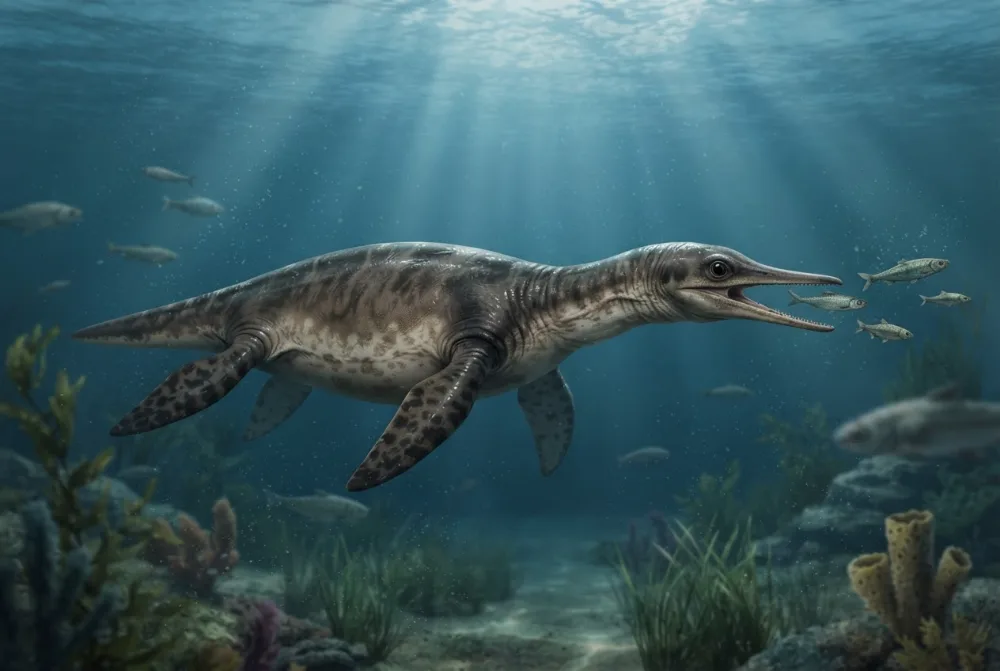
Dolichorhynchops
Dolichorhynchops was a small, fast-swimming marine reptile that lived in the Late Cretaceous seas. It had a long snout and a short neck, and it used its four flippers to chase after fish and squid.1
Yabayeho ryari?
Yanganaga ite?
Yari ndende ite?
Yari iremereye ite?
 ndende nk'imbwa 3 zikurikiranye🍌ndende nk'imineke 17 ikurikiranye🍉iremereye nk'imbuto 85 za watermelon🧸iremereye nk'abana 22 bo mu ishuri ry'incuke🎒iremereye nk'abanyeshuri 13🏊yashoboraga koga uburebure bwa pisine nini (50 m) mu masegonda 6,2
Dolichorhynchops yanganaga ite ugereranyije NAWE?
Ni imibare gusa ibarirwa muri mushakisha yawe. Nta kintu kibikwa cyangwa cyoherezwa ahandi.
Yihutaga ite?


Utuntu dushimishije
Dolichorhynchops was a plesiosaur, but unlike the long-necked plesiosaurs, it had a short neck and a big head.1
The first fossil of Dolichorhynchops was found by a teenager, George Fryer Sternberg, in Kansas around 1900.1
Its name means 'long-nosed face' because of its long, narrow snout.1
Dolichorhynchops lived in the Western Interior Seaway, a shallow sea that split North America in two during the Cretaceous.1
Ibibazo bibazwa cyane kuri Dolichorhynchops
?How big was Dolichorhynchops?
Dolichorhynchops was a relatively small plesiosaur, measuring around 3 metres (9.8 ft) long. Some estimates range from 2.5 to 3 metres (8.2 to 9.8 ft).13
?What did Dolichorhynchops eat?
It ate fish and squid. Its long, narrow jaws were filled with sharp teeth to grab prey, which it swallowed whole.43
?Was Dolichorhynchops a dinosaur?
No, it was a marine reptile called a plesiosaur, not a dinosaur. It lived in the seas during the Late Cretaceous.14
?When did Dolichorhynchops live?
It lived during the Late Cretaceous, about 87 to 72 million years ago. Fossils are found in North America.1
?Could Dolichorhynchops swim fast?
Yes, it was a quick and agile swimmer. It used its long, paddle-like flippers to 'fly' through the water like a penguin.4
?Did Dolichorhynchops give birth to live young?
Yes, fossils have been found with unborn babies inside, strong evidence that it gave birth to live young.4
Ku bazobereye muri dinozore
- Izina rya siyansi
- Dolichorhynchops
- Yiswe na
- Williston 19025
- Itsinda
- Plesiyozore
- Umuryango / ishami
- Polycotylidae5
- Ishyirwa mu byiciro
- Plesiosauria > Sauropterygia5
- Imyaka y'amabuye
- imyaka miliyoni 94 kugeza 66 (Turonian / Maastrichtian)5
- Inzego z'amabuye
- Niobrara, Pierre Shale, Mesaverde5
- Ibihugu
- Amerika, Kanada, Polonye, Uburusiya5
- Ibisigazwa byanditswe
- 14 muri The Paleobiology Database5
- Ivumburwa
- The first specimen was found by teenage fossil hunter George Fryer Sternberg in Kansas around 1900. It was named Dolichorhynchops osborni by Samuel Wendell Williston in 1902.1
- Biracyagibwaho impaka
- Scientists still debate whether some large polycotylid specimens from Wyoming belong to Dolichorhynchops or to a different genus.1
Aho amakuru yakuwe
- Dolichorhynchops (en.wikipedia.org)
- A new genus of small polycotylid plesiosaur from the Upper Cretaceous of the Western Interior Seaway and a clarification of the genus Dolichorhynchops (sciencedirect.com)
- Herschel Short-necked Plesiosaur (royalsaskmuseum.ca)
- Sea Monster Pictures, Dolichorhynchops Photos, Facts, Desktop Wallpaper, Animals Reports, News, Info - National Geographic | National Geographic (nationalgeographic.com)
- Dolichorhynchops in The Paleobiology Database (CC BY 4.0): imyaka, ahantu, inzego z'amabuye, ishyirwa mu byiciro.
Buri kintu kiri kuri uru rupapuro gifite nimero yerekana aho cyakuwe. Niba hari icyo twibeshye, tubabarire, turi abakunzi ba dinozore, ntituri ikinyamakuru cya siyansi. Tubwire kuri [email protected] tuzagikosora.
 Rex arashonje! Dino Wiki ni umushinga wa papa umwe yakoreye umuhungu we ukunda dinozore, ni ubuntu, nta matangazo kandi nta bigukurikirana. Abantu bakuru bashobora guha Rex akantu ko kurya kugira ngo Dino Wiki ikomeze kuboneka kuri interineti.Gaburira Rex
 Elasmosaurus
 Pliosaurus
 Plesiosaurus
 Cimoliasaurus
 Colymbosaurus
 Trinacromerum
 Tyrannosaurus
 Triceratops
 Velociraptor
 Spinosaurus
 Ankylosaurus
 Parasaurolophus