 Uri dinozore iyihe? Umukino w'ibibazo
 Intambara ya dinozore
 Isiganwa rya dinozore
 Imikino mito ya dinozore
 Alubumu ya sitikeri
 Intonde za TOP za dinozore
 Ntungura!
Yabayeho ryari?

Yanganaga ite?
Yari ndende ite?
Yari iremereye ite?
 ndende nk'injangwe 4 zo mu rugo zikurikiranye🍌ndende nk'imineke 11 ikurikiranye🍌iremereye nk'imineke 76🏃yashoboraga kwiruka metero 100 mu masegonda 16 (umuntu wihuta kurusha abandi akenera 9,6)
Graciliceratops yanganaga ite ugereranyije NAWE?
Ni imibare gusa ibarirwa muri mushakisha yawe. Nta kintu kibikwa cyangwa cyoherezwa ahandi.
Yihutaga ite?


Utuntu dushimishije
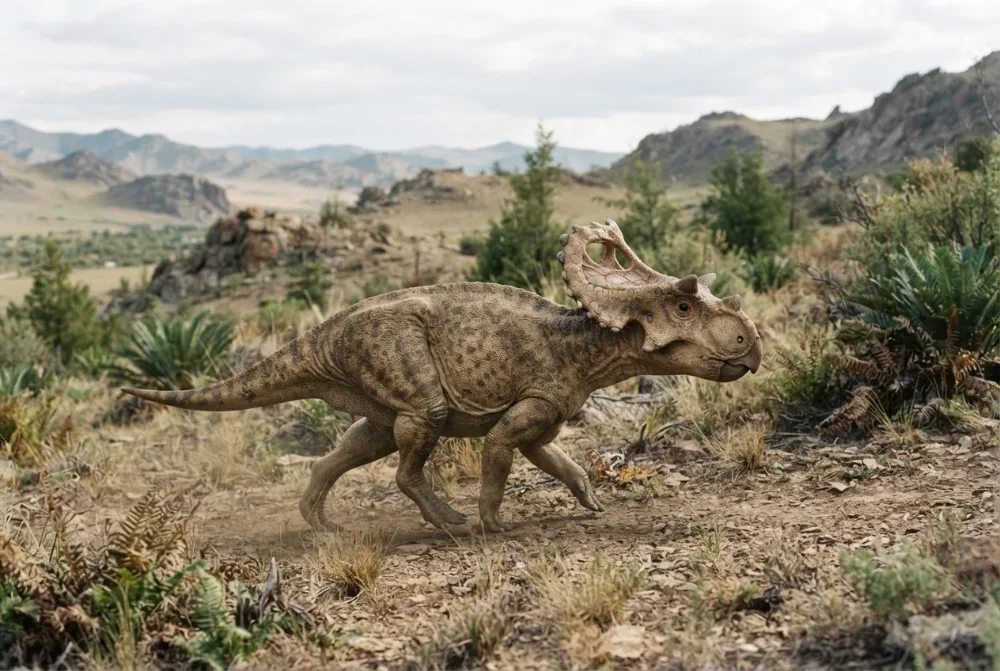
Graciliceratops had a very slender, fragile frill with large holes in it, held up by thin struts of bone.2
The only fossil found is a young animal, because its sacral vertebrae were not yet fused together.2
Its shin bone (tibia) was longer than its thigh bone (femur), which helped it run fast.2
Graciliceratops lived alongside the large dromaeosaurid Achillobator and the tyrannosauroid Khankhuuluu.2
It was a basal neoceratopsian, an early relative of later horned dinosaurs like Protoceratops.2
Ibibazo bibazwa cyane kuri Graciliceratops
?How big was Graciliceratops?
The only known fossil is a young animal about 60 cm long and weighing 2.27 to 9.1 kg. Scientists think a full-grown adult would have been around 2 m long, about the size of a small pony.21
?What did Graciliceratops eat?
It was an herbivore, eating plants. Fossil fruits found in the same area show that flowering plants grew there, so it probably ate those.21
Ku bazobereye muri dinozore
- Izina rya siyansi
- Graciliceratops
- Yiswe na
- Sereno 20003
- Itsinda
- Dinozore zifite amahembe
- Umuryango / ishami
- Neoceratopsia3
- Ishyirwa mu byiciro
- Ornithischia > Ceratopsia3
- Imyaka y'amabuye
- imyaka miliyoni 100 kugeza 84 (Cenomanian / Santonian)3
- Inzego z'amabuye
- Baynshire3
- Ibihugu
- Mongoliya3
- Ibisigazwa byanditswe
- 1 muri The Paleobiology Database3
- Ivumburwa
- The first fossil was found in 1971 by a Polish-Mongolian expedition. It was originally called Microceratops, but Paul Sereno gave it the new name Graciliceratops in 2000.21
- Biracyagibwaho impaka
- Scientists are not sure exactly how big a fully grown Graciliceratops was, because the only known skeleton is from a juvenile.2
Aho amakuru yakuwe
- Graciliceratops | Natural History Museum (nhm.ac.uk)
- Graciliceratops (en.wikipedia.org)
- Graciliceratops in The Paleobiology Database (CC BY 4.0): imyaka, ahantu, inzego z'amabuye, ishyirwa mu byiciro.
Buri kintu kiri kuri uru rupapuro gifite nimero yerekana aho cyakuwe. Niba hari icyo twibeshye, tubabarire, turi abakunzi ba dinozore, ntituri ikinyamakuru cya siyansi. Tubwire kuri [email protected] tuzagikosora.
 Rex arashonje! Dino Wiki ni umushinga wa papa umwe yakoreye umuhungu we ukunda dinozore, ni ubuntu, nta matangazo kandi nta bigukurikirana. Abantu bakuru bashobora guha Rex akantu ko kurya kugira ngo Dino Wiki ikomeze kuboneka kuri interineti.Gaburira Rex
 Triceratops
 Protoceratops
 Ojoceratops
 Tatankaceratops
 Psittacosaurus
 Centrosaurus
 Tyrannosaurus
 Velociraptor
 Spinosaurus
 Ankylosaurus
 Parasaurolophus
 Pteranodon