 Uri dinozore iyihe? Umukino w'ibibazo
 Intambara ya dinozore
 Isiganwa rya dinozore
 Imikino mito ya dinozore
 Alubumu ya sitikeri
 Intonde za TOP za dinozore
 Ntungura!
Gremlin
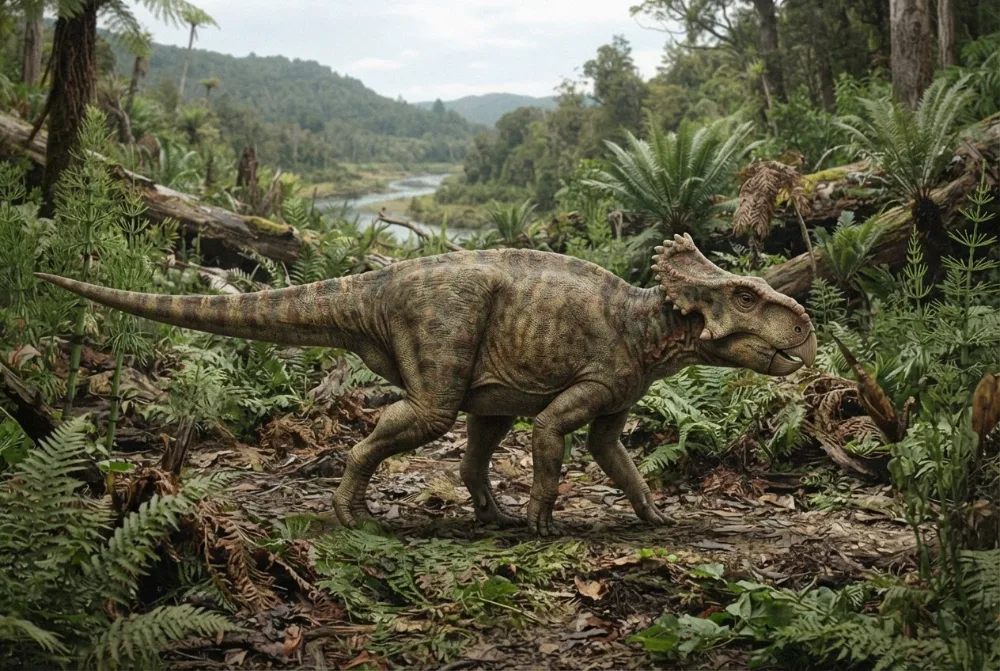
Gremlin was a small, four-footed plant-eater that lived about 77 million years ago. It used its beak-like snout to munch on low-growing plants, and it had no horns on its face, just a tiny frill behind its head.2
Yabayeho ryari?
Yanganaga ite?
Yari ndende ite?
Ubutumburuke bwayo bwanganaga iki?
Yari iremereye ite?

 ndende nk'injangwe 4 zo mu rugo zikurikiranye🍌ndende nk'imineke 11 ikurikiranyeiremereye nk'injangwe 10 zo mu rugo🍉iremereye nk'imbuto 8 za watermelon🧸iremereye nk'abana 2 bo mu ishuri ry'incuke🎒iremereye nk'abanyeshuri 1🏃yashoboraga kwiruka metero 100 mu masegonda 10 (umuntu wihuta kurusha abandi akenera 9,6)
Gremlin yanganaga ite ugereranyije NAWE?
Ni imibare gusa ibarirwa muri mushakisha yawe. Nta kintu kibikwa cyangwa cyoherezwa ahandi.
Yihutaga ite?


Utuntu dushimishije
Gremlin is known from just one fossil bone, a right frontal bone from the skull, which was found in the Oldman Formation of Alberta.1
Unlike its big cousin Triceratops, Gremlin had no horns on its face and only a small frill extending from the back of its head.2
Gremlin can be told apart from other leptoceratopsids by a ridge on its frontal bone that runs sideways from the middle of the skull to the top of the eye socket.1
The species name slobodorum honors Ed and Wendy Sloboda, who helped find the fossil and contributed a lot to Canadian paleontology.1
Gremlin lived about 77 million years ago, during the Campanian stage of the Cretaceous period.1
Scientists think Gremlin helps fill a gap in the evolution of leptoceratopsids in Alberta, between the older Gryphoceratops and the younger Unescoceratops.2
Ku bazobereye muri dinozore
- Izina rya siyansi
- Gremlin
- Yiswe na
- Ryan et al. 20233
- Itsinda
- Dinozore zifite amahembe
- Umuryango / ishami
- Leptoceratopsidae3
- Ishyirwa mu byiciro
- Ornithischia > Ceratopsia3
- Imyaka y'amabuye
- imyaka miliyoni 84 kugeza 72 (Campanian)3
- Inzego z'amabuye
- Two Medicine, Oldman3
- Ibihugu
- Amerika, Kanada3
- Ibisigazwa byanditswe
- 2 muri The Paleobiology Database3
- Ivumburwa
- Gremlin was named in 2023 by Michael J. Ryan and colleagues from a frontal bone found in the Oldman Formation of Alberta. The fossil was discovered with the help of Ed and Wendy Sloboda.12
- Biracyagibwaho impaka
- Scientists are still debating exactly how Gremlin is related to other leptoceratopsids, because the fossil is only a single bone.1
Aho amakuru yakuwe
- Gremlin slobodorum (en.wikipedia.org)
- New Late Cretaceous Horned-Dinosaur Discovered In Southern Alberta | Department of Earth Sciences (earthsci.carleton.ca)
- Gremlin in The Paleobiology Database (CC BY 4.0): imyaka, ahantu, inzego z'amabuye, ishyirwa mu byiciro.
Buri kintu kiri kuri uru rupapuro gifite nimero yerekana aho cyakuwe. Niba hari icyo twibeshye, tubabarire, turi abakunzi ba dinozore, ntituri ikinyamakuru cya siyansi. Tubwire kuri [email protected] tuzagikosora.
 Rex arashonje! Dino Wiki ni umushinga wa papa umwe yakoreye umuhungu we ukunda dinozore, ni ubuntu, nta matangazo kandi nta bigukurikirana. Abantu bakuru bashobora guha Rex akantu ko kurya kugira ngo Dino Wiki ikomeze kuboneka kuri interineti.Gaburira Rex
 Triceratops
 Protoceratops
 Ojoceratops
 Tatankaceratops
 Psittacosaurus
 Centrosaurus
 Tyrannosaurus
 Velociraptor
 Spinosaurus
 Ankylosaurus
 Parasaurolophus
 Pteranodon