 Uri dinozore iyihe? Umukino w'ibibazo
 Intambara ya dinozore
 Isiganwa rya dinozore
 Imikino mito ya dinozore
 Alubumu ya sitikeri
 Intonde za TOP za dinozore
 Ntungura!
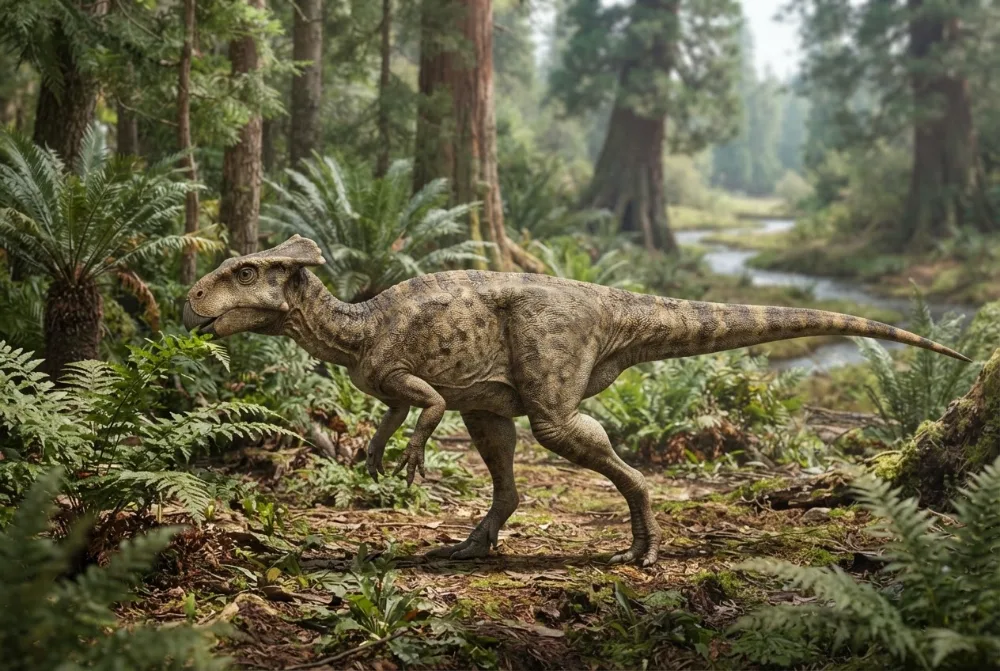
Leptoceratops
Leptoceratops was a tiny horned dinosaur that lived at the very end of the Age of Dinosaurs. It had a small frill on its head and no horns, and it walked on two legs. Even though it was small, it was a tough plant-eater that lived alongside giants like Triceratops and Tyrannosaurus.1
Yabayeho ryari?
Yanganaga ite?
Yari ndende ite?
Ubutumburuke bwayo bwanganaga iki?
Yari iremereye ite?
 ndende nk'imbwa 3 zikurikiranye🍌ndende nk'imineke 17 ikurikiranye🍉iremereye nk'imbuto 40 za watermelon🧸iremereye nk'abana 11 bo mu ishuri ry'incuke🎒iremereye nk'abanyeshuri 6🏃yashoboraga kwiruka metero 100 mu masegonda 9,7 (umuntu wihuta kurusha abandi akenera 9,6)
Leptoceratops yanganaga ite ugereranyije NAWE?
Ni imibare gusa ibarirwa muri mushakisha yawe. Nta kintu kibikwa cyangwa cyoherezwa ahandi.
Yihutaga ite?


Utuntu dushimishije
Leptoceratops is one of the smallest horned dinosaurs ever found, only about the size of a large dog.1
Unlike its big cousin Triceratops, Leptoceratops had no horns and only a tiny frill at the back of its skull.1
The first Leptoceratops fossils were discovered in 1910 by Barnum Brown along the Red Deer River in Alberta, Canada.13
Scientists have found at least eight Leptoceratops specimens, including several nearly complete skeletons.2
Leptoceratops lived right at the end of the Cretaceous Period, about 66 to 72 million years ago.6
Some bonebeds in Montana suggest that Leptoceratops may have dug burrows and lived in groups.3
Leptoceratops had a deep, pointed beak and teeth with simple roots, perfect for chewing tough plants.2
Ibibazo bibazwa cyane kuri Leptoceratops
?How big was Leptoceratops?
About 2 metres (6.6 feet) long and 0.6 to 0.9 metres (2 to 3 feet) tall at the hips, roughly the size of a large dog.14
?Did Leptoceratops have horns?
No, Leptoceratops had no horns, only a small frill on its head, unlike its big cousin Triceratops.14
?What did Leptoceratops eat?
It was a plant-eater that ate tough plants like angiosperms, conifers, and cycads, using its beak and special teeth to chew.1
?Could Leptoceratops walk on two legs?
Yes, it likely walked on two legs when moving fast and on all fours when moving slowly.14
Gusenya ibinyoma
Ibivugwa: Leptoceratops is often thought to be a baby Triceratops because of its small size and simple frill.
Ukuri: Leptoceratops is a separate, smaller species of horned dinosaur that lived at the same time as Triceratops. It had its own unique features like a tiny frill and no horns.1
Ku bazobereye muri dinozore
- Izina rya siyansi
- Leptoceratops
- Yiswe na
- Brown 19146
- Itsinda
- Dinozore zifite amahembe
- Umuryango / ishami
- Leptoceratopsidae6
- Ishyirwa mu byiciro
- Ornithischia > Ceratopsia6
- Imyaka y'amabuye
- imyaka miliyoni 72 kugeza 66 (Maastrichtian)6
- Inzego z'amabuye
- Scollard, Hell Creek, "Lance"6
- Ibihugu
- Amerika, Kanada6
- Ibisigazwa byanditswe
- 8 muri The Paleobiology Database6
- Ivumburwa
- Leptoceratops was named by American paleontologist Barnum Brown in 1914, based on a partial skull and skeleton found in 1910 in Alberta, Canada.13
- Biracyagibwaho impaka
- Scientists still debate whether some fossils from Montana belong to Leptoceratops or to its close relatives Montanoceratops and Cerasinops.1
Aho amakuru yakuwe
- Leptoceratops - Wikipedia (en.wikipedia.org)
- A NEW PARTIAL SKELETON OF LEPTOCERATOPS GRACILIS FROM (experiment-uploads.s3.amazonaws.com)
- LEPTOCERATOPS - DinoChecker dinosaur archive (dinochecker.com)
- Leptoceratops Gracilis, Dinosaur Pictures, Dinosaur Facts - National Geographic | National Geographic (nationalgeographic.com)
- Leptoceratops | Natural History Museum (nhm.ac.uk)
- Leptoceratops in The Paleobiology Database (CC BY 4.0): imyaka, ahantu, inzego z'amabuye, ishyirwa mu byiciro.
Buri kintu kiri kuri uru rupapuro gifite nimero yerekana aho cyakuwe. Niba hari icyo twibeshye, tubabarire, turi abakunzi ba dinozore, ntituri ikinyamakuru cya siyansi. Tubwire kuri [email protected] tuzagikosora.
 Rex arashonje! Dino Wiki ni umushinga wa papa umwe yakoreye umuhungu we ukunda dinozore, ni ubuntu, nta matangazo kandi nta bigukurikirana. Abantu bakuru bashobora guha Rex akantu ko kurya kugira ngo Dino Wiki ikomeze kuboneka kuri interineti.Gaburira Rex
 Triceratops
 Protoceratops
 Ojoceratops
 Tatankaceratops
 Psittacosaurus
 Centrosaurus
 Tyrannosaurus
 Velociraptor
 Spinosaurus
 Ankylosaurus
 Parasaurolophus
 Pteranodon