 Uri dinozore iyihe? Umukino w'ibibazo
 Intambara ya dinozore
 Isiganwa rya dinozore
 Imikino mito ya dinozore
 Alubumu ya sitikeri
 Intonde za TOP za dinozore
 Ntungura!
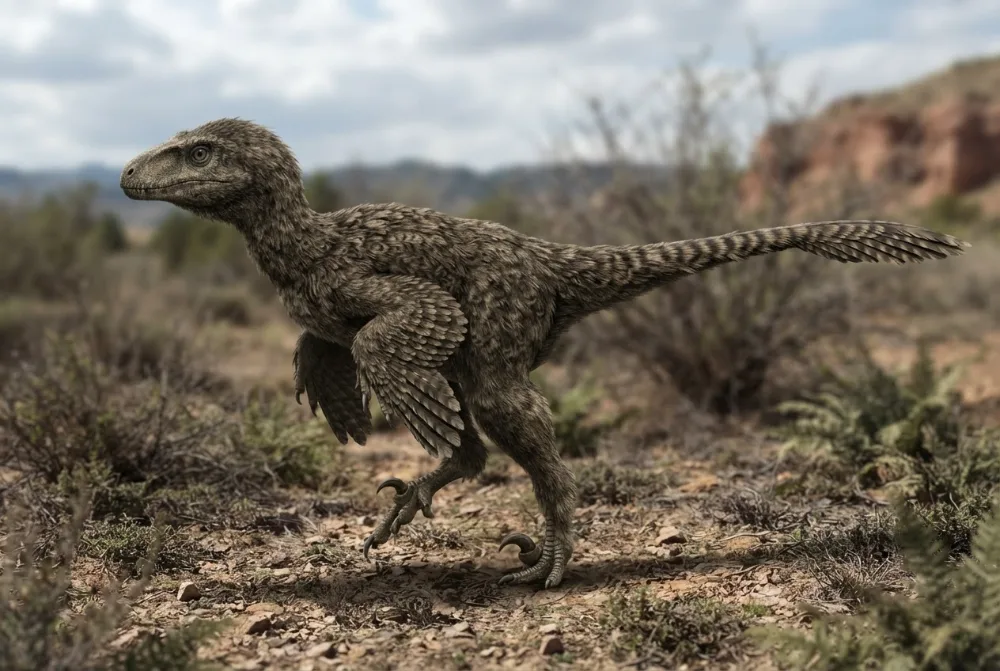
Linhevenator
Linhevenator was a small, bird-like dinosaur that lived in what is now China. It had short, strong arms and a big claw on its foot, just like its cousins the raptors. It probably used its arms and claws to catch food.1
Yabayeho ryari?
Yanganaga ite?
Yari ndende ite?
Ubutumburuke bwayo bwanganaga iki?
igereranya
Yari iremereye ite?

 ndende nk'imbwa 2,5 zikurikiranye🍌ndende nk'imineke 15 ikurikiranye🍉iremereye nk'imbuto 5 za watermelon🏃yashoboraga kwiruka metero 100 mu masegonda 8,2 (umuntu wihuta kurusha abandi akenera 9,6)
Linhevenator yanganaga ite ugereranyije NAWE?
Ni imibare gusa ibarirwa muri mushakisha yawe. Nta kintu kibikwa cyangwa cyoherezwa ahandi.
Yihutaga ite?


Utuntu dushimishije
Linhevenator had a humerus, the upper arm bone, that was much shorter and sturdier than in most other troodontids.1
Its second toe had a big, curved claw, similar to the killer claw of dromaeosaurids like Velociraptor.1
The deltopectoral crest, a bump on the upper arm bone where muscles attach, was large, suggesting strong arm muscles.1
Linhevenator lived about 83 to 72 million years ago, during the Campanian age of the Late Cretaceous.2
The only known skeleton is partly articulated, meaning some bones were still connected when found.1
Scientists think Linhevenator might have used its strong arms for digging or climbing, not just for catching prey.1
Ibibazo bibazwa cyane kuri Linhevenator
?How big was Linhevenator?
Linhevenator was about 1.9 to 2.7 metres long (6.2 to 8.9 feet), with an average of 2.2 metres (7.2 feet). It weighed around 23 kilograms (51 pounds).3
?What did Linhevenator eat?
Scientists are not sure. Some think troodontids like Linhevenator ate plants because of their teeth, while others think they were meat-eaters. The strong arms and big claw suggest it could catch prey.43
?Did Linhevenator have feathers?
The sources do not say for sure, but troodontids were bird-like dinosaurs closely related to birds, so many scientists think they probably had feathers.3
?When did Linhevenator live?
Linhevenator lived about 83 to 72 million years ago, during the Campanian age of the Late Cretaceous.3
Gusenya ibinyoma
Ibivugwa: Some people think all raptors had long, grasping arms.
Ukuri: Linhevenator shows that some troodontids had short, strong arms, so not all raptor-like dinosaurs had long arms.1
Ku bazobereye muri dinozore
- Izina rya siyansi
- Linhevenator
- Yiswe na
- Xu et al. 20115
- Itsinda
- Raputori
- Umuryango / ishami
- Troodontidae5
- Ishyirwa mu byiciro
- Theropoda > Troodontidae5
- Imyaka y'amabuye
- imyaka miliyoni 84 kugeza 72 (Campanian)5
- Inzego z'amabuye
- Wulansuhai5
- Ibihugu
- Ubushinwa5
- Ibisigazwa byanditswe
- 1 muri The Paleobiology Database5
- Ivumburwa
- Linhevenator was named by Xu and colleagues in 2011 based on a partial skeleton found in the Wulansuhai Formation in Inner Mongolia, China.21
- Biracyagibwaho impaka
- Scientists are not sure if Linhevenator was mainly a meat-eater or if it also ate plants, because its teeth have large serrations that some researchers link to herbivory.1
Aho amakuru yakuwe
- A Short-Armed Troodontid Dinosaur from the Upper (ivpp.cas.cn)
- PBDB Taxon (paleobiodb.org)
- Linhevenator (en.wikipedia.org)
- A Short-Armed Troodontid Dinosaur from the Upper Cretaceous of Inner Mongolia and Its Implications for Troodontid Evolution | PLOS One (journals.plos.org)
- Linhevenator in The Paleobiology Database (CC BY 4.0): imyaka, ahantu, inzego z'amabuye, ishyirwa mu byiciro.
Buri kintu kiri kuri uru rupapuro gifite nimero yerekana aho cyakuwe. Niba hari icyo twibeshye, tubabarire, turi abakunzi ba dinozore, ntituri ikinyamakuru cya siyansi. Tubwire kuri [email protected] tuzagikosora.
 Rex arashonje! Dino Wiki ni umushinga wa papa umwe yakoreye umuhungu we ukunda dinozore, ni ubuntu, nta matangazo kandi nta bigukurikirana. Abantu bakuru bashobora guha Rex akantu ko kurya kugira ngo Dino Wiki ikomeze kuboneka kuri interineti.Gaburira Rex
 Velociraptor
 Microraptor
 Deinonychus
 Asiamericana
 Richardoestesia
 Saurornitholestes
 Tyrannosaurus
 Triceratops
 Spinosaurus
 Ankylosaurus
 Parasaurolophus
 Pteranodon