 Uri dinozore iyihe? Umukino w'ibibazo
 Intambara ya dinozore
 Isiganwa rya dinozore
 Imikino mito ya dinozore
 Alubumu ya sitikeri
 Intonde za TOP za dinozore
 Ntungura!
Monoclonius
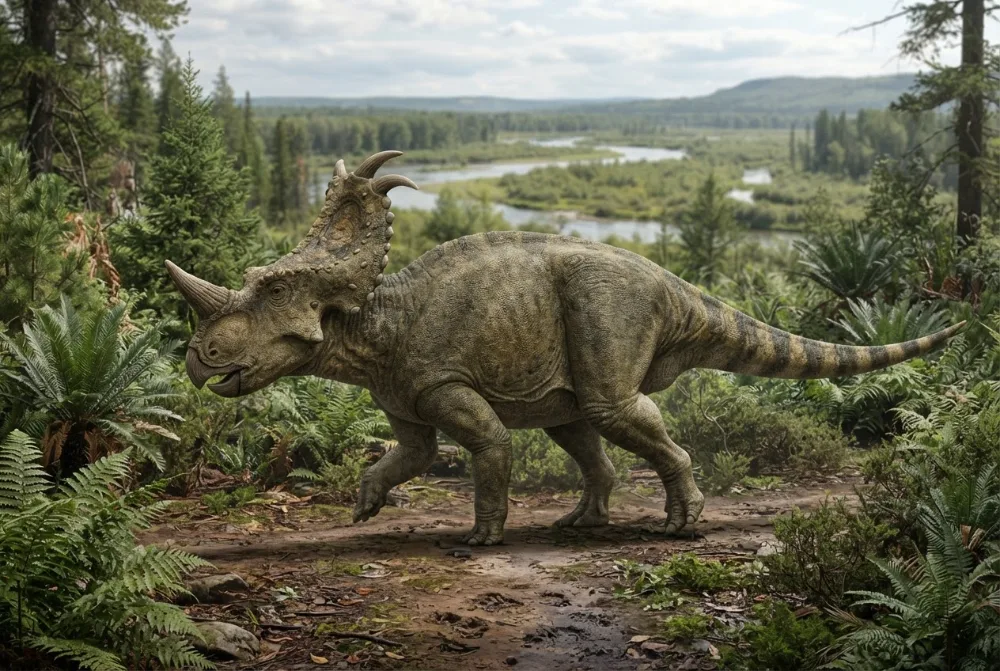
Monoclonius was a plant-eating dinosaur with a big frill on its head and a horn on its nose. It lived about 75 million years ago in what is now Montana and Alberta. Scientists are not sure if Monoclonius is really its own dinosaur or just a young version of another dinosaur called Centrosaurus.12
Yabayeho ryari?
Yanganaga ite?
Yari ndende ite?
Ubutumburuke bwayo bwanganaga iki?
igereranya
Yari iremereye ite?

 ndende nk'imbwa 6 zikurikiranye🍌ndende nk'imineke 31 ikurikiranyeiremereye nk'imbwa 110🍉iremereye nk'imbuto 430 za watermelon🎒iremereye nk'ibyumba 2,5 by'amashuri byuzuye abana🐻❄️iremereye nk'idubu 5 zo mu rubura🏃yashoboraga kwiruka metero 100 mu masegonda 11 (umuntu wihuta kurusha abandi akenera 9,6)
Monoclonius yanganaga ite ugereranyije NAWE?
Ni imibare gusa ibarirwa muri mushakisha yawe. Nta kintu kibikwa cyangwa cyoherezwa ahandi.
Yihutaga ite?


Utuntu dushimishije
Monoclonius was named in 1876 by the famous fossil hunter Edward Drinker Cope, just months after the Battle of the Little Bighorn.1
The name Monoclonius means 'single sprout' and refers to how its teeth grew, not to a horn. Cope thought only one set of teeth was used at a time.1
Many fossils once called Monoclonius are now thought to belong to other dinosaurs, like Centrosaurus or Styracosaurus.1
The type species is Monoclonius crassus, which means 'the fat one' in Latin.1
Monoclonius fossils have been found in the Judith River Formation in Montana and the Dinosaur Park Formation in Alberta.12
When Cope first described Monoclonius, he did not realize it was a horned dinosaur. He thought the skull frill was part of the breastbone.1
Ibibazo bibazwa cyane kuri Monoclonius
?How big was Monoclonius?
Monoclonius was up to 5 metres (16.5 feet) long and may have weighed about 2,170 kilograms (4,780 pounds).4
?What did Monoclonius eat?
Monoclonius was an herbivore, a plant eater. It probably ate cycads, palms, and other prehistoric plants with its tough, hook-like beak.4
?When did Monoclonius live?
Monoclonius lived in the Late Cretaceous period, about 76 to 73 million years ago, toward the end of the age of dinosaurs.4
?Why is Monoclonius called a nomen dubium?
Monoclonius is often considered a nomen dubium, or doubtful name, because the fossils are too incomplete or immature to be confidently matched with adult specimens. Many are thought to be young Centrosaurus.1
?Did Monoclonius have a horn on its nose?
Yes, Monoclonius had a single nose horn that pointed upwards and two smaller horns over its eyes, plus a small frill on its head.4
?Where were Monoclonius fossils found?
Monoclonius fossils have been found in Montana, USA, and Alberta, Canada.4
Gusenya ibinyoma
Ibivugwa: Monoclonius means 'single horn'.
Ukuri: Monoclonius actually means 'single sprout', referring to its teeth, not a horn. Cope named it before he knew it was a horned dinosaur.1
Ku bazobereye muri dinozore
- Izina rya siyansi
- Monoclonius
- Yiswe na
- Cope 18765
- Itsinda
- Dinozore zifite amahembe
- Umuryango / ishami
- Ceratopsidae5
- Ishyirwa mu byiciro
- Ornithischia > Ceratopsia > Ceratopsidae5
- Imyaka y'amabuye
- imyaka miliyoni 84 kugeza 72 (Campanian)5
- Inzego z'amabuye
- Oldman, Judith River, Kirtland5
- Ibihugu
- Amerika, Kanada5
- Ibisigazwa byanditswe
- 13 muri The Paleobiology Database5
- Ivumburwa
- Edward Drinker Cope named Monoclonius in 1876 based on fossils found near the Judith River in Montana by himself and a young Charles Sternberg.1
- Biracyagibwaho impaka
- Scientists debate whether Monoclonius is a valid genus or just a mix of juvenile Centrosaurus and other ceratopsids. Many consider it a nomen dubium (doubtful name).12
Aho amakuru yakuwe
- Monoclonius (en.wikipedia.org)
- PBDB Taxon (paleobiodb.org)
- Monoclonius Cope 1876 - Encyclopedia of Life (eol.org)
- enchantedlearning.com (enchantedlearning.com)
- Monoclonius in The Paleobiology Database (CC BY 4.0): imyaka, ahantu, inzego z'amabuye, ishyirwa mu byiciro.
Buri kintu kiri kuri uru rupapuro gifite nimero yerekana aho cyakuwe. Niba hari icyo twibeshye, tubabarire, turi abakunzi ba dinozore, ntituri ikinyamakuru cya siyansi. Tubwire kuri [email protected] tuzagikosora.
 Rex arashonje! Dino Wiki ni umushinga wa papa umwe yakoreye umuhungu we ukunda dinozore, ni ubuntu, nta matangazo kandi nta bigukurikirana. Abantu bakuru bashobora guha Rex akantu ko kurya kugira ngo Dino Wiki ikomeze kuboneka kuri interineti.Gaburira Rex
 Triceratops
 Protoceratops
 Ojoceratops
 Tatankaceratops
 Psittacosaurus
 Centrosaurus
 Tyrannosaurus
 Velociraptor
 Spinosaurus
 Ankylosaurus
 Parasaurolophus
 Pteranodon