 Uri dinozore iyihe? Umukino w'ibibazo
 Intambara ya dinozore
 Isiganwa rya dinozore
 Imikino mito ya dinozore
 Alubumu ya sitikeri
 Intonde za TOP za dinozore
 Ntungura!
Sinoceratops
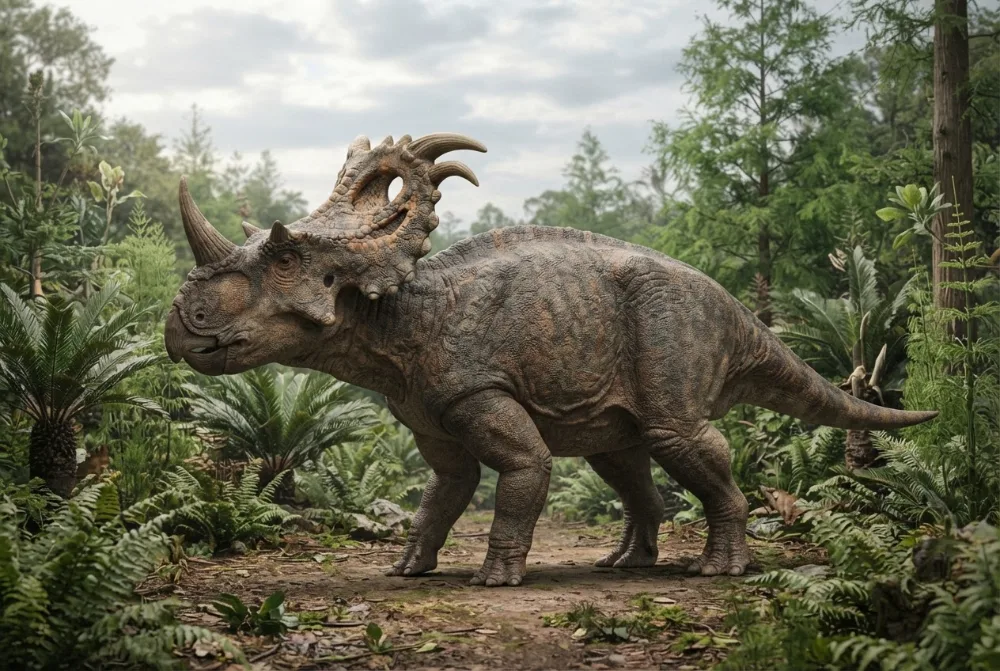
Sinoceratops was a big, plant-eating dinosaur with a fancy frill on its head and a horn on its nose. It lived in China during the Late Cretaceous, and it was the first horned dinosaur of its group found outside North America!12
Yabayeho ryari?
Yanganaga ite?
Yari ndende ite?
Ubutumburuke bwayo bwanganaga iki?
Yari iremereye ite?

 ndende nk'imbwa 5 zikurikiranye🍌ndende nk'imineke 28 ikurikiranyeiremereye nk'imbwa 100🍉iremereye nk'imbuto 400 za watermelon🎒iremereye nk'ibyumba 2,5 by'amashuri byuzuye abana🐻❄️iremereye nk'idubu 4 zo mu rubura🏃yashoboraga kwiruka metero 100 mu masegonda 11 (umuntu wihuta kurusha abandi akenera 9,6)
Sinoceratops yanganaga ite ugereranyije NAWE?
Ni imibare gusa ibarirwa muri mushakisha yawe. Nta kintu kibikwa cyangwa cyoherezwa ahandi.
Yihutaga ite?


Utuntu dushimishije
Sinoceratops had a short, hooked horn on its nose and no horns above its eyes, which is different from many other horned dinosaurs.1
Its neck frill had a row of forward-curving hornlets that made it look like a crown, plus a series of low knobs on top that no other horned dinosaur has.1
The skull of Sinoceratops was about 180 cm (5.9 ft) long, making it one of the largest centrosaurine skulls known.2
It was much larger than most other centrosaurines, similar in size to some chasmosaurines.2
Sinoceratops lived alongside the giant duck-billed dinosaur Shantungosaurus and the tyrannosaur Zhuchengtyrannus.1
It is the only ceratopsid dinosaur known from Asia; all other ceratopsids are from North America.1
Ibibazo bibazwa cyane kuri Sinoceratops
?How big was Sinoceratops?
About 5 metres (16 ft) long and 2 tonnes (2.2 short tons) in weight.1
?What did Sinoceratops eat?
It was a plant-eater, a herbivore that ate plants.1
?Did Sinoceratops have feathers?
No, there is no evidence that Sinoceratops had feathers. It was a horned dinosaur with scaly skin like other ceratopsians.1
?Was Sinoceratops bigger than Triceratops?
No, Sinoceratops was smaller. Triceratops could grow up to 9 metres (30 ft) long, while Sinoceratops was about 5 metres (16 ft).1
?When did Sinoceratops live?
It lived about 77.3 to 73.5 million years ago, during the Late Cretaceous Period.1
?Where was Sinoceratops found?
Its fossils were discovered in Shandong province, China, in the Hongtuya Formation.1
Gusenya ibinyoma
Ibivugwa: Some people think all horned dinosaurs lived in North America.
Ukuri: Sinoceratops is the first and only ceratopsid dinosaur found in China, showing that they also lived in Asia.1
Ku bazobereye muri dinozore
- Izina rya siyansi
- Sinoceratops
- Yiswe na
- Xu et al. 20105
- Itsinda
- Dinozore zifite amahembe
- Umuryango / ishami
- Ceratopsidae5
- Ishyirwa mu byiciro
- Ornithischia > Ceratopsia > Ceratopsidae5
- Imyaka y'amabuye
- imyaka miliyoni 84 kugeza 72 (Campanian)5
- Inzego z'amabuye
- Hongtuya5
- Ibihugu
- Ubushinwa5
- Ibisigazwa byanditswe
- 1 muri The Paleobiology Database5
- Ivumburwa
- Sinoceratops was named in 2010 by Xu Xing and colleagues, based on three skulls found in Zhucheng, China, in 2008.1
- Biracyagibwaho impaka
- Scientists debate whether Sinoceratops is a basal centrosaurine or more closely related to chasmosaurines, because it has features of both groups.2
Aho amakuru yakuwe
- Sinoceratops (en.wikipedia.org)
- First ceratopsid dinosaur from China and its biogeographical implications (ivpp.cas.cn)
- PBDB Taxon (paleobiodb.org)
- Sinoceratops (simple.wikipedia.org)
- Sinoceratops in The Paleobiology Database (CC BY 4.0): imyaka, ahantu, inzego z'amabuye, ishyirwa mu byiciro.
Buri kintu kiri kuri uru rupapuro gifite nimero yerekana aho cyakuwe. Niba hari icyo twibeshye, tubabarire, turi abakunzi ba dinozore, ntituri ikinyamakuru cya siyansi. Tubwire kuri [email protected] tuzagikosora.
 Rex arashonje! Dino Wiki ni umushinga wa papa umwe yakoreye umuhungu we ukunda dinozore, ni ubuntu, nta matangazo kandi nta bigukurikirana. Abantu bakuru bashobora guha Rex akantu ko kurya kugira ngo Dino Wiki ikomeze kuboneka kuri interineti.Gaburira Rex
 Triceratops
 Protoceratops
 Ojoceratops
 Tatankaceratops
 Psittacosaurus
 Centrosaurus
 Tyrannosaurus
 Velociraptor
 Spinosaurus
 Ankylosaurus
 Parasaurolophus
 Pteranodon