 ඔයා මොන ඩයිනෝද? ක්විස්
 ඩයිනෝ සටන
 ඩයිනෝ තරඟය
 ඩයිනෝ පොඩි ගේම්
 ස්ටිකර් ඇල්බමය
 ඩයිනෝ TOP ලැයිස්තු
 මාව පුදුම කරන්න!
Albertonectes
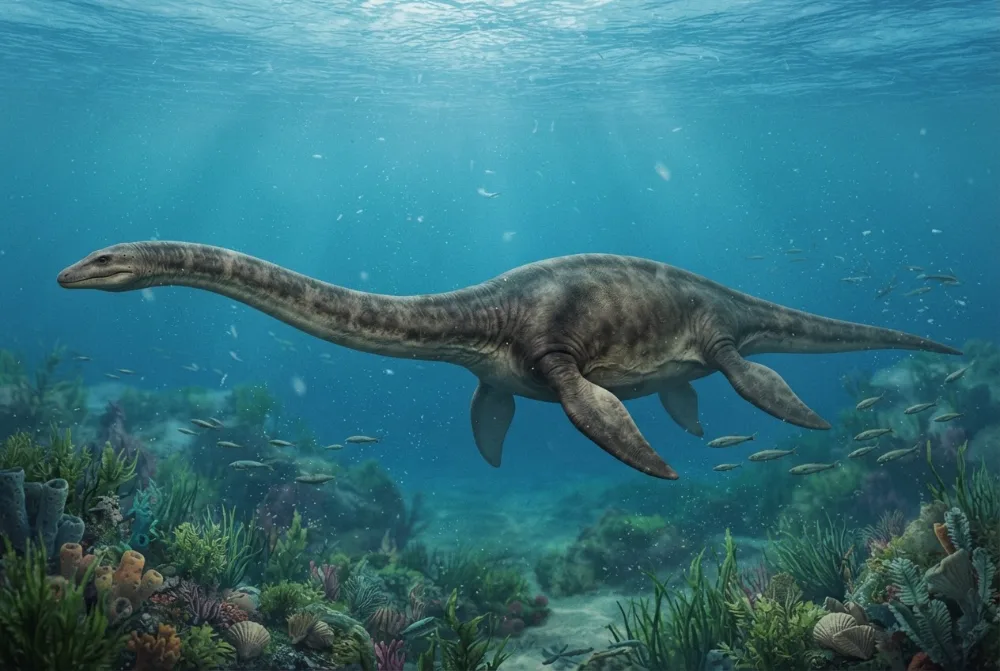
Albertonectes was a huge marine reptile that lived in the sea, not a dinosaur. It had an incredibly long neck, longer than a school bus, and swam with four flippers like paddles.12
ඒක ජීවත් වුණේ කවදද?
ඒක කොච්චර ලොකුද?
ඒක කොච්චර දිගද?
ඒක කොච්චර බරද?
 පෙළට නවත්තපු කාර් 2.5ක් තරම් දිගයි🍌පෙළට තියපු කෙසෙල් ගෙඩි 67ක් තරම් දිගයි
 අලියෙක් තරම් විතර බරයි🍉කොමඩු ගෙඩි 960ක් තරම් බරයි🎒මුළු පාසල් පන්ති 6ක ළමයි තරම් බරයි🐻❄️ධ්රැව වලසුන් 11 දෙනෙක් තරම් බරයි🏊ලොකු පිහිනුම් තටාකයක දිග (මීටර් 50) තත්පර 8.2කින් පීනන්න පුළුවන්
Albertonectes ඔයාට සාපේක්ෂව කොච්චර ලොකුද?
ඔයාගේ බ්රවුසරයේ ගණිතය විතරයි. කිසිම දෙයක් සේව් වෙන්නේ නැහැ, කොහෙවත් යවන්නේ නැහැ.
ඒක කොච්චර වේගවත්ද?


විනෝද කරුණු
Albertonectes had 76 neck bones, more than any other known animal. Its neck was about 7 metres (23 feet) long.12
Its fossils were discovered by accident in 2007 during ammolite mining. An excavator broke part of the skeleton, and some stomach stones were lost.12
Albertonectes lived in the Western Interior Seaway, a huge inland sea that stretched from the Gulf of Mexico to the Arctic Ocean.2
No skull of Albertonectes has ever been found, so scientists can only guess what its head looked like based on other elasmosaurs.12
Over 97 stomach stones were found with the skeleton, but they are too small to help with buoyancy or digestion. Scientists are still not sure why plesiosaurs swallowed stones.12
Albertonectes was a plesiosaur, not a dinosaur. Dinosaurs lived on land, while plesiosaurs were air-breathing reptiles that lived in the sea.2
Albertonectes ගැන වැඩියෙන්ම අහන ප්රශ්න
?How big was Albertonectes?
Albertonectes was about 12.1 metres (40 feet) long and weighed around 4.8 metric tons (5.3 short tons). Its neck alone was about 7 metres (23 feet) long.12
?Was Albertonectes a dinosaur?
No, Albertonectes was a plesiosaur, a marine reptile that lived in the sea. Dinosaurs lived on land.2
?What did Albertonectes eat?
Scientists think Albertonectes ate small fish and crustaceans. Its small, slender teeth were not for attacking large prey.2
?How many neck bones did Albertonectes have?
Albertonectes had 76 neck bones, more than any other known animal. That is why its neck was so long.12
?When did Albertonectes live?
Albertonectes lived about 73.5 million years ago, during the Late Cretaceous period.1
මිථ්යා බිඳින්නා
මිථ්යාව: Albertonectes was a dinosaur.
ඇත්ත: Albertonectes was a plesiosaur, a marine reptile that lived in the ocean, not a dinosaur. Dinosaurs were land animals.2
ඩයිනෝ විශේෂඥයන්ට
- විද්යාත්මක නාමය
- Albertonectes
- නම් කළේ
- Kubo et al. 20124
- කාණ්ඩය
- ප්ලීසියෝසෝරයෝ
- පවුල / ක්ලේඩය
- Elasmosauridae4
- වර්ගීකරණය
- Plesiosauria > Elasmosauridae > Sauropterygia4
- පාෂාණවල වයස
- වසර මිලියන 84 සිට 72 දක්වා (Campanian)4
- පාෂාණ සංයුති
- Bearpaw Shale4
- රටවල්
- කැනඩාව4
- පොසිල වාර්තා
- The Paleobiology Database හි 14
- සොයාගැනීම
- The only known skeleton was found in 2007 by an ammolite mining company near Lethbridge, Alberta, Canada. It was named Albertonectes vanderveldei in 2012 by paleontologist Tai Kubo and his team.12
- තාමත් වාද විවාද
- Scientists are not sure why Albertonectes swallowed so many stomach stones, since they are too small to help with buoyancy or digestion.2
කරුණු එන්නේ කොහෙන්ද
- Albertonectes (en.wikipedia.org)
- Albertonectes | The Canadian Encyclopedia (thecanadianencyclopedia.ca)
- PBDB Taxon (paleobiodb.org)
- Albertonectes in The Paleobiology Database (CC BY 4.0): වයස, ස්ථාන, පාෂාණ සංයුති, වර්ගීකරණය.
මේ පිටුවේ හැම කරුණකටම ඒකේ මූලාශ්රය පෙන්නන අංකයක් තියෙනවා. අපි මොකක් හරි වැරදියට දාලා නම්, සමාවෙන්න, අපි ඩයිනෝ රසිකයෝ, විද්යා සඟරාවක් නෙවෙයි. [email protected] ලිපිනයට කියන්න, අපි ඒක හදන්නම්.
 Rex ට බඩගිනියි! Dino Wiki කියන්නේ ඩයිනෝලාට ආදරය කරන පුතා වෙනුවෙන් තාත්තා කෙනෙක් කරපු ව්යාපෘතියක්, දැන්වීම් සහ ට්රැකර් නැතිව නොමිලේ. ලොකු අයට Rex ට කෑමක් දීලා මේක ඔන්ලයින් තියාගන්න උදව් කරන්න පුළුවන්.Rex ට කෑම දෙන්න
 Elasmosaurus
 Pliosaurus
 Plesiosaurus
 Cimoliasaurus
 Colymbosaurus
 Trinacromerum
 Tyrannosaurus
 Triceratops
 Velociraptor
 Spinosaurus
 Ankylosaurus
 Parasaurolophus