 ඔයා මොන ඩයිනෝද? ක්විස්
 ඩයිනෝ සටන
 ඩයිනෝ තරඟය
 ඩයිනෝ පොඩි ගේම්
 ස්ටිකර් ඇල්බමය
 ඩයිනෝ TOP ලැයිස්තු
 මාව පුදුම කරන්න!
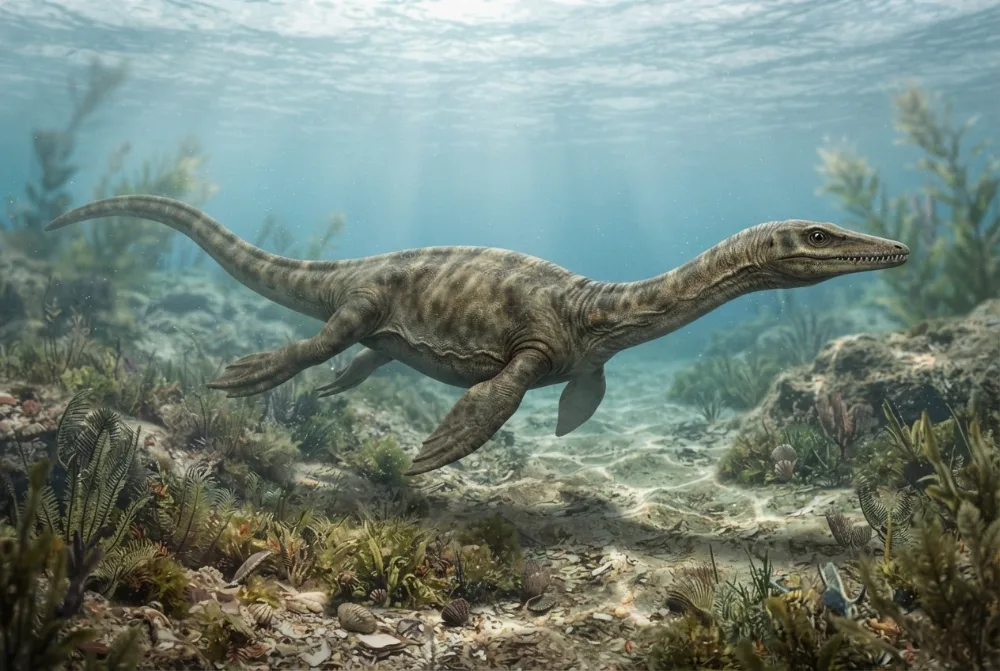
Hispaniasaurus
Hispaniasaurus was a strange marine reptile that lived in the shallow seas of Spain about 240 million years ago. It had a long, rectangular skull with no openings on top, and its teeth were big and strong.12
ඒක ජීවත් වුණේ කවදද?
ඒක කොච්චර වේගවත්ද?


විනෝද කරුණු
Hispaniasaurus is known only from a partial skull, which is very small and rectangular in shape.2
The bones on top of its skull were highly vascularised, meaning they had lots of blood vessels. Scientists think this might have helped it feed in a special way.2
It lived during the Middle Triassic period, about 241 to 237 million years ago, in a shallow marine environment.32
The upper temporal openings on its skull might have been closed shut, which is unusual for reptiles.2
ඩයිනෝ විශේෂඥයන්ට
- විද්යාත්මක නාමය
- Hispaniasaurus
- නම් කළේ
- Marquez-Aliaga et al. 20173
- කාණ්ඩය
- මුහුදු උරගයෝ
- පවුල / ක්ලේඩය
- Eosauropterygia3
- වර්ගීකරණය
- Sauropterygia3
- පාෂාණවල වයස
- වසර මිලියන 241 සිට 237 දක්වා (Ladinian)3
- පාෂාණ සංයුති
- Cañete3
- රටවල්
- ස්පාඤ්ඤය3
- පොසිල වාර්තා
- The Paleobiology Database හි 13
- සොයාගැනීම
- Hispaniasaurus was named in 2017 by Ana Marquez-Aliaga and her team. The only fossil found so far is a partial skull from the Cañete Formation in Spain.13
- තාමත් වාද විවාද
- Scientists are not sure whether the upper temporal openings on its skull were completely closed or located further back, because the fossil is incomplete.2
කරුණු එන්නේ කොහෙන්ද
- Hispaniasaurus (en.wikipedia.org)
- An enigmatic marine reptile, Hispaniasaurus cranioelongatus (gen. et sp. nov.) with nothosauroid affinities from the Ladinian of the Iberian Range (Spain) (exa.ai)
- Hispaniasaurus in The Paleobiology Database (CC BY 4.0): වයස, ස්ථාන, පාෂාණ සංයුති, වර්ගීකරණය.
මේ පිටුවේ හැම කරුණකටම ඒකේ මූලාශ්රය පෙන්නන අංකයක් තියෙනවා. අපි මොකක් හරි වැරදියට දාලා නම්, සමාවෙන්න, අපි ඩයිනෝ රසිකයෝ, විද්යා සඟරාවක් නෙවෙයි. [email protected] ලිපිනයට කියන්න, අපි ඒක හදන්නම්.
 Rex ට බඩගිනියි! Dino Wiki කියන්නේ ඩයිනෝලාට ආදරය කරන පුතා වෙනුවෙන් තාත්තා කෙනෙක් කරපු ව්යාපෘතියක්, දැන්වීම් සහ ට්රැකර් නැතිව නොමිලේ. ලොකු අයට Rex ට කෑමක් දීලා මේක ඔන්ලයින් තියාගන්න උදව් කරන්න පුළුවන්.Rex ට කෑම දෙන්න
 Nothosaurus
 Placodus
 Lariosaurus
 Cyamodus
 Cymatosaurus
 Proneusticosaurus
 Chonespondylus
 Cymbospondylus
 Phalarodon
 Mixosaurus
 Chaohusaurus
 Chensaurus