 ඔයා මොන ඩයිනෝද? ක්විස්
 ඩයිනෝ සටන
 ඩයිනෝ තරඟය
 ඩයිනෝ පොඩි ගේම්
 ස්ටිකර් ඇල්බමය
 ඩයිනෝ TOP ලැයිස්තු
 මාව පුදුම කරන්න!
Iberodactylus
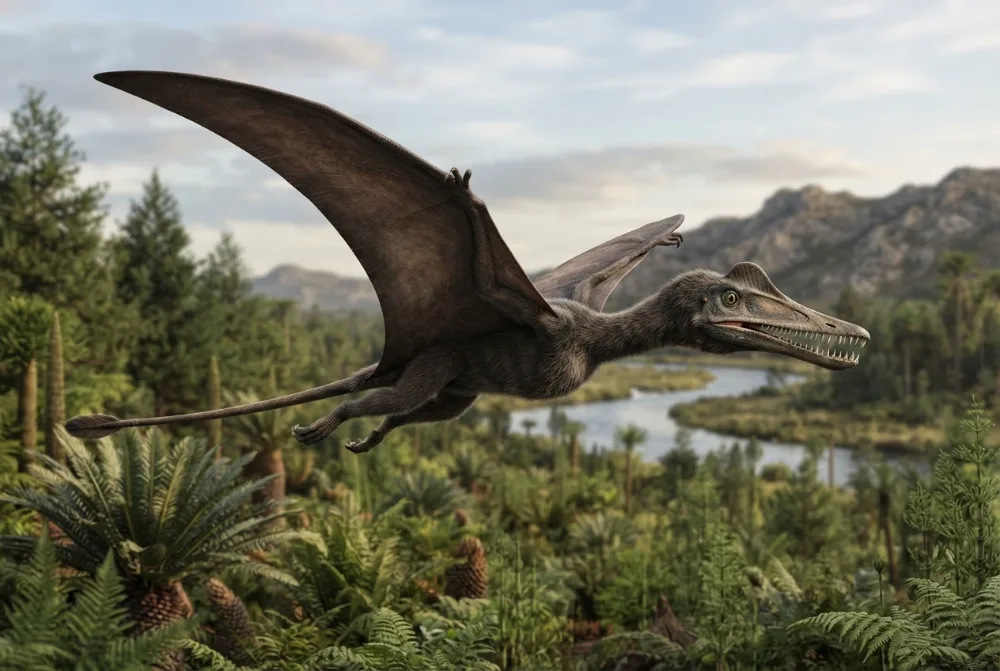
Iberodactylus was a flying reptile that lived about 125 million years ago. It had a big crest on its snout and sharp teeth for catching fish. It was not a dinosaur, but a pterosaur that soared over the coast of what is now Spain.12
ඒක ජීවත් වුණේ කවදද?
ඒක කොච්චර ලොකුද?
ඒකේ පියාපත් කොච්චර පළලද?
 පෙළට තියපු බයිසිකල් 2ක් තරම් පළල පියාපත්⚽මුළු පාපන්දු පිට්ටනියක් හරහා තත්පර 6කින් පියාඹන්න පුළුවන්
Iberodactylus ඔයාට සාපේක්ෂව කොච්චර ලොකුද?
ඔයාගේ බ්රවුසරයේ ගණිතය විතරයි. කිසිම දෙයක් සේව් වෙන්නේ නැහැ, කොහෙවත් යවන්නේ නැහැ.
ඒක කොච්චර වේගවත්ද?


විනෝද කරුණු
Iberodactylus is known from only one fossil: a partial snout with a crest and six pairs of tooth sockets.1
Its closest relative is Hamipterus from China, which is surprising because they lived so far apart.1
The crest on its snout was blade-like and covered with curved grooves and ridges.1
Scientists think the fossil might be from a male because male Hamipterus had bigger crests than females.1
Iberodactylus lived in a coastal environment, alongside marine reptiles like plesiosaurs and many fish.1
The fossil was found in a limestone layer that was once the bottom of a shallow sea.1
ඩයිනෝ විශේෂඥයන්ට
- විද්යාත්මක නාමය
- Iberodactylus
- නම් කළේ
- Holgado et al. 20194
- කාණ්ඩය
- පියාඹන උරගයෝ
- පවුල / ක්ලේඩය
- Hamipteridae4
- වර්ගීකරණය
- Pterosauria > Pterodactyloidea4
- පාෂාණවල වයස
- වසර මිලියන 126 සිට 121 දක්වා (Barremian)4
- පාෂාණ සංයුති
- Blesa4
- රටවල්
- ස්පාඤ්ඤය4
- පොසිල වාර්තා
- The Paleobiology Database හි 14
- සොයාගැනීම
- Iberodactylus was named in 2019 by Holgado and colleagues. The fossil was found in the 1980s by local collector Javier Andreu near Obón, Spain.1
- තාමත් වාද විවාද
- Scientists are not sure about the full size of Iberodactylus because only a piece of its snout has been found.1
කරුණු එන්නේ කොහෙන්ද
- On a new crested pterodactyloid from the Early Cretaceous of the Iberian Peninsula and the radiation of the clade Anhangueria (pmc.ncbi.nlm.nih.gov)
- PBDB Taxon (paleobiodb.org)
- Iberodactylus (en.wikipedia.org)
- Iberodactylus in The Paleobiology Database (CC BY 4.0): වයස, ස්ථාන, පාෂාණ සංයුති, වර්ගීකරණය.
මේ පිටුවේ හැම කරුණකටම ඒකේ මූලාශ්රය පෙන්නන අංකයක් තියෙනවා. අපි මොකක් හරි වැරදියට දාලා නම්, සමාවෙන්න, අපි ඩයිනෝ රසිකයෝ, විද්යා සඟරාවක් නෙවෙයි. [email protected] ලිපිනයට කියන්න, අපි ඒක හදන්නම්.
 Rex ට බඩගිනියි! Dino Wiki කියන්නේ ඩයිනෝලාට ආදරය කරන පුතා වෙනුවෙන් තාත්තා කෙනෙක් කරපු ව්යාපෘතියක්, දැන්වීම් සහ ට්රැකර් නැතිව නොමිලේ. ලොකු අයට Rex ට කෑමක් දීලා මේක ඔන්ලයින් තියාගන්න උදව් කරන්න පුළුවන්.Rex ට කෑම දෙන්න
 Pteranodon
 Quetzalcoatlus
 Dorygnathus
 Rhamphorhynchus
 Anhanguera
 Pterodactylus
 Stegosaurus
 Iguanodon
 Archaeopteryx
 Giganotosaurus
 Microraptor
 Deinonychus