 ඔයා මොන ඩයිනෝද? ක්විස්
 ඩයිනෝ සටන
 ඩයිනෝ තරඟය
 ඩයිනෝ පොඩි ගේම්
 ස්ටිකර් ඇල්බමය
 ඩයිනෝ TOP ලැයිස්තු
 මාව පුදුම කරන්න!
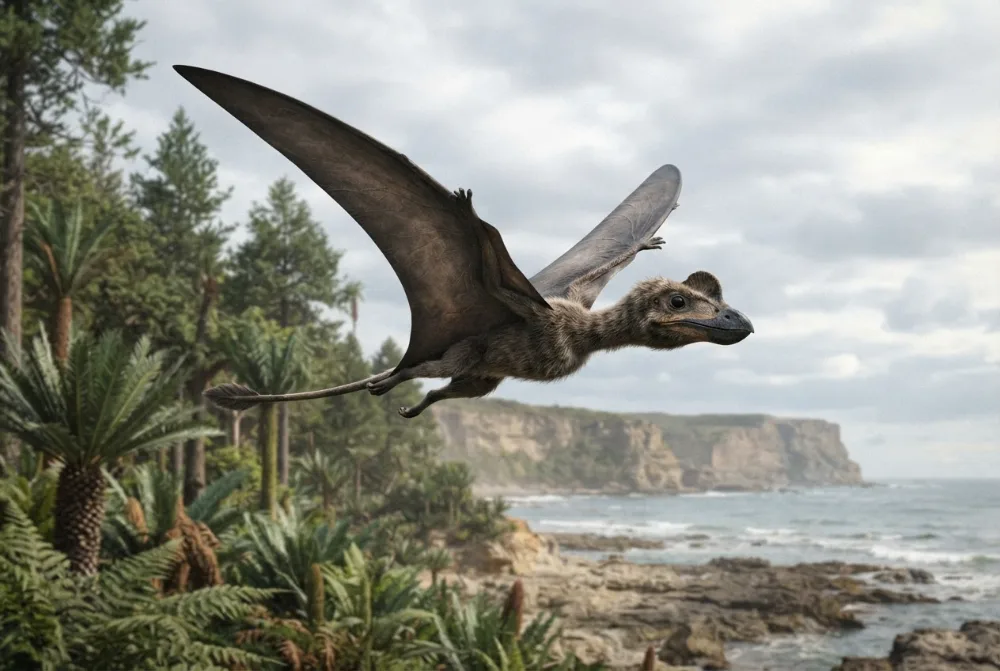
Normannognathus
Normannognathus was a flying reptile that lived about 150 million years ago. It had a tall crest on its head and a slightly upturned snout, making it look a bit like a dragon.12
ඒක ජීවත් වුණේ කවදද?
ඒක කොච්චර ලොකුද?
ඒකේ පියාපත් කොච්චර පළලද?
 නහයෙන් වලිගයට පෙළට ඉන්න ගෙදර පූසෝ 2 දෙනෙක් තරම් දිගයි⚽මුළු පාපන්දු පිට්ටනියක් හරහා තත්පර 10කින් පියාඹන්න පුළුවන්
Normannognathus ඔයාට සාපේක්ෂව කොච්චර ලොකුද?
ඔයාගේ බ්රවුසරයේ ගණිතය විතරයි. කිසිම දෙයක් සේව් වෙන්නේ නැහැ, කොහෙවත් යවන්නේ නැහැ.
ඒක කොච්චර වේගවත්ද?


විනෝද කරුණු
Normannognathus had teeth all the way to the tip of its jaws, which is unusual for some pterosaurs.2
Its tall crest started right in front of the nostril opening and had a concave front edge, making it look like a wave.2
The crest was flat and ran along the midline of the upper jaw, and it may have been covered by a horny sheath.1
The fossil is only about 10 centimetres long, and it includes the front part of the skull and lower jaws.1
Scientists have changed their minds about where Normannognathus belongs in the pterosaur family tree, placing it in different groups over the years.1
It lived during the Kimmeridgian age, about 152 to 149 million years ago, in a marine environment.4
මිථ්යා බිඳින්නා
මිථ්යාව: Normannognathus was a dinosaur.
ඇත්ත: It was a pterosaur, a flying reptile that is not a dinosaur.1
ඩයිනෝ විශේෂඥයන්ට
- විද්යාත්මක නාමය
- Normannognathus
- නම් කළේ
- Buffetaut et al. 19984
- කාණ්ඩය
- පියාඹන උරගයෝ
- පවුල / ක්ලේඩය
- Lophocratia4
- වර්ගීකරණය
- Pterosauria > Pterodactyloidea4
- පාෂාණවල වයස
- වසර මිලියන 152 සිට 149 දක්වා (Kimmeridgian)4
- පාෂාණ සංයුති
- Argiles d'Octeville4
- රටවල්
- ප්රංශය4
- පොසිල වාර්තා
- The Paleobiology Database හි 14
- සොයාගැනීම
- Jean-Jacques Lepage found the fossil in 1993 on the Normandy coast at Cap de la Hève, near Ecqueville. In 1998, Eric Buffetaut and colleagues named it Normannognathus wellnhoferi.1
- තාමත් වාද විවාද
- Scientists still debate exactly which group of pterosaurs Normannognathus belongs to, with different studies placing it in different families.1
කරුණු එන්නේ කොහෙන්ද
- Normannognathus (en.wikipedia.org)
- A new pterodactyloid pterosaur from the Kimmeridgian of the Cap de la Hève (Normandy, France) | Geological Magazine | Cambridge Core (cambridge.org)
- Normannognathus wellnhoferi | Pterosaur Database by DinoAnimals.com (dinoanimals.com)
- Normannognathus in The Paleobiology Database (CC BY 4.0): වයස, ස්ථාන, පාෂාණ සංයුති, වර්ගීකරණය.
මේ පිටුවේ හැම කරුණකටම ඒකේ මූලාශ්රය පෙන්නන අංකයක් තියෙනවා. අපි මොකක් හරි වැරදියට දාලා නම්, සමාවෙන්න, අපි ඩයිනෝ රසිකයෝ, විද්යා සඟරාවක් නෙවෙයි. [email protected] ලිපිනයට කියන්න, අපි ඒක හදන්නම්.
 Rex ට බඩගිනියි! Dino Wiki කියන්නේ ඩයිනෝලාට ආදරය කරන පුතා වෙනුවෙන් තාත්තා කෙනෙක් කරපු ව්යාපෘතියක්, දැන්වීම් සහ ට්රැකර් නැතිව නොමිලේ. ලොකු අයට Rex ට කෑමක් දීලා මේක ඔන්ලයින් තියාගන්න උදව් කරන්න පුළුවන්.Rex ට කෑම දෙන්න
 Pteranodon
 Quetzalcoatlus
 Dorygnathus
 Rhamphorhynchus
 Anhanguera
 Pterodactylus
 Brachiosaurus
 Diplodocus
 Allosaurus
 Brontosaurus
 Compsognathus
 Camarasaurus