 ඔයා මොන ඩයිනෝද? ක්විස්
 ඩයිනෝ සටන
 ඩයිනෝ තරඟය
 ඩයිනෝ පොඩි ගේම්
 ස්ටිකර් ඇල්බමය
 ඩයිනෝ TOP ලැයිස්තු
 මාව පුදුම කරන්න!
Parahenodus
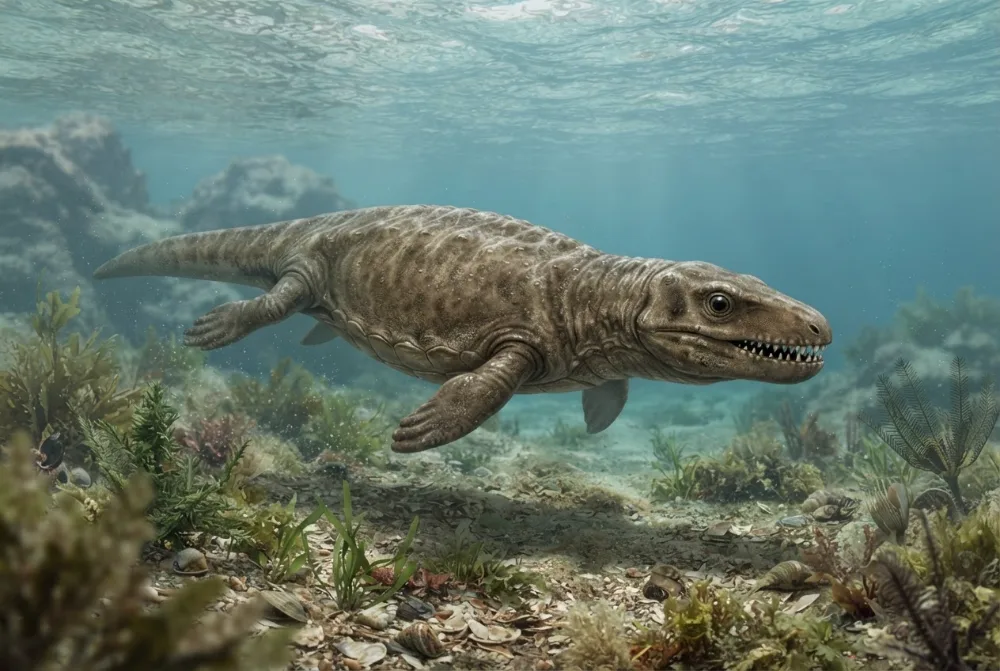
Parahenodus was a strange, shell-crushing marine reptile that lived in the Late Triassic. It looked a bit like a turtle but was actually a placodont, a group of reptiles that ate hard-shelled animals. Only its skull has been found so far!12
ඒක ජීවත් වුණේ කවදද?
ඒක කොච්චර වේගවත්ද?


විනෝද කරුණු
Parahenodus is known from just one partial skull, discovered between 2008 and 2015 in Spain.1
It was a close relative of Henodus, another placodont from Germany, and together they form the family Henodontidae.12
Parahenodus lived during the Late Triassic, about 237 to 205 million years ago, in the Carnian and Norian ages.31
Its name means 'near Henodus', because it looks very similar to Henodus but has some more primitive features.1
The discovery of Parahenodus helped scientists understand how the unusual skull of Henodontidae evolved over time.2
ඩයිනෝ විශේෂඥයන්ට
- විද්යාත්මක නාමය
- Parahenodus
- නම් කළේ
- Miguel Chaves et al. 20183
- කාණ්ඩය
- මුහුදු උරගයෝ
- පවුල / ක්ලේඩය
- Henodontidae3
- වර්ගීකරණය
- Placodontia > Sauropterygia3
- පාෂාණවල වයස
- වසර මිලියන 237 සිට 206 දක්වා (Carnian / Norian)3
- පාෂාණ සංයුති
- Keuper3
- රටවල්
- ස්පාඤ්ඤය3
- පොසිල වාර්තා
- The Paleobiology Database හි 13
- සොයාගැනීම
- Parahenodus was named and described in 2018 by Carlos de Miguel Chaves, Francisco Ortega, and Adán Pérez-García based on a partial skull found in the Keuper Facies of El Atance, Spain.13
කරුණු එන්නේ කොහෙන්ද
- Parahenodus (en.wikipedia.org)
- A new placodont from the Upper Triassic of Spain provides new insights on the acquisition of the specialized skull of Henodontidae (onlinelibrary.wiley.com)
- Parahenodus in The Paleobiology Database (CC BY 4.0): වයස, ස්ථාන, පාෂාණ සංයුති, වර්ගීකරණය.
මේ පිටුවේ හැම කරුණකටම ඒකේ මූලාශ්රය පෙන්නන අංකයක් තියෙනවා. අපි මොකක් හරි වැරදියට දාලා නම්, සමාවෙන්න, අපි ඩයිනෝ රසිකයෝ, විද්යා සඟරාවක් නෙවෙයි. [email protected] ලිපිනයට කියන්න, අපි ඒක හදන්නම්.
 Rex ට බඩගිනියි! Dino Wiki කියන්නේ ඩයිනෝලාට ආදරය කරන පුතා වෙනුවෙන් තාත්තා කෙනෙක් කරපු ව්යාපෘතියක්, දැන්වීම් සහ ට්රැකර් නැතිව නොමිලේ. ලොකු අයට Rex ට කෑමක් දීලා මේක ඔන්ලයින් තියාගන්න උදව් කරන්න පුළුවන්.Rex ට කෑම දෙන්න
 Nothosaurus
 Placodus
 Lariosaurus
 Cyamodus
 Cymatosaurus
 Proneusticosaurus
 Massospondylus
 Plateosaurus
 Coelophysis
 Podokesaurus
 Thecodontosaurus
 Eudimorphodon