 ඔයා මොන ඩයිනෝද? ක්විස්
 ඩයිනෝ සටන
 ඩයිනෝ තරඟය
 ඩයිනෝ පොඩි ගේම්
 ස්ටිකර් ඇල්බමය
 ඩයිනෝ TOP ලැයිස්තු
 මාව පුදුම කරන්න!
Scaphognathus
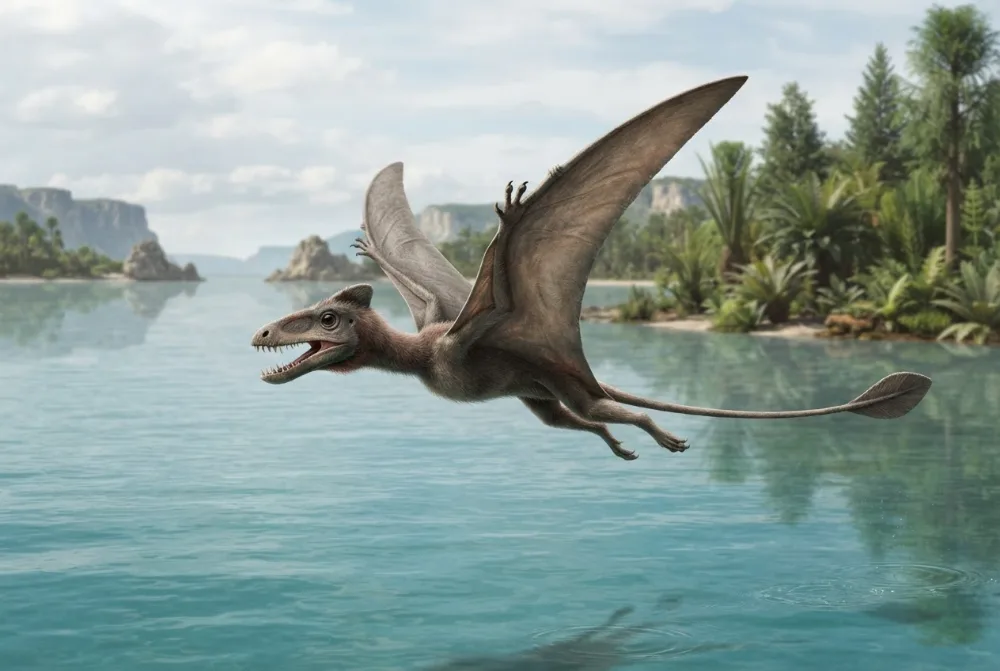
Scaphognathus was a small pterosaur with a blunt snout and a long tail. It flew over warm Jurassic lagoons and snatched fish from the water. Unlike many pterosaurs, it was probably awake during the day.1
ඒක ජීවත් වුණේ කවදද?
ඒක කොච්චර ලොකුද?
ඒකේ පියාපත් කොච්චර පළලද?
 නහයෙන් වලිගයට පෙළට ඉන්න ගෙදර පූසෝ 2 දෙනෙක් තරම් දිගයි⚽මුළු පාපන්දු පිට්ටනියක් හරහා තත්පර 11කින් පියාඹන්න පුළුවන්
Scaphognathus ඔයාට සාපේක්ෂව කොච්චර ලොකුද?
ඔයාගේ බ්රවුසරයේ ගණිතය විතරයි. කිසිම දෙයක් සේව් වෙන්නේ නැහැ, කොහෙවත් යවන්නේ නැහැ.
ඒක කොච්චර වේගවත්ද?


විනෝද කරුණු
Scaphognathus had a short, blunt skull only about 11 centimetres (4.5 inches) long.1
It had 16 teeth in the upper jaw and 10 in the lower jaw, and they pointed straight up and down, not forward.1
A second specimen found was much smaller, with a wingspan of only 50 centimetres (20 inches), and scientists think it was a juvenile.1
Scaphognathus lived during the Late Jurassic, about 155 to 150 million years ago.1
Its eye bones (scleral rings) suggest it was diurnal, or active during the day, unlike some other pterosaurs that were nocturnal.1
The first fossil was described in 1831 by August Goldfuss, who thought it was a species of Pterodactylus.1
Scaphognathus ගැන වැඩියෙන්ම අහන ප්රශ්න
?How big was Scaphognathus?
Scaphognathus had a wingspan of about 0.9 metres (3 feet). A second, smaller specimen had a wingspan of only about 50 centimetres (20 inches) and was probably a juvenile.12
?What did Scaphognathus eat?
Scaphognathus was a carnivore, meaning it ate meat. Its main food was a type of ancient fish called Pholidophorus.2
?Was Scaphognathus a dinosaur?
No, Scaphognathus was a pterosaur, a flying reptile, not a dinosaur. It lived during the Late Jurassic, about 155 to 150 million years ago.12
?Why did Scaphognathus have a long tail?
Scaphognathus had a long tail that ended in a leaf-shaped flap. This probably helped it steer and balance while flying, like a rudder on a boat.2
මිථ්යා බිඳින්නා
මිථ්යාව: Scaphognathus is sometimes confused with Rhamphorhynchus because both have long tails.
ඇත්ත: Scaphognathus had a shorter, blunter skull and vertical teeth, while Rhamphorhynchus had a longer, thinner skull with forward-pointing teeth.1
ඩයිනෝ විශේෂඥයන්ට
- විද්යාත්මක නාමය
- Scaphognathus
- නම් කළේ
- Wagner 18613
- කාණ්ඩය
- පියාඹන උරගයෝ
- පවුල / ක්ලේඩය
- Rhamphorhynchidae3
- වර්ගීකරණය
- Pterosauria > Rhamphorhynchidae3
- පාෂාණවල වයස
- වසර මිලියන 168 සිට 143 දක්වා (Bathonian / Tithonian)3
- පාෂාණ සංයුති
- Solnhofener Plattenkalk, Tiaojishan3
- රටවල්
- ජර්මනිය, චීනය3
- පොසිල වාර්තා
- The Paleobiology Database හි 33
- වෙනත් නම්
- Brachytrachelus, Pachyrhamphus (පැරණි නම් දැන් එකම සත්වයා ලෙස ගණන් කෙරේ)3
- සොයාගැනීම
- The first Scaphognathus fossil was described by August Goldfuss in 1831 from the Solnhofen Limestone near Eichstätt, Germany. He originally named it a new species of Pterodactylus. In 1861, Johann Wagner gave it its own genus name Scaphognathus.1
- තාමත් වාද විවාද
- Scientists are not sure whether some fossils from China belong to Scaphognathus or to a related pterosaur.3
කරුණු එන්නේ කොහෙන්ද
- Scaphognathus (en.wikipedia.org)
- Scaphognathus Facts for Kids (kids.kiddle.co)
- Scaphognathus in The Paleobiology Database (CC BY 4.0): වයස, ස්ථාන, පාෂාණ සංයුති, වර්ගීකරණය.
මේ පිටුවේ හැම කරුණකටම ඒකේ මූලාශ්රය පෙන්නන අංකයක් තියෙනවා. අපි මොකක් හරි වැරදියට දාලා නම්, සමාවෙන්න, අපි ඩයිනෝ රසිකයෝ, විද්යා සඟරාවක් නෙවෙයි. [email protected] ලිපිනයට කියන්න, අපි ඒක හදන්නම්.
 Rex ට බඩගිනියි! Dino Wiki කියන්නේ ඩයිනෝලාට ආදරය කරන පුතා වෙනුවෙන් තාත්තා කෙනෙක් කරපු ව්යාපෘතියක්, දැන්වීම් සහ ට්රැකර් නැතිව නොමිලේ. ලොකු අයට Rex ට කෑමක් දීලා මේක ඔන්ලයින් තියාගන්න උදව් කරන්න පුළුවන්.Rex ට කෑම දෙන්න
 Pteranodon
 Quetzalcoatlus
 Dorygnathus
 Rhamphorhynchus
 Anhanguera
 Pterodactylus
 Brachiosaurus
 Diplodocus
 Allosaurus
 Brontosaurus
 Compsognathus
 Camarasaurus