 Uri dhino ripi? Kwizi
 Hondo yemadhino
 Mujaho wemadhino
 Mitambo midiki yemadhino
 Arubhamu yemasitika
 Rondedzero dzeTOP dzemadhino
 Ndishamise!
Livyatan
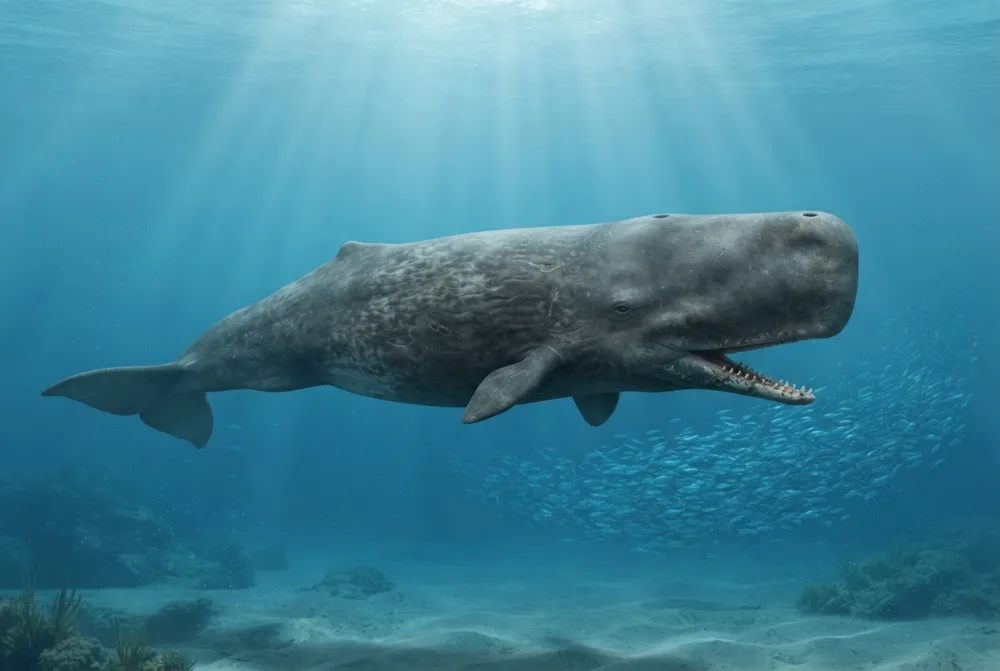
Livyatan was a giant sperm whale that lived in the ocean millions of years ago. It had huge teeth and was one of the biggest hunters in the sea. It was not a dinosaur, but a mammal like whales today.1
Rairarama rini?
Raiva hombe sei?
Raiva refu zvakadii?
Rairema zvakadii?

 kureba semotokari 4 dzakamiswa dzakatevedzana🍌kureba semabhanana 97 akatevedzana🍉kurema semanwiwa 11000🎒kurema semakirasi 71 akazara evana vechikoro🐻❄️kurema semabere echando 130🏊raigona kushambira kureba kwedziva guru rekushambira (50 m) mumasekonzi 5.1
Livyatan raiva hombe sei kana richienzaniswa NEWE?
Masvomhu chete mubrowser yako. Hapana chinochengetwa kana kutumirwa kupi zvako.
Raimhanya zvakadii?


Zvinonakidza
Livyatan had teeth up to 36 centimeters (over 14 inches) long, bigger than any other sperm whale.1
Its skull was about 3 meters (10 feet) long, making it the largest fossil sperm whale skull known.1
Livyatan lived at the same time as the giant shark Carcharocles megalodon, and both were top predators.1
Scientists think Livyatan could bite harder than any other four-legged animal ever found.1
Unlike modern sperm whales that suck in food, Livyatan used its teeth to hunt and tear large prey.1
The name Livyatan comes from a Hebrew word for a sea monster, and the species name melvillei honors the author of Moby-Dick.1
Mibvunzo inonyanya kubvunzwa nezve Livyatan
?How big was Livyatan?
About 13.5 to 17.5 meters (44 to 57 feet) long, similar to a modern sperm whale.2
?What did Livyatan eat?
It hunted large prey like medium-sized baleen whales, using its huge teeth to bite and tear flesh.12
?Did Livyatan live at the same time as megalodon?
Yes, Livyatan and the giant shark megalodon lived in the same oceans and may have competed for food.23
?Why did Livyatan go extinct?
It probably died out because of a cooling event at the end of the Miocene that reduced its food supply.2
?Is Livyatan a dinosaur?
No, Livyatan was a mammal, a giant sperm whale, not a dinosaur.2
?How long were Livyatan's teeth?
Its teeth were up to 36.2 centimeters (14.3 inches) long, the largest biting teeth of any known animal.21
?Where was Livyatan discovered?
Its fossil skull was found in the Pisco Formation of Peru, in a coastal desert near Ica.21
Mubvisi wengano
Ngano: Some people think Livyatan was a dinosaur.
Chokwadi: Livyatan was a whale, a mammal, not a dinosaur.1
Zvevanyanzvi vemadhino
- Zita resainzi
- Livyatan
- Akaripa zita:
- Lambert et al. 20104
- Boka
- Shasha dzenhoroondo yekare-kare
- Mhuri / boka
- Physeteroidea4
- Kurongwa kwemhuka
- Mammalia > Cetacea > Physeteroidea4
- Zera rematombo
- makore mamiriyoni 23 kusvika 3.6 (Aquitanian / Zanclean)4
- Mapoka ematombo
- Pisco4
- Nyika
- South Africa, Peru, Ajentina, Chile, Amerika4
- Zvinyorwa zvemafosiri
- 6 mu The Paleobiology Database4
- Kuwanikwa
- Scientists found a skull with teeth in the Pisco desert of Peru, and they named it Livyatan melvillei in 2010.1
- Zvichiri kupokanwa
- Scientists are still debating what the big basin on its head was for, like echolocation or display.1
Kunobva chokwadi
- The giant bite of a new raptorial sperm whale from the Miocene epoch of Peru (nature.com)
- Livyatan (en.wikipedia.org)
- Behold Livyatan: the sperm whale that killed other whales | National Geographic (nationalgeographic.com)
- Livyatan in The Paleobiology Database (CC BY 4.0): zera, nzvimbo, mapoka ematombo, kurongwa kwemhuka.
Chokwadi chega chega papeji ino chine nhamba inoratidza kwachakabva. Kana takakanganisa chimwe chinhu, ruregerero, tiri vanoda madhino, kwete magazini yesainzi. Tiudze pa [email protected] tichazvigadzirisa.
 Rex ane nzara! Dino Wiki ipurojekiti yababa yemwanakomana wavo anoda madhino, mahara, pasina kushambadza uye pasina zvinokutevera. Vakuru vanogona kupa Rex chekudyadya kuti vabatsire kuchengeta saiti iri pamhepo.Fudza Rex
 Megalodon
 Sabre-toothed cat
 Dimetrodon
 Woolly mammoth
 Arthropleura
 Helicoprion