 Uri dhino ripi? Kwizi
 Hondo yemadhino
 Mujaho wemadhino
 Mitambo midiki yemadhino
 Arubhamu yemasitika
 Rondedzero dzeTOP dzemadhino
 Ndishamise!
Massospondylus
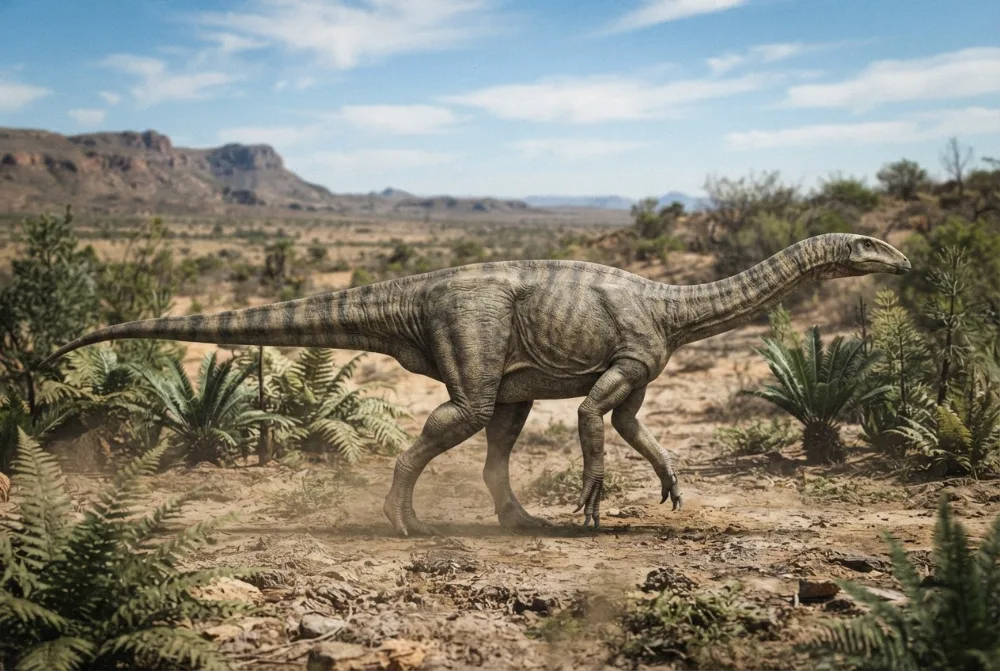
Massospondylus was an early long-necked dinosaur that lived in southern Africa during the Early Jurassic. It had a small head, a long neck and tail, and a slender body. This dinosaur walked on two legs and used its sharp thumb claws to pull down branches or dig up plants.1
Rairarama rini?
Raiva hombe sei?
Raiva refu zvakadii?
Raiva rakakwirira zvakadii?
Rairema zvakadii?
 kureba seimbwa 6 kubva pamhino kusvika kumuswe🍌kureba semabhanana 33 akatevedzana🍉kurema semanwiwa 27🧸kurema sevana vekireshi 7🎒kurema sevana vechikoro 4🏃raigona kumhanya mamita 100 mumasekonzi 8.8 (munhu anomhanya kupfuura vose anoda 9.6)
Massospondylus raiva hombe sei kana richienzaniswa NEWE?
Masvomhu chete mubrowser yako. Hapana chinochengetwa kana kutumirwa kupi zvako.
Raimhanya zvakadii?


Zvinonakidza
Massospondylus was one of the first dinosaurs to be named, described by Richard Owen in 1854.1
Its name means 'longer vertebra' because Owen thought the neck bones were tail bones.1
Fossil eggs and embryos of Massospondylus have been found, and they are among the oldest known dinosaur eggs.1
The eggshell of Massospondylus was extremely thin, less than 0.1 mm (0.0039 in) thick.1
Baby Massospondylus had proportionally longer arms and a larger head than adults, suggesting they may have walked on four legs when young.1
Massospondylus could speed up or slow down its growth depending on how much food was available.1
The oldest known Massospondylus was about 20 years old when it died.1
Mibvunzo inonyanya kubvunzwa nezve Massospondylus
?How big was Massospondylus?
Massospondylus was about 4 to 6 metres (13 to 20 feet) long, with a small head, long neck and tail, and a slender body. It weighed around 150 kilograms (330 pounds) according to the Natural History Museum.13
?What did Massospondylus eat?
It was probably a herbivore (plant-eater), though some scientists think it may have been omnivorous. It used its sharp thumb claws to pull down branches or dig up plants, and it may have swallowed stones to help grind tough leaves in its stomach.12
?Did Massospondylus walk on two legs or four?
It is now considered to have been bipedal (walked on two legs), though it was long thought to be quadrupedal. Some studies suggest babies may have walked on four legs, but newer research says it was bipedal at all ages.1
?When did Massospondylus live?
It lived during the Early Jurassic, about 201 to 184 million years ago.13
?Where was Massospondylus found?
Fossils have been found in southern Africa, including South Africa, Lesotho, and Zimbabwe, and also in Namibia. Some fossils from the US and Argentina were once assigned to it but are now considered different dinosaurs.12
?Did Massospondylus lay eggs?
Yes, it laid eggs, and some of the oldest known dinosaur eggs and embryos belong to this genus. The eggshells were extremely thin, less than 0.1 mm (0.004 in) thick.1
Mubvisi wengano
Ngano: Massospondylus was a four-legged (quadrupedal) dinosaur.
Chokwadi: Scientists now think Massospondylus walked on two legs (bipedal), though babies may have been four-legged.1
Zvevanyanzvi vemadhino
- Zita resainzi
- Massospondylus
- Akaripa zita:
- Owen 18544
- Boka
- Madhino emitsipa mirefu
- Mhuri / boka
- Massospondylidae4
- Kurongwa kwemhuka
- Sauropodomorpha4
- Zera rematombo
- makore mamiriyoni 237 kusvika 175 (Carnian / Toarcian)4
- Mapoka ematombo
- Elliot, Mpandi, Forest Sandstone4
- Nyika
- South Africa, Zimbabwe, Lesotho, Namibia4
- Zvinyorwa zvemafosiri
- 80 mu The Paleobiology Database4
- Kuwanikwa
- The first fossils of Massospondylus were found in 1853 or 1854 by Joseph Millard Orpen and his brothers on a farm in the Drakensberg mountains near Harrismith, South Africa. Their father donated the fossils to the Hunterian Museum in London, where Richard Owen described and named the dinosaur in 1854.1
- Zvichiri kupokanwa
- Scientists are still debating whether Massospondylus was purely a plant-eater or also ate small animals or carrion.1
Kunobva chokwadi
- Massospondylus (en.wikipedia.org)
- enchantedlearning.com (enchantedlearning.com)
- Massospondylus | Natural History Museum (nhm.ac.uk)
- Massospondylus in The Paleobiology Database (CC BY 4.0): zera, nzvimbo, mapoka ematombo, kurongwa kwemhuka.
Chokwadi chega chega papeji ino chine nhamba inoratidza kwachakabva. Kana takakanganisa chimwe chinhu, ruregerero, tiri vanoda madhino, kwete magazini yesainzi. Tiudze pa [email protected] tichazvigadzirisa.
 Rex ane nzara! Dino Wiki ipurojekiti yababa yemwanakomana wavo anoda madhino, mahara, pasina kushambadza uye pasina zvinokutevera. Vakuru vanogona kupa Rex chekudyadya kuti vabatsire kuchengeta saiti iri pamhepo.Fudza Rex
 Brachiosaurus
 Diplodocus
 Brontosaurus
 Argentinosaurus
 Camarasaurus
 Morosaurus
 Nothosaurus
 Coelophysis
 Podokesaurus
 Simosaurus
 Eudimorphodon
 Herrerasaurus