 Uri dhino ripi? Kwizi
 Hondo yemadhino
 Mujaho wemadhino
 Mitambo midiki yemadhino
 Arubhamu yemasitika
 Rondedzero dzeTOP dzemadhino
 Ndishamise!
Ornitholestes
Ornitholestes was a small, fast dinosaur that lived about 154 million years ago. It had long fingers with claws to grab quick prey like lizards and early mammals. Its name means 'bird robber', but scientists think it probably didn't eat many birds.12
Rairarama rini?
Raiva hombe sei?
Raiva refu zvakadii?
Raiva rakakwirira zvakadii?
Rairema zvakadii?
 kureba sekatsi dzemumba 4 kubva pamhino kusvika kumuswe🍌kureba semabhanana 12 akatevedzana🍌kurema semabhanana 120🏃raigona kumhanya mamita 100 mumasekonzi 9 (munhu anomhanya kupfuura vose anoda 9.6)
Ornitholestes raiva hombe sei kana richienzaniswa NEWE?
Masvomhu chete mubrowser yako. Hapana chinochengetwa kana kutumirwa kupi zvako.
Raimhanya zvakadii?


Zvinonakidza
Ornitholestes had big eyes, which were more than one quarter of the length of its skull. This might have helped it see at night.1
Its tail was very long and whiplike, making up more than half of its body length. The tail helped it balance while running.1
The front teeth of Ornitholestes were cone-shaped and not very serrated, but the back teeth were curved and had sharp serrations like steak knives.1
Only one nearly complete skeleton of Ornitholestes has been found. It was discovered in Wyoming in 1900 by a team from the American Museum of Natural History.1
Some scientists once thought Ornitholestes was the same dinosaur as Coelurus, but most now agree they are different genera.12
An early drawing by Charles R. Knight showed Ornitholestes chasing the bird Archaeopteryx, but scientists today think it mostly ate ground animals.1
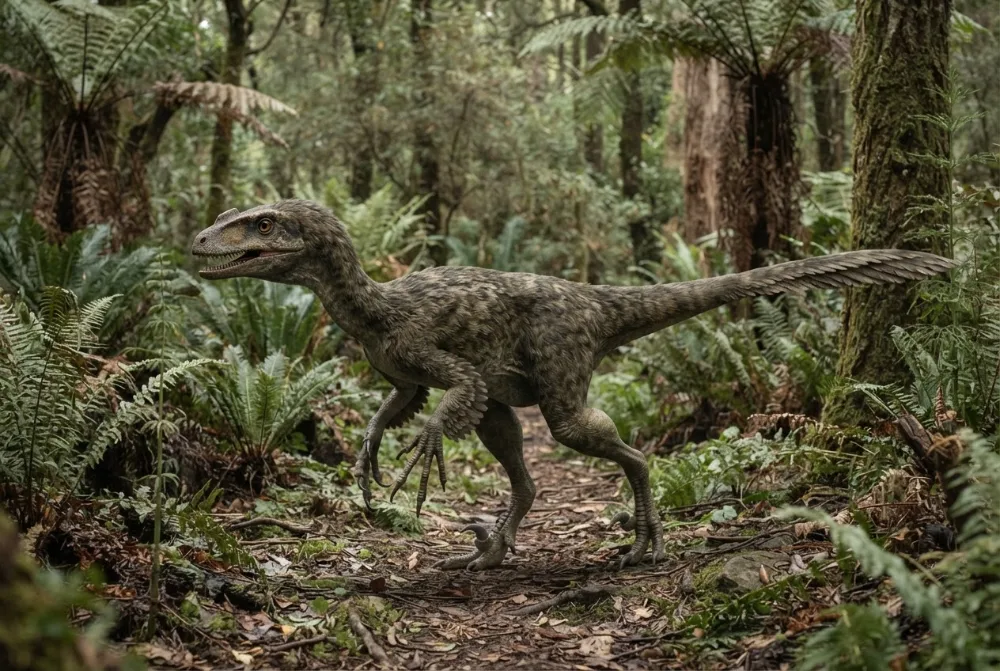
Mibvunzo inonyanya kubvunzwa nezve Ornitholestes
?How big was Ornitholestes?
About 2 metres (6.6 feet) long and weighed around 12.6 kilograms (27.8 pounds).12
?What did Ornitholestes eat?
It ate small, speedy animals like lizards, early mammals, and maybe baby dinosaurs. Some scientists think it might have also caught fish or an occasional bird.12
?Could Ornitholestes fly?
No, Ornitholestes was a dinosaur that walked and ran on two legs. It could not fly.12
?When did Ornitholestes live?
It lived during the Late Jurassic Period, about 154 million years ago.12
?How fast could Ornitholestes run?
Scientists do not know its exact speed, but it had strong running muscles and a long tail for balance, so it was probably fast.12
?Did Ornitholestes have feathers?
No fossil feathers have been found with Ornitholestes, but since it was a close relative of feathered dinosaurs, some scientists think it might have had simple feathers.1
Mubvisi wengano
Ngano: Ornitholestes mainly ate birds.
Chokwadi: Its name means 'bird robber', but scientists now think it mostly ate small land animals like lizards, mammals, and baby dinosaurs. It may have also eaten fish.1
Zvevanyanzvi vemadhino
- Zita resainzi
- Ornitholestes
- Akaripa zita:
- Osborn 19034
- Boka
- Madhino anodya nyama
- Mhuri / boka
- Compsognathidae4
- Kurongwa kwemhuka
- Theropoda > Compsognathidae4
- Zera rematombo
- makore mamiriyoni 158 kusvika 143 ()4
- Mapoka ematombo
- Morrison4
- Nyika
- Amerika4
- Zvinyorwa zvemafosiri
- 4 mu The Paleobiology Database4
- Kuwanikwa
- Ornitholestes was named by Henry Fairfield Osborn in 1903. The skeleton was dug up in July 1900 in Wyoming by a team from the American Museum of Natural History.1
- Zvichiri kupokanwa
- Scientists are not sure if Ornitholestes hunted at night. One researcher suggested its big eyes were for night vision, but there is no proof yet.1
Kunobva chokwadi
- Ornitholestes (en.wikipedia.org)
- Ornitholestes | Small, carnivorous, Jurassic | Britannica (britannica.com)
- Ornitholestes — Grokipedia (grokipedia.com)
- Ornitholestes in The Paleobiology Database (CC BY 4.0): zera, nzvimbo, mapoka ematombo, kurongwa kwemhuka.
Chokwadi chega chega papeji ino chine nhamba inoratidza kwachakabva. Kana takakanganisa chimwe chinhu, ruregerero, tiri vanoda madhino, kwete magazini yesainzi. Tiudze pa [email protected] tichazvigadzirisa.
 Rex ane nzara! Dino Wiki ipurojekiti yababa yemwanakomana wavo anoda madhino, mahara, pasina kushambadza uye pasina zvinokutevera. Vakuru vanogona kupa Rex chekudyadya kuti vabatsire kuchengeta saiti iri pamhepo.Fudza Rex
 Allosaurus
 Carnotaurus
 Dilophosaurus
 Giganotosaurus
 Compsognathus
 Paronychodon
 Brachiosaurus
 Diplodocus
 Brontosaurus
 Camarasaurus
 Morosaurus
 Apatosaurus