 Uri dhino ripi? Kwizi
 Hondo yemadhino
 Mujaho wemadhino
 Mitambo midiki yemadhino
 Arubhamu yemasitika
 Rondedzero dzeTOP dzemadhino
 Ndishamise!
Pararcus
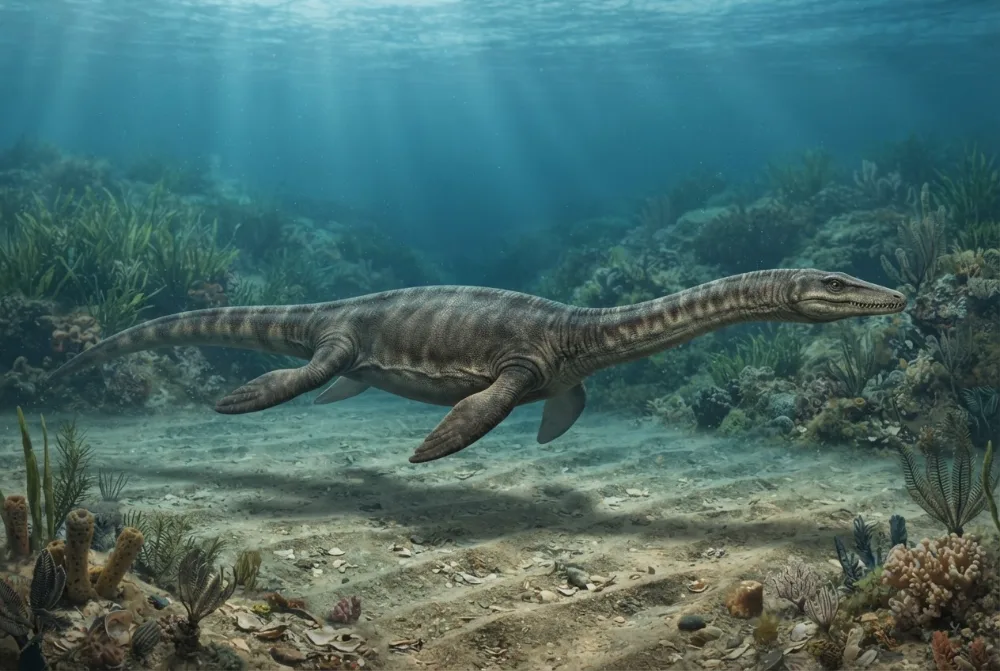
Pararcus was a marine reptile that lived in the shallow seas of the Netherlands about 245 million years ago. It had a flat body and strong, paddle-like limbs for swimming. Unlike many other placodonts, it did not have a heavy shell on its back.12
Rairarama rini?
Raiva hombe sei?
Raiva refu zvakadii?
 kureba sekatsi dzemumba 2.5 kubva pamhino kusvika kumuswe🍌kureba semabhanana 8 akatevedzana🏊raigona kushambira kureba kwedziva guru rekushambira (50 m) mumasekonzi 16
Pararcus raiva hombe sei kana richienzaniswa NEWE?
Masvomhu chete mubrowser yako. Hapana chinochengetwa kana kutumirwa kupi zvako.
Raimhanya zvakadii?


Zvinonakidza
Pararcus had a special backbone where the neural arches (the parts that protect the spinal cord) were not fused together, even in adults. This is called paedomorphosis and is common in animals that live in the sea.1
Its hip bones (pubis and ischium) were flat and plate-like, which helped it swim efficiently.1
The only known fossil of Pararcus was found by a fossil collector named Gerben Diepenbroek, and the species is named after him.1
Pararcus lived during the Middle Triassic period, about 247 to 241 million years ago, when the Netherlands was covered by a shallow sea.2
Unlike some other placodonts that had heavy armour plates, Pararcus only had a few small, unfused armour plates scattered in its skin.1
The vertebrae of Pararcus were deeply hollowed out on both ends (amphicoelous) and still had a notochord, a flexible rod that runs through the spine.1
Zvevanyanzvi vemadhino
- Zita resainzi
- Pararcus
- Akaripa zita:
- Klein and Scheyer 20142
- Boka
- Zvinokambaira zvemugungwa
- Mhuri / boka
- Placodontia2
- Kurongwa kwemhuka
- Placodontia > Sauropterygia2
- Zera rematombo
- makore mamiriyoni 247 kusvika 241 ()2
- Mapoka ematombo
- Vossenveld2
- Nyika
- Netherlands2
- Zvinyorwa zvemafosiri
- 1 mu The Paleobiology Database2
- Kuwanikwa
- Pararcus was named in 2014 by Nicole Klein and Torsten Scheyer. The only fossil was found by Gerben Diepenbroek in a quarry near Winterswijk, the Netherlands.21
- Zvichiri kupokanwa
- Scientists are not sure exactly how Pararcus swam. Its flexible backbone and flat hip bones suggest it might have moved differently from other placodonts.1
Kunobva chokwadi
- Klein_20120147.indd (zora.uzh.ch)
- Pararcus in The Paleobiology Database (CC BY 4.0): zera, nzvimbo, mapoka ematombo, kurongwa kwemhuka.
Chokwadi chega chega papeji ino chine nhamba inoratidza kwachakabva. Kana takakanganisa chimwe chinhu, ruregerero, tiri vanoda madhino, kwete magazini yesainzi. Tiudze pa [email protected] tichazvigadzirisa.
 Rex ane nzara! Dino Wiki ipurojekiti yababa yemwanakomana wavo anoda madhino, mahara, pasina kushambadza uye pasina zvinokutevera. Vakuru vanogona kupa Rex chekudyadya kuti vabatsire kuchengeta saiti iri pamhepo.Fudza Rex
 Nothosaurus
 Placodus
 Lariosaurus
 Cyamodus
 Cymatosaurus
 Proneusticosaurus
 Chonespondylus
 Cymbospondylus
 Phalarodon
 Mixosaurus
 Chaohusaurus
 Chensaurus