 Uri dhino ripi? Kwizi
 Hondo yemadhino
 Mujaho wemadhino
 Mitambo midiki yemadhino
 Arubhamu yemasitika
 Rondedzero dzeTOP dzemadhino
 Ndishamise!
Scaphognathus
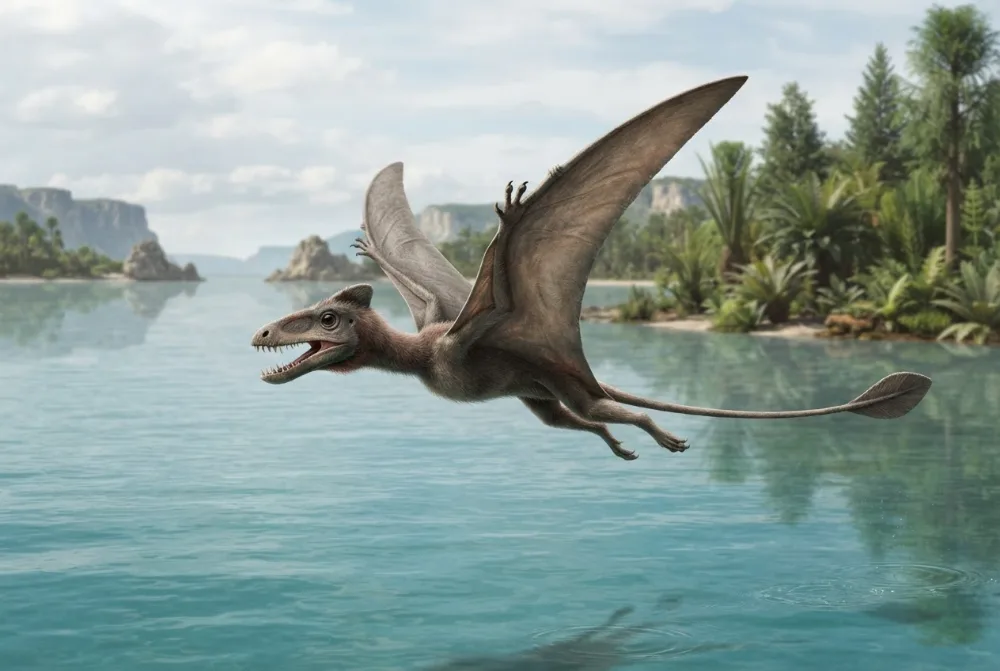
Scaphognathus was a small pterosaur with a blunt snout and a long tail. It flew over warm Jurassic lagoons and snatched fish from the water. Unlike many pterosaurs, it was probably awake during the day.1
Rairarama rini?
Raiva hombe sei?
Mapapiro aro aiva akapamhama zvakadii?
 kureba sekatsi dzemumba 2 kubva pamhino kusvika kumuswe⚽raigona kubhururuka richiyambuka nhandare yose yebhora mumasekonzi 11
Scaphognathus raiva hombe sei kana richienzaniswa NEWE?
Masvomhu chete mubrowser yako. Hapana chinochengetwa kana kutumirwa kupi zvako.
Raimhanya zvakadii?


Zvinonakidza
Scaphognathus had a short, blunt skull only about 11 centimetres (4.5 inches) long.1
It had 16 teeth in the upper jaw and 10 in the lower jaw, and they pointed straight up and down, not forward.1
A second specimen found was much smaller, with a wingspan of only 50 centimetres (20 inches), and scientists think it was a juvenile.1
Scaphognathus lived during the Late Jurassic, about 155 to 150 million years ago.1
Its eye bones (scleral rings) suggest it was diurnal, or active during the day, unlike some other pterosaurs that were nocturnal.1
The first fossil was described in 1831 by August Goldfuss, who thought it was a species of Pterodactylus.1
Mibvunzo inonyanya kubvunzwa nezve Scaphognathus
?How big was Scaphognathus?
Scaphognathus had a wingspan of about 0.9 metres (3 feet). A second, smaller specimen had a wingspan of only about 50 centimetres (20 inches) and was probably a juvenile.12
?What did Scaphognathus eat?
Scaphognathus was a carnivore, meaning it ate meat. Its main food was a type of ancient fish called Pholidophorus.2
?Was Scaphognathus a dinosaur?
No, Scaphognathus was a pterosaur, a flying reptile, not a dinosaur. It lived during the Late Jurassic, about 155 to 150 million years ago.12
?Why did Scaphognathus have a long tail?
Scaphognathus had a long tail that ended in a leaf-shaped flap. This probably helped it steer and balance while flying, like a rudder on a boat.2
Mubvisi wengano
Ngano: Scaphognathus is sometimes confused with Rhamphorhynchus because both have long tails.
Chokwadi: Scaphognathus had a shorter, blunter skull and vertical teeth, while Rhamphorhynchus had a longer, thinner skull with forward-pointing teeth.1
Zvevanyanzvi vemadhino
- Zita resainzi
- Scaphognathus
- Akaripa zita:
- Wagner 18613
- Boka
- Zvinokambaira zvinobhururuka
- Mhuri / boka
- Rhamphorhynchidae3
- Kurongwa kwemhuka
- Pterosauria > Rhamphorhynchidae3
- Zera rematombo
- makore mamiriyoni 168 kusvika 143 (Bathonian / Tithonian)3
- Mapoka ematombo
- Solnhofener Plattenkalk, Tiaojishan3
- Nyika
- Germany, China3
- Zvinyorwa zvemafosiri
- 3 mu The Paleobiology Database3
- Rinonziwo
- Brachytrachelus, Pachyrhamphus (mazita ekare zvino oonekwa semhuka imwe chete)3
- Kuwanikwa
- The first Scaphognathus fossil was described by August Goldfuss in 1831 from the Solnhofen Limestone near Eichstätt, Germany. He originally named it a new species of Pterodactylus. In 1861, Johann Wagner gave it its own genus name Scaphognathus.1
- Zvichiri kupokanwa
- Scientists are not sure whether some fossils from China belong to Scaphognathus or to a related pterosaur.3
Kunobva chokwadi
- Scaphognathus (en.wikipedia.org)
- Scaphognathus Facts for Kids (kids.kiddle.co)
- Scaphognathus in The Paleobiology Database (CC BY 4.0): zera, nzvimbo, mapoka ematombo, kurongwa kwemhuka.
Chokwadi chega chega papeji ino chine nhamba inoratidza kwachakabva. Kana takakanganisa chimwe chinhu, ruregerero, tiri vanoda madhino, kwete magazini yesainzi. Tiudze pa [email protected] tichazvigadzirisa.
 Rex ane nzara! Dino Wiki ipurojekiti yababa yemwanakomana wavo anoda madhino, mahara, pasina kushambadza uye pasina zvinokutevera. Vakuru vanogona kupa Rex chekudyadya kuti vabatsire kuchengeta saiti iri pamhepo.Fudza Rex
 Pteranodon
 Quetzalcoatlus
 Dorygnathus
 Rhamphorhynchus
 Anhanguera
 Pterodactylus
 Brachiosaurus
 Diplodocus
 Allosaurus
 Brontosaurus
 Compsognathus
 Camarasaurus