 Uri dhino ripi? Kwizi
 Hondo yemadhino
 Mujaho wemadhino
 Mitambo midiki yemadhino
 Arubhamu yemasitika
 Rondedzero dzeTOP dzemadhino
 Ndishamise!
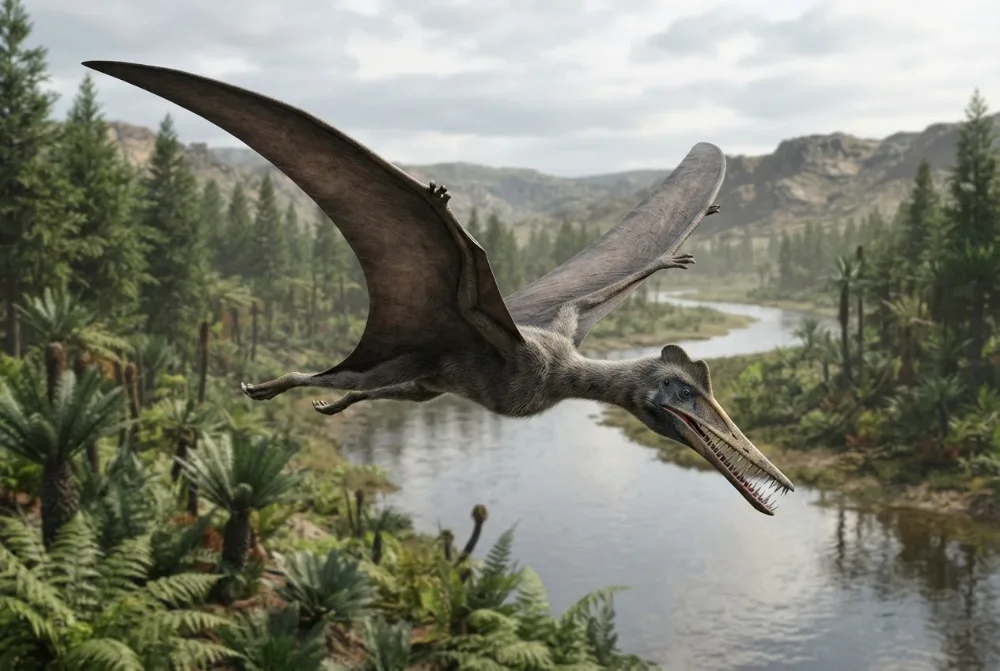
Sericipterus
Sericipterus was a flying reptile that lived about 160 million years ago in what is now China. It had a wingspan of at least 1.73 meters (5.7 feet), making it one of the largest pterosaurs of its time. It probably soared over lakes and rivers, catching fish with its long, sharp teeth.12
Rairarama rini?
Raiva hombe sei?
Mapapiro aro aiva akapamhama zvakadii?
 kureba sekatsi dzemumba 3 kubva pamhino kusvika kumuswe⚽raigona kubhururuka richiyambuka nhandare yose yebhora mumasekonzi 8.4
Sericipterus raiva hombe sei kana richienzaniswa NEWE?
Masvomhu chete mubrowser yako. Hapana chinochengetwa kana kutumirwa kupi zvako.
Raimhanya zvakadii?


Zvinonakidza
Sericipterus had three bony crests on its head: one on the snout, one on top of the skull, and a short crest at the front of the skull.1
It was one of the largest non-pterodactyloid pterosaurs, meaning it belonged to an early group of pterosaurs that did not have the short tails and long heads of later forms.2
The name Sericipterus comes from the Silk Road, the ancient trade route that passed through the region where it was found.1
Its teeth were curved, sharply pointed, and had two keels (sharp edges) for cutting, like steak knives.1
The holotype specimen (IVPP V14725) includes a disarticulated skull, partial lower jaw, many teeth, parts of the spine, wing bones, and other fragments.2
Sericipterus lived in a terrestrial (land) environment, unlike many pterosaurs that lived near the sea.2
Mibvunzo inonyanya kubvunzwa nezve Sericipterus
?How big was Sericipterus?
Sericipterus had a wingspan of at least 1.73 meters, making it one of the largest non pterodactyloid pterosaurs.12
?What did Sericipterus eat?
It likely ate small tetrapods, as it lived inland and had sharp, curved teeth with cutting edges, similar to other rhamphorhynchids.12
?When did Sericipterus live?
Sericipterus lived during the Late Jurassic, about 160 million years ago, in what is now China.12
?Was Sericipterus a dinosaur?
No, Sericipterus was a pterosaur, a flying reptile, not a dinosaur.1
Zvevanyanzvi vemadhino
- Zita resainzi
- Sericipterus
- Akaripa zita:
- Andres et al. 20103
- Boka
- Zvinokambaira zvinobhururuka
- Mhuri / boka
- Rhamphorhynchidae3
- Kurongwa kwemhuka
- Pterosauria > Rhamphorhynchidae3
- Zera rematombo
- makore mamiriyoni 162 kusvika 155 (Oxfordian)3
- Mapoka ematombo
- Shishugou3
- Nyika
- China3
- Zvinyorwa zvemafosiri
- 1 mu The Paleobiology Database3
- Kuwanikwa
- Sericipterus was named and described in 2010 by Brian Andres, James Clark, and Xu Xing. The fossils were found during joint expeditions from 2001 to 2006 in the Wucaiwan area of the Junggar Basin in China.12
- Zvichiri kupokanwa
- Scientists are not sure how many teeth Sericipterus had in its lower jaw, because the lower jaw bones were not fully preserved.1
Kunobva chokwadi
- Sericipterus (en.wikipedia.org)
- Full article: A new rhamphorhynchid pterosaur from the Upper Jurassic of Xinjiang, China, and the phylogenetic relationships of basal pterosaurs (tandfonline.com)
- Sericipterus in The Paleobiology Database (CC BY 4.0): zera, nzvimbo, mapoka ematombo, kurongwa kwemhuka.
Chokwadi chega chega papeji ino chine nhamba inoratidza kwachakabva. Kana takakanganisa chimwe chinhu, ruregerero, tiri vanoda madhino, kwete magazini yesainzi. Tiudze pa [email protected] tichazvigadzirisa.
 Rex ane nzara! Dino Wiki ipurojekiti yababa yemwanakomana wavo anoda madhino, mahara, pasina kushambadza uye pasina zvinokutevera. Vakuru vanogona kupa Rex chekudyadya kuti vabatsire kuchengeta saiti iri pamhepo.Fudza Rex
 Pteranodon
 Quetzalcoatlus
 Dorygnathus
 Rhamphorhynchus
 Anhanguera
 Pterodactylus
 Brachiosaurus
 Diplodocus
 Allosaurus
 Brontosaurus
 Compsognathus
 Camarasaurus