 Kwisi: O dinosaure efe?
 Ntwa ya didinosaure
 Peiso ya didinosaure
 Dipapadi tse nyane tsa didinosaure
 Albamo ya ditikara
 Manane a TOP a didinosaure
 Nkgethele!
E phetse neng?

E ne e le kgolo hakae?
E ne e le telele hakae?
E ne e phahame hakae?
E ne e le boima hakae?

 telele jwaloka dikoloi tse 4 tse pakilweng ka mola🍌telele jwaloka dibanana tse 100 di behilwe ka molaboima jwaloka dikoloi tse 13🍉boima jwaloka mahapu a 4000🎒boima jwaloka ditlelase tse feletseng tse 25 tsa bana ba sekolo🐻❄️boima jwaloka dibere tse tshweu tse 44🏃e ne e ka matha dimitara tse 100 ka metsotswana e 22 (motho ya lebelo ka ho fetisisa o hloka 9,6)
Astrophocaudia e ne e le kgolo hakae ha e bapiswa le WENA?
Ke dipalo feela ho browser ya hao. Ha ho letho le bolokwang kapa le romelwang kae kapa kae.
E ne e le lebelo hakae?


Dintlha tse monate
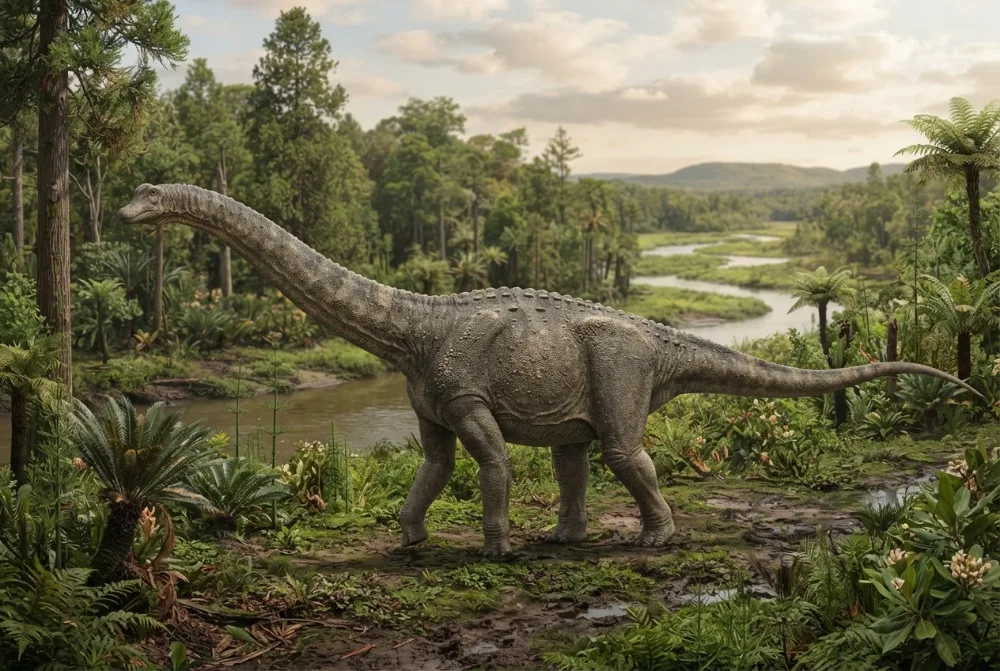
The name Astrophocaudia has a double meaning: 'non-twisting tail' because the tail bones were tightly connected, and 'star tail' because the tail bones look like a three-pointed star from behind.1
Scientists are not sure how big Astrophocaudia was. One study said it was about 10.9 metres (36 feet) long and weighed 2.85 tonnes (6,300 pounds), but another said 18.3 metres (60 feet) long and 20 tonnes (44,000 pounds).1
Most of the bones from one single Astrophocaudia were found together, including 24 tail bones, parts of the neck and back, ribs, a shoulder blade, and a hip bone.1
Astrophocaudia's fossils were first discovered in the 1960s by paleontologist Robert Slaughter, but they were not fully studied until the 2010s.1
The species name slaughteri honors Robert Slaughter, who dug up the bones.1
Dipotso tse botswang haholo ka Astrophocaudia
?How big was Astrophocaudia?
Scientists are not sure. One study estimated it at 10.9 metres (36 feet) long and 2.85 tonnes (6,300 pounds), while another estimated 18.3 metres (60 feet) long and 20 tonnes (44,000 pounds).1
?What did Astrophocaudia eat?
It was a herbivore, meaning it ate plants.3
?When did Astrophocaudia live?
It lived during the Early Cretaceous Period, about 112 to 106 million years ago.1
Bakeng sa ditsebi tsa didinosaure
- Lebitso la saense
- Astrophocaudia
- E rehilwe ke
- D'Emic 20133
- Sehlopha
- Melala e melelele
- Lelapa / leloko
- Somphospondyli3
- Tlhophiso
- Sauropodomorpha > Sauropoda > Macronaria3
- Dilemo tsa mafika
- dilemo tse dimilione tse 113 ho isa ho 110 (Albian)3
- Dibopeho tsa mafika
- Paluxy3
- Dinaha
- Amerika3
- Direkoto tsa difosili
- 1 ho The Paleobiology Database3
- Ho sibollwa
- Astrophocaudia was named in 2012 (published 2013) by Michael D. D'Emic based on fossils found in the 1960s by Robert Slaughter in the Paluxy Formation of Texas.13
- E sa ntse e phehwa kgang
- Scientists are not sure exactly how large Astrophocaudia grew because different estimates give very different sizes.1
Moo dintlha di tswang teng
- Astrophocaudia (en.wikipedia.org)
- Astrophocaudia (ru.wikipedia.org)
- Astrophocaudia in The Paleobiology Database (CC BY 4.0): dilemo, dibaka, dibopeho tsa mafika, tlhophiso.
Ntlha e nngwe le e nngwe leqepheng lena e na le nomoro e supang mohlodi wa yona. Haeba re fositse ho hong, re kopa tshwarelo, re balatedi ba didinosaure, ha re koranta ya saense. Re bolelle ho [email protected] mme re tla e lokisa.
 Rex o lapile! Dino Wiki ke projeke ya ntate bakeng sa mora wa hae ya ratang didinosaure, ke mahala, ha ho dipapatso, ha ho disebedi. Batho ba baholo ba ka fepa Rex seneke ho thusa hore e dule e le inthaneteng.Fepa Rex
 Brachiosaurus
 Diplodocus
 Brontosaurus
 Argentinosaurus
 Camarasaurus
 Morosaurus
 Stegosaurus
 Iguanodon
 Archaeopteryx
 Giganotosaurus
 Microraptor
 Deinonychus