 Kwisi: O dinosaure efe?
 Ntwa ya didinosaure
 Peiso ya didinosaure
 Dipapadi tse nyane tsa didinosaure
 Albamo ya ditikara
 Manane a TOP a didinosaure
 Nkgethele!
Brachytrachelopan
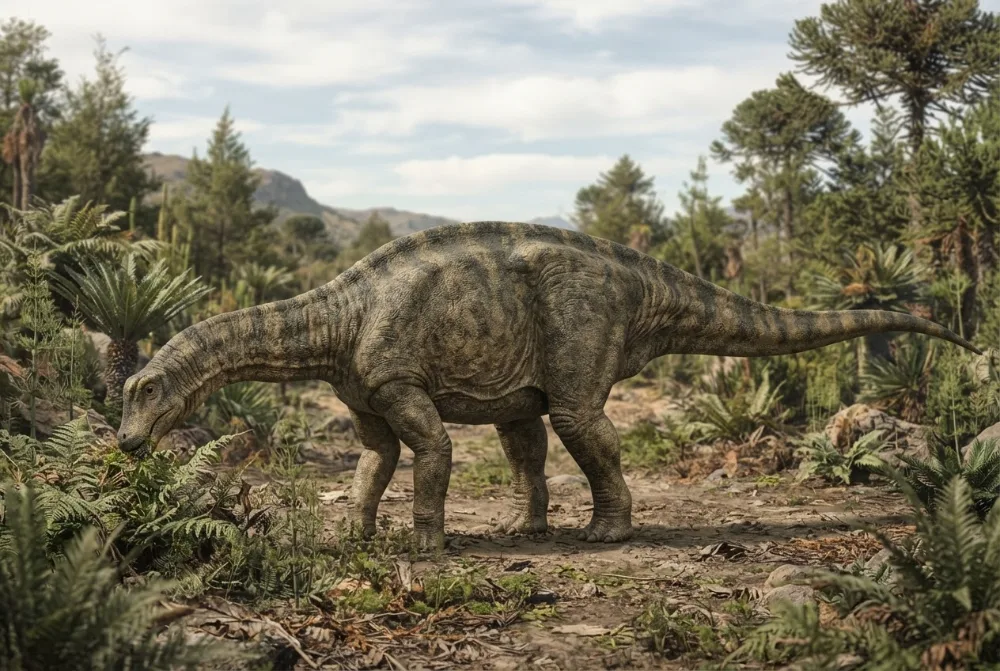
Brachytrachelopan was a sauropod dinosaur with a very short neck, unlike most of its long-necked relatives. It lived in what is now Argentina during the Late Jurassic period, about 150 million years ago. This dinosaur was a plant-eater that probably fed on low-growing plants.12
E phetse neng?
E ne e le kgolo hakae?
E ne e le telele hakae?
E ne e phahame hakae?
kakanyo
E ne e le boima hakae?
 telele jwaloka dikoloi tse 2.5 tse pakilweng ka mola🍌telele jwaloka dibanana tse 61 di behilwe ka mola
 e batla e le boima jwaloka tlou🍉boima jwaloka mahapu a 1000🎒boima jwaloka ditlelase tse feletseng tse 6 tsa bana ba sekolo🐻❄️boima jwaloka dibere tse tshweu tse 11🏃e ne e ka matha dimitara tse 100 ka metsotswana e 19 (motho ya lebelo ka ho fetisisa o hloka 9,6)
Brachytrachelopan e ne e le kgolo hakae ha e bapiswa le WENA?
Ke dipalo feela ho browser ya hao. Ha ho letho le bolokwang kapa le romelwang kae kapa kae.
E ne e le lebelo hakae?


Dintlha tse monate
Brachytrachelopan had the shortest neck of any known sauropod, about 40 percent shorter than other dicraeosaurids.12
Its neck was so short that it could not bend upward much, so it only ate plants growing near the ground.1
This dinosaur weighed about 5 metric tons, which is as heavy as a large elephant.1
The only known fossil was found by a shepherd named Daniel Mesa while he was looking for lost sheep.1
Brachytrachelopan belonged to a group called dicraeosaurids, which were sauropods with shorter necks than most.1
Scientists think Brachytrachelopan filled the same ecological role as large iguanodontian dinosaurs in North America, which were also low-browsing plant-eaters.1
The fossil bones were found still connected to each other, but much of the skeleton had already been lost to erosion.1
Dipotso tse botswang haholo ka Brachytrachelopan
?How big was Brachytrachelopan?
It was small for a sauropod, measuring 10 to 11 metres (33 to 36 ft) in length and weighing about 5 metric tons (5.5 short tons).1
?What did Brachytrachelopan eat?
It was a herbivore that ate low-growing plants, probably those growing at heights between about 1 and 2 metres.1
?Why did Brachytrachelopan have a short neck?
Its short neck helped it feed on low plants, unlike most other sauropods that had long necks for reaching high vegetation.1
?Where was Brachytrachelopan found?
It was discovered in the Cañadón Calcáreo Formation in Chubut Province, Argentina, about 25 kilometres (16 mi) north-northeast of Cerro Cóndor.1
?When did Brachytrachelopan live?
It lived during the Late Jurassic Period, about 150 million years ago.4
?Is Brachytrachelopan a dinosaur?
Yes, it is a sauropod dinosaur from the group Diplodocoidea and family Dicraeosauridae.1
Bakeng sa ditsebi tsa didinosaure
- Lebitso la saense
- Brachytrachelopan
- E rehilwe ke
- Rauhut et al. 20055
- Sehlopha
- Melala e melelele
- Lelapa / leloko
- Dicraeosauridae5
- Tlhophiso
- Sauropodomorpha > Sauropoda > Diplodocoidea5
- Dilemo tsa mafika
- dilemo tse dimilione tse 155 ho isa ho 145 (Kimmeridgian / Tithonian)5
- Dibopeho tsa mafika
- Cañadón Calcáreo5
- Dinaha
- Argentina5
- Direkoto tsa difosili
- 1 ho The Paleobiology Database5
- Ho sibollwa
- Brachytrachelopan was discovered by a local shepherd named Daniel Mesa in Chubut Province, Argentina. Scientists Oliver Rauhut and colleagues named it in 2005.1
- E sa ntse e phehwa kgang
- Scientists are still debating exactly how Brachytrachelopan and other dicraeosaurids evolved such short necks compared to other sauropods.12
Moo dintlha di tswang teng
- Brachytrachelopan (en.wikipedia.org)
- Discovery of a short-necked sauropod dinosaur from the Late Jurassic period of Patagonia | Nature (nature.com)
- PBDB Taxon (paleobiodb.org)
- Brachytrachelopan | Natural History Museum (nhm.ac.uk)
- Brachytrachelopan in The Paleobiology Database (CC BY 4.0): dilemo, dibaka, dibopeho tsa mafika, tlhophiso.
Ntlha e nngwe le e nngwe leqepheng lena e na le nomoro e supang mohlodi wa yona. Haeba re fositse ho hong, re kopa tshwarelo, re balatedi ba didinosaure, ha re koranta ya saense. Re bolelle ho [email protected] mme re tla e lokisa.
 Rex o lapile! Dino Wiki ke projeke ya ntate bakeng sa mora wa hae ya ratang didinosaure, ke mahala, ha ho dipapatso, ha ho disebedi. Batho ba baholo ba ka fepa Rex seneke ho thusa hore e dule e le inthaneteng.Fepa Rex
 Brachiosaurus
 Diplodocus
 Brontosaurus
 Argentinosaurus
 Camarasaurus
 Morosaurus
 Allosaurus
 Compsognathus
 Camptosaurus
 Nanosaurus
 Rhamphorhynchus
 Ceratosaurus