 Kwisi: O dinosaure efe?
 Ntwa ya didinosaure
 Peiso ya didinosaure
 Dipapadi tse nyane tsa didinosaure
 Albamo ya ditikara
 Manane a TOP a didinosaure
 Nkgethele!
Cedarosaurus
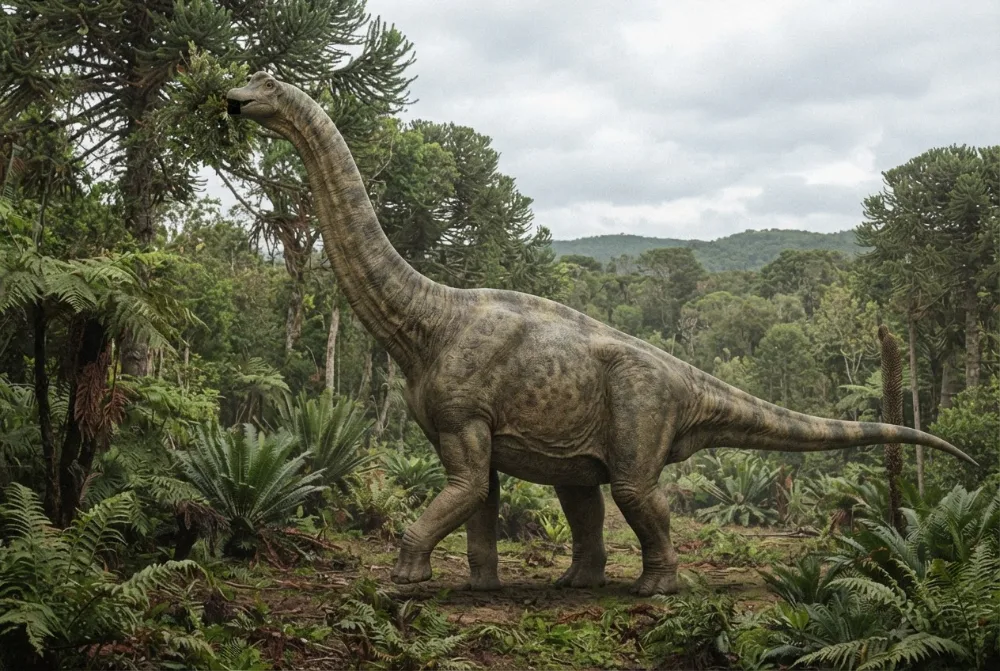
Cedarosaurus was a giant, long-necked plant-eater that lived during the Early Cretaceous. It stomped through what is now Utah, USA, using its long neck to munch leaves high in the trees.1
E phetse neng?
E ne e le kgolo hakae?
E ne e le telele hakae?
E ne e phahame hakae?
kakanyo
E ne e le boima hakae?
 telele jwaloka dikoloi tse 3 tse pakilweng ka mola🍌telele jwaloka dibanana tse 83 di behilwe ka mola
 boima jwaloka ditlou tse 1.5🍉boima jwaloka mahapu a 2000🎒boima jwaloka ditlelase tse feletseng tse 12 tsa bana ba sekolo🐻❄️boima jwaloka dibere tse tshweu tse 22🏃e ne e ka matha dimitara tse 100 ka metsotswana e 24 (motho ya lebelo ka ho fetisisa o hloka 9,6)
Cedarosaurus e ne e le kgolo hakae ha e bapiswa le WENA?
Ke dipalo feela ho browser ya hao. Ha ho letho le bolokwang kapa le romelwang kae kapa kae.
E ne e le lebelo hakae?


Dintlha tse monate
Cedarosaurus had a more slender arm bone (radius) than its relative Venenosaurus.1
Scientists found 115 gastroliths (stomach stones) with a Cedarosaurus skeleton. The stones weighed about 7 kilograms (15 pounds) in total.1
Most of the gastroliths were smaller than 10 millilitres in volume, and the largest one weighed 715 grams (25.2 ounces).1
The gastroliths were mostly made of chert, with some sandstone, siltstone, and quartzite. Some even contained tiny fossils inside.1
Its middle tail vertebrae have neural spines that point forward when the bones are lined up, a feature also seen in some other sauropods like Gondwanatitan.1
Dipotso tse botswang haholo ka Cedarosaurus
?How big was Cedarosaurus?
About 15 metres (49 feet) long and weighed up to 10 metric tons (11 short tons). That is roughly as long as a bus and as heavy as two elephants.1
?What did Cedarosaurus eat?
It was a plant-eater that used its long neck to reach leaves high in trees. It also swallowed gastroliths (stomach stones) to help grind up the tough plants inside its belly.1
?When did Cedarosaurus live?
It lived during the Early Cretaceous Period, about 139 to 134 million years ago.1
?Where was Cedarosaurus found?
Its fossils were discovered in 1996 in eastern Utah, USA, in the Cedar Mountain Formation.1
Bakeng sa ditsebi tsa didinosaure
- Lebitso la saense
- Cedarosaurus
- E rehilwe ke
- Tidwell et al. 19992
- Sehlopha
- Melala e melelele
- Lelapa / leloko
- Brachiosauridae2
- Tlhophiso
- Sauropodomorpha > Sauropoda > Macronaria2
- Dilemo tsa mafika
- dilemo tse dimilione tse 137 ho isa ho 110 (Valanginian / Albian)2
- Dibopeho tsa mafika
- Cedar Mountain, Paluxy2
- Dinaha
- Amerika2
- Direkoto tsa difosili
- 3 ho The Paleobiology Database2
- Ho sibollwa
- Cedarosaurus was named in 1999 by Virginia Tidwell, Kenneth Carpenter, and William Brooks. The fossils were found in 1996 in eastern Utah, USA.12
- E sa ntse e phehwa kgang
- Scientists are not sure exactly how Cedarosaurus used its gastroliths. Some stones were large and irregular, which might have been hard to swallow, so they may have been swallowed by accident.1
Moo dintlha di tswang teng
- Cedarosaurus (en.wikipedia.org)
- Cedarosaurus in The Paleobiology Database (CC BY 4.0): dilemo, dibaka, dibopeho tsa mafika, tlhophiso.
Ntlha e nngwe le e nngwe leqepheng lena e na le nomoro e supang mohlodi wa yona. Haeba re fositse ho hong, re kopa tshwarelo, re balatedi ba didinosaure, ha re koranta ya saense. Re bolelle ho [email protected] mme re tla e lokisa.
 Rex o lapile! Dino Wiki ke projeke ya ntate bakeng sa mora wa hae ya ratang didinosaure, ke mahala, ha ho dipapatso, ha ho disebedi. Batho ba baholo ba ka fepa Rex seneke ho thusa hore e dule e le inthaneteng.Fepa Rex
 Brachiosaurus
 Diplodocus
 Brontosaurus
 Argentinosaurus
 Camarasaurus
 Morosaurus
 Stegosaurus
 Iguanodon
 Archaeopteryx
 Giganotosaurus
 Microraptor
 Deinonychus